
Apr . 01, 2024 17:55 Back to list
wrapped cover steel wire spiral hydraulic hose Performance Analysis
Introduction
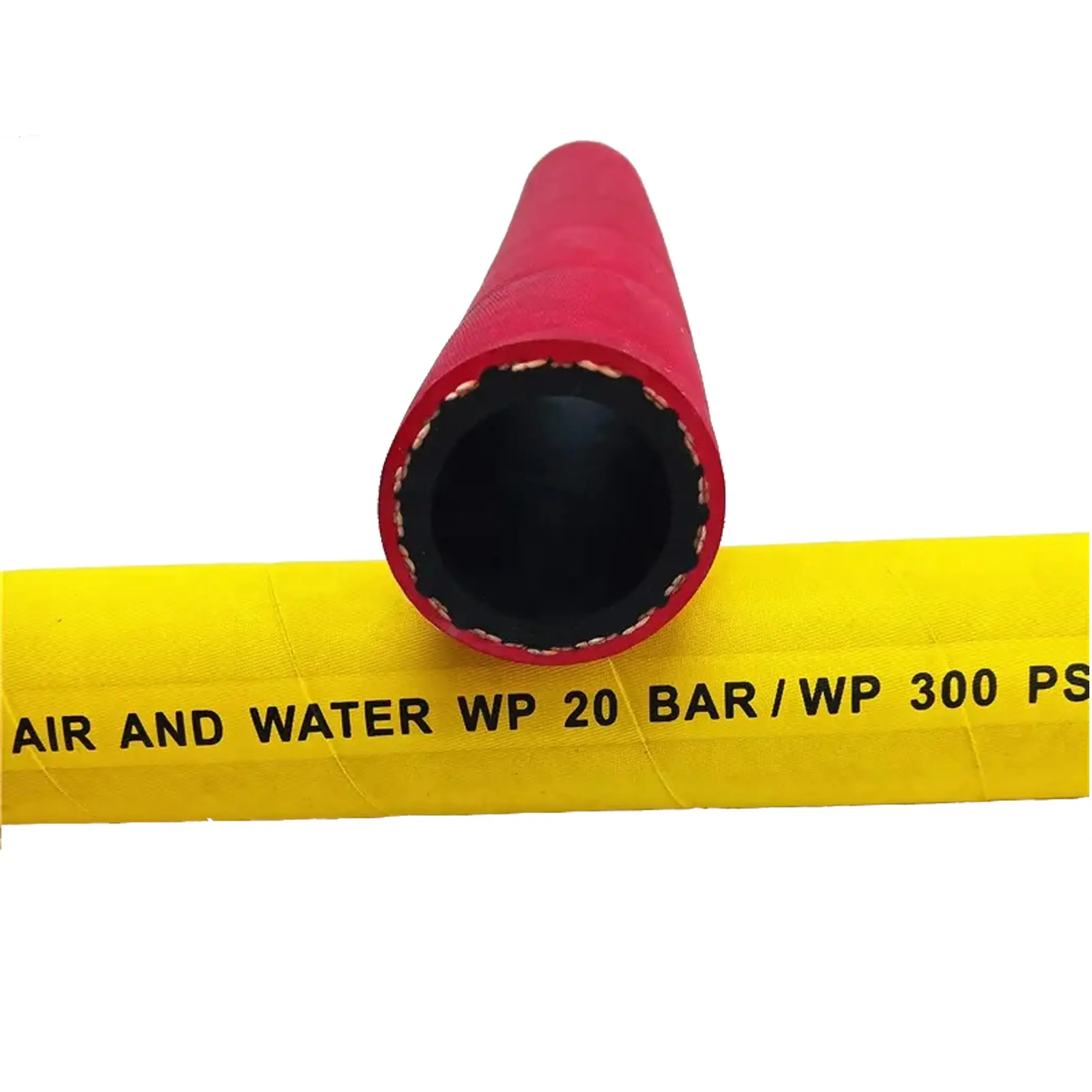
Wrapped cover steel wire spiral hydraulic hose represents a critical component in fluid power systems across a diverse range of industries, including construction, agriculture, manufacturing, and oil & gas. This hose type distinguishes itself through its robust construction, combining a flexible synthetic rubber inner tube, multiple layers of high-tensile steel wire spirally wound for reinforcement, and a durable wrapped outer cover. Its primary function is the reliable and safe transmission of hydraulic fluid under high pressure and demanding operating conditions. Unlike smoothbore or braided hose, the spiral wire reinforcement offers significantly enhanced pressure capability and kink resistance. The wrapped cover provides abrasion, weathering, and chemical resistance, extending the hose’s operational lifespan. Performance is dictated by working pressure, burst pressure, temperature range, and fluid compatibility, making careful selection essential for optimal system performance and safety. The hose’s design directly addresses common failure points in hydraulic systems, such as hose rupture and leakage, contributing to increased productivity and reduced downtime.
Material Science & Manufacturing
The construction of wrapped cover steel wire spiral hydraulic hose relies on a specific combination of material properties and controlled manufacturing processes. The inner tube is typically formulated from a Nitrile (NBR) or Ethylene Propylene Diene Monomer (EPDM) rubber compound, selected for its resistance to hydraulic fluids, oils, and fuels. NBR provides excellent resistance to petroleum-based fluids, while EPDM excels in applications requiring water, steam, and phosphate ester fluid compatibility. The reinforcing layers consist of high-tensile steel wire, typically carbon steel, spirally wound with a precise pitch and tension. This spiral configuration provides the hose with its ability to withstand extreme pressures and resist bending or kinking. The wire’s surface treatment – often galvanization or epoxy coating – is critical for corrosion protection. The outer cover is typically composed of a synthetic rubber blend, such as Chloroprene (CR) or Polyurethane (PU), offering abrasion resistance, weathering protection, and resistance to ozone and UV degradation.
Manufacturing begins with the extrusion of the inner tube to precise dimensional tolerances. The steel wire is then spirally wound onto the inner tube using automated winding machines, maintaining consistent pitch and tension. This is a crucial step, as variations in wire tension directly impact the hose's pressure rating and flexibility. Following wire winding, the outer cover is applied through an extrusion process, encapsulating the reinforcement layers. Curing, typically performed in an autoclave under controlled temperature and pressure, vulcanizes the rubber compounds, establishing the final mechanical properties and dimensional stability. Quality control measures throughout the process include dimensional checks, pressure testing (to burst pressure), and visual inspection for defects. Precise control of the curing parameters – temperature, pressure, and time – is vital to ensure optimal rubber crosslinking and prevent premature failure.
Performance & Engineering
The performance of wrapped cover steel wire spiral hydraulic hose is fundamentally governed by principles of fluid mechanics and material stress analysis. The steel wire spiral effectively converts internal fluid pressure into hoop stress within the hose wall, resisting expansion and maintaining dimensional integrity. The number of wire layers directly correlates with the hose’s maximum working pressure and burst pressure. Engineering calculations must account for factors such as fluid viscosity, operating temperature, and pressure pulsations, which can induce fatigue stress. The hose's bend radius is a critical parameter; exceeding the minimum bend radius can lead to kinking, reduced flow, and premature failure. Finite Element Analysis (FEA) is commonly employed during the design phase to optimize the wire spiral geometry and cover thickness for specific operating conditions. Environmental resistance is a key consideration. Exposure to extreme temperatures (both high and low) can affect the rubber compounds’ flexibility and resistance to degradation. Chemical compatibility is also vital; prolonged contact with incompatible fluids can cause swelling, softening, or cracking of the inner tube and outer cover. The hose’s design must also meet relevant industry standards, such as Society of Automotive Engineers (SAE) standards and European EN standards, which specify performance requirements and testing procedures.
Technical Specifications
| Parameter | Unit | Typical Value (SAE 100R4 Type) | Typical Value (EN 853 1SN Type) |
|---|---|---|---|
| Working Pressure | MPa | 31.5 | 25 |
| Burst Pressure | MPa | 105 | 75 |
| Temperature Range | °C | -40 to +100 | -40 to +70 |
| Inner Tube Material | - | NBR (Nitrile Rubber) | NBR (Nitrile Rubber) |
| Reinforcement | Layers | Multiple Steel Wire Spiral | Single Steel Wire Spiral |
| Cover Material | - | CR (Chloroprene Rubber) | CR (Chloroprene Rubber) |
Failure Mode & Maintenance
Failure modes in wrapped cover steel wire spiral hydraulic hose are diverse, often stemming from a combination of factors. Fatigue cracking, initiated by repeated pressure pulsations and bending stresses, is a common occurrence, particularly in high-cycle applications. Wire breakages within the spiral reinforcement can lead to a sudden and catastrophic hose rupture. Cover degradation, caused by exposure to UV radiation, ozone, and harsh chemicals, results in loss of flexibility and increased susceptibility to abrasion. Internal degradation of the rubber tube, induced by fluid incompatibility or contamination, manifests as swelling, softening, and ultimately, leakage. Kinking, resulting from exceeding the minimum bend radius, can cause localized stress concentrations and premature failure.
Preventative maintenance is crucial for maximizing hose lifespan and ensuring safe operation. Regular visual inspections should be conducted to identify signs of wear, such as cracks, abrasions, and swelling. Hose routing should be carefully planned to avoid sharp bends, abrasion points, and exposure to excessive heat. Hydraulic fluid should be maintained at a clean and consistent viscosity, and filtration systems should be regularly inspected and maintained. Pressure testing should be performed periodically to verify the hose’s structural integrity. If a hose exhibits any signs of damage or degradation, it should be immediately replaced. Proper storage practices, including protection from sunlight and extreme temperatures, are also essential. Never attempt to repair a damaged hydraulic hose; replacement is the only safe and reliable option.
Industry FAQ
Q: What is the primary difference between SAE 100R4 and EN 853 1SN hydraulic hose?
A: SAE 100R4 hoses generally feature multiple layers of spiral steel wire reinforcement, providing higher working pressures and superior kink resistance compared to EN 853 1SN hoses, which typically have a single layer. EN 853 1SN hoses are often more cost-effective and suitable for lower-pressure applications. The temperature ranges also differ, with SAE 100R4 often handling higher temperatures.
Q: How does fluid compatibility affect hose lifespan?
A: Incompatible fluids can cause the inner tube material to swell, soften, or crack, leading to leakage and premature failure. For instance, using a petroleum-based fluid in a hose designed for phosphate ester fluids will rapidly degrade the rubber compound. Selecting a hose with an inner tube specifically formulated for the intended fluid is crucial.
Q: What is the impact of exceeding the minimum bend radius?
A: Exceeding the minimum bend radius creates localized stress concentrations within the hose wall, particularly at the inner radius. This can lead to fatigue cracking, kinking, and reduced flow, ultimately resulting in hose failure. Proper hose routing and support are essential to maintain the specified bend radius.
Q: What preventative measures can be taken to mitigate wire breakage?
A: Wire breakage is often caused by fatigue stress induced by pressure pulsations and bending. Using pulsation dampeners in the hydraulic system can reduce pressure spikes. Ensuring proper hose routing to avoid sharp bends and abrasion also minimizes stress. Regularly inspecting the hose for signs of external damage that could compromise the wire reinforcement is crucial.
Q: How often should hydraulic hoses be replaced as a preventative measure?
A: Replacement frequency depends on operating conditions, fluid type, and hose usage. As a general guideline, hoses should be inspected annually and replaced every 5-7 years, even if no visible damage is apparent. In high-stress applications or with abrasive environments, more frequent replacement may be necessary.
Conclusion
Wrapped cover steel wire spiral hydraulic hose remains an indispensable component in numerous industrial applications demanding reliable high-pressure fluid conveyance. Its robust construction, characterized by a flexible inner tube, spirally wound steel wire reinforcement, and durable outer cover, provides superior performance and longevity compared to alternative hose types. Understanding the interplay between material science, manufacturing processes, and engineering principles is crucial for selecting the appropriate hose for a given application and maximizing its operational lifespan.
Future developments in this field will likely focus on the integration of smart sensors for real-time condition monitoring, the development of new rubber compounds with enhanced chemical resistance and temperature stability, and the implementation of advanced manufacturing techniques to further improve hose durability and reliability. Adherence to rigorous industry standards and proactive maintenance practices will continue to be paramount in ensuring the safe and efficient operation of hydraulic systems utilizing this critical component.