
Apr . 01, 2024 17:55 Back to list
wrapped cover hydraulic hose Performance Analysis
Introduction
Wrapped cover hydraulic hose constitutes a critical component in fluid power systems across a diverse range of industries, including construction, agriculture, manufacturing, and oil & gas. This hose type is characterized by a flexible inner tube, reinforced layers – typically constructed from steel wire or textile braid – and an outer protective covering, traditionally wrapped fabric. Its primary function is the reliable and safe transmission of hydraulic fluid under significant pressure. The technical position of the wrapped cover hydraulic hose within the industry chain lies between the hose fitting manufacturers and the end-user applications where hydraulic power is utilized. Core performance metrics defining its utility encompass working pressure, burst pressure, temperature resistance, and resistance to fluid compatibility, factors that directly impact system efficiency and operational safety. The industry faces consistent challenges in achieving longer service life, improved flexibility in extreme temperatures, and robust resistance against abrasive wear and chemical attack. Addressing these concerns requires continuous material innovation and stringent quality control during the manufacturing process.
Material Science & Manufacturing
The materials comprising wrapped cover hydraulic hose are carefully selected to withstand the demanding operational conditions inherent in hydraulic systems. The inner tube is commonly constructed from synthetic rubbers such as nitrile (NBR), chlorinated polyether (CPE), or ethylene propylene diene monomer (EPDM). NBR provides excellent resistance to petroleum-based hydraulic fluids, while CPE excels in heat and ozone resistance. EPDM offers superior resistance to water and phosphate ester fluids. The reinforcement layer is predominantly high-tensile steel wire, spiral-wound or braided, determining the hose’s pressure capabilities. Textile reinforcement, typically using polyester or aramid fibers, offers greater flexibility but lower pressure ratings. The wrapping, historically a woven fabric saturated with rubber compound, provides abrasion resistance and protects the reinforcement layers. Modern iterations may utilize a thermoplastic polyurethane (TPU) outer layer for enhanced durability and chemical resistance.
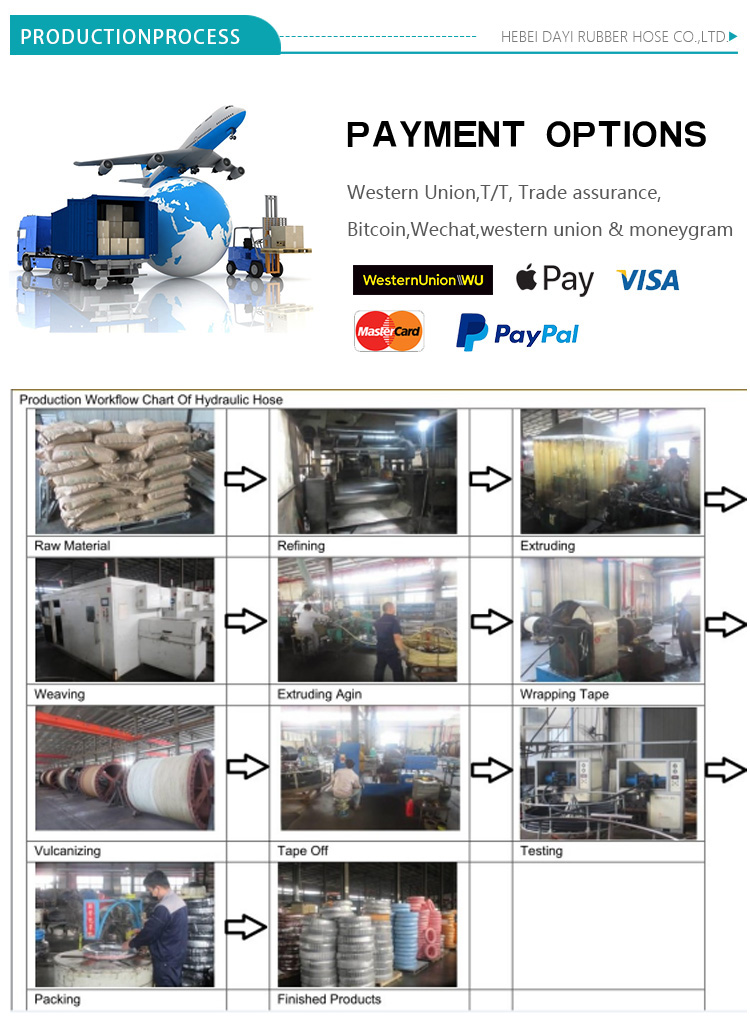
Manufacturing involves a multi-stage process. The inner tube is extruded through a die to achieve the desired inner diameter and wall thickness. The reinforcement layer is then applied, either by winding steel wire helically around a mandrel or by braiding textile fibers over a forming pin. The wrapped cover is applied by wrapping fabric tape around the reinforced tube, often followed by a rubber impregnation process. Critical parameter control includes maintaining precise rubber compound viscosity and temperature during extrusion, ensuring consistent wire tension during winding or braid density during braiding, and controlling the impregnation level of the wrapping material. Post-processing includes vulcanization (curing) to crosslink the rubber compounds, improving their strength, elasticity, and chemical resistance. Quality control measures encompass hydrostatic testing to verify burst pressure, impulse testing to assess fatigue life, and dimensional inspections to confirm adherence to specifications.
Performance & Engineering
The performance of wrapped cover hydraulic hose is governed by fundamental engineering principles relating to fluid mechanics, material strength, and fatigue resistance. Force analysis centers on calculating the hoop stress within the hose wall due to internal pressure. This stress is directly proportional to the pressure and radius, and inversely proportional to the wall thickness. Higher pressures necessitate thicker walls or stronger reinforcement layers. Environmental resistance is paramount; temperature extremes can significantly affect rubber compound properties, reducing flexibility at low temperatures and accelerating degradation at high temperatures. Fluid compatibility dictates the selection of inner tube material to prevent swelling, cracking, or leaching, which can compromise hose integrity.
Compliance requirements are stringent, governed by international standards such as SAE J517 (Hydraulic Hose – Performance Characteristics) and EN 853 (Hydraulic Hoses – Test Methods). These standards specify testing procedures for pressure rating, impulse testing, temperature range, and fluid resistance. Functional implementation considers factors such as bend radius – minimizing bending stress concentration to prevent premature failure – and hose assembly practices – ensuring proper fitting crimping and alignment to distribute load evenly. Fatigue life is a critical design consideration, particularly in applications with cyclical pressure loading. Finite element analysis (FEA) is often employed to simulate stress distribution and predict hose lifespan under various operating conditions. Furthermore, consideration must be given to electrostatic discharge (ESD) particularly in flammable environments.
Technical Specifications
| Parameter | Unit | Typical Value (Example 1 - 1" ID Hose) | Typical Value (Example 2 - 1/2" ID Hose) |
|---|---|---|---|
| Working Pressure | PSI | 3000 | 2000 |
| Burst Pressure | PSI | 9000 | 6000 |
| Temperature Range | °F | -40 to +212 | -40 to +185 |
| Inner Tube Material | - | NBR | CPE |
| Reinforcement | Layers | 4 Spiral Steel Wire | 2 Braided Textile |
| Cover Material | - | Wrapped Fabric, Rubber Impregnated | Wrapped Fabric, Rubber Impregnated |
Failure Mode & Maintenance
Wrapped cover hydraulic hose is susceptible to several failure modes in practical applications. Fatigue cracking, induced by repeated pressure cycles, is a common occurrence, initiating at stress concentration points such as fitting crimps or areas of localized damage. Delamination of the cover or reinforcement layers can occur due to poor adhesion or exposure to harsh environments. Degradation of the rubber compounds due to exposure to ozone, UV radiation, or incompatible fluids leads to hardening, cracking, and loss of flexibility. Oxidation of the steel wire reinforcement can reduce its strength and contribute to corrosion. Abrasive wear, resulting from contact with rough surfaces, can erode the outer cover, exposing the reinforcement layers to corrosion. Pinholes develop as a result of abrasion or defects in the rubber compound.
Professional maintenance is crucial for maximizing hose lifespan and preventing catastrophic failures. Regular visual inspections should be conducted to identify any signs of damage, such as cracks, abrasions, bulges, or leaks. Hose assemblies should be routed to avoid sharp bends, excessive stretching, and contact with hot surfaces or abrasive materials. Fittings should be inspected for proper crimping and alignment. Fluid contamination should be minimized through the use of filtration systems. When replacing hoses, it’s vital to ensure compatibility with the hydraulic fluid and operating conditions. Avoid twisting the hose during installation, as this can induce stress and accelerate fatigue. Following manufacturer’s recommendations for hose handling, storage, and service intervals is paramount to ensuring operational reliability.
Industry FAQ
Q: What is the impact of impulse pressure on the service life of a wrapped cover hydraulic hose?
A: Impulse pressure, characterized by rapid pressure fluctuations, significantly reduces hose lifespan. Each pressure surge induces stress cycling, contributing to fatigue crack initiation and propagation. Higher impulse pressures and more frequent cycles accelerate fatigue damage. Hose selection should consider the anticipated impulse pressure levels, and proper dampening techniques (e.g., accumulators) should be employed to mitigate these effects.
Q: How does the choice of inner tube material affect fluid compatibility and hose performance?
A: Inner tube material selection is critical for fluid compatibility. Incompatible fluids can cause swelling, softening, cracking, or leaching of the rubber compound, compromising hose integrity. NBR is suitable for petroleum-based fluids, CPE for heat and ozone resistance, and EPDM for water and phosphate ester fluids. Incorrect material selection leads to premature failure and potential safety hazards.
Q: What are the key considerations when selecting a hose with appropriate reinforcement?
A: Reinforcement selection depends on the required working pressure and application demands. Steel wire reinforcement offers higher pressure ratings and abrasion resistance but is less flexible. Textile reinforcement provides greater flexibility but lower pressure capacity. The number of layers and the braid angle or helix pitch influence the hose's strength and flexibility. Consider impulse pressure requirements when selecting reinforcement.
Q: What are best practices for proper hose assembly and crimping?
A: Proper hose assembly and crimping are essential for safety and performance. Fittings must be compatible with the hose and fluid. Crimping should be performed using calibrated dies and equipment, ensuring adequate clamping force without damaging the hose. Fittings must be properly aligned to prevent stress concentrations. Hose assemblies should be pressure tested after crimping to verify leak-free performance.
Q: How can I determine the appropriate bend radius for a wrapped cover hydraulic hose?
A: Exceeding the minimum bend radius induces excessive stress on the hose wall, leading to fatigue failure. The minimum bend radius is typically specified by the hose manufacturer and depends on the hose diameter and construction. Maintain a generous bend radius whenever possible, avoiding sharp turns or kinking, to maximize hose lifespan.
Conclusion
Wrapped cover hydraulic hose remains a fundamental component in numerous industrial applications, providing a cost-effective and reliable solution for fluid power transmission. Successful implementation hinges on a comprehensive understanding of material science, manufacturing processes, and performance characteristics. Careful consideration of operating conditions, fluid compatibility, and appropriate reinforcement selection are paramount to achieving optimal service life and ensuring operational safety. Adherence to relevant industry standards and best practices for assembly and maintenance are equally crucial.
Future developments are focused on enhancing hose durability, reducing weight, and improving resistance to extreme environments. Advancements in rubber compound technology, coupled with innovative reinforcement materials, promise to deliver hoses with increased pressure ratings, extended service life, and reduced environmental impact. Continued research into non-destructive testing methods will enable more accurate assessment of hose condition, facilitating proactive maintenance and minimizing the risk of catastrophic failures. Ultimately, a holistic approach encompassing material innovation, rigorous quality control, and informed application engineering will drive the continued evolution of wrapped cover hydraulic hose technology.