
Apr . 01, 2024 17:55 Back to list
wire spiral high pressure hydraulic hose Performance Analysis
Introduction
Wire spiral high pressure hydraulic hose is a reinforced flexible conduit engineered for the transmission of hydraulic fluid under extreme pressure and challenging environmental conditions. Positioned as a critical component in hydraulic power systems, it bridges the gap between stationary pumps and actuators in diverse applications spanning construction equipment, agricultural machinery, oil and gas exploration, and industrial manufacturing. Its core performance characteristics – burst pressure, working pressure, temperature resistance, and fluid compatibility – directly impact system efficiency, reliability, and safety. Unlike smoothbore or braided hose, the wire spiral reinforcement offers superior strength-to-weight ratio and enhanced resistance to kinking and twisting, making it the preferred choice for demanding applications. Understanding its construction, material properties, and failure mechanisms is paramount for optimal system design, operation, and maintenance. This guide provides an in-depth analysis of wire spiral hydraulic hose, addressing key technical considerations for engineers, procurement specialists, and maintenance personnel.
Material Science & Manufacturing
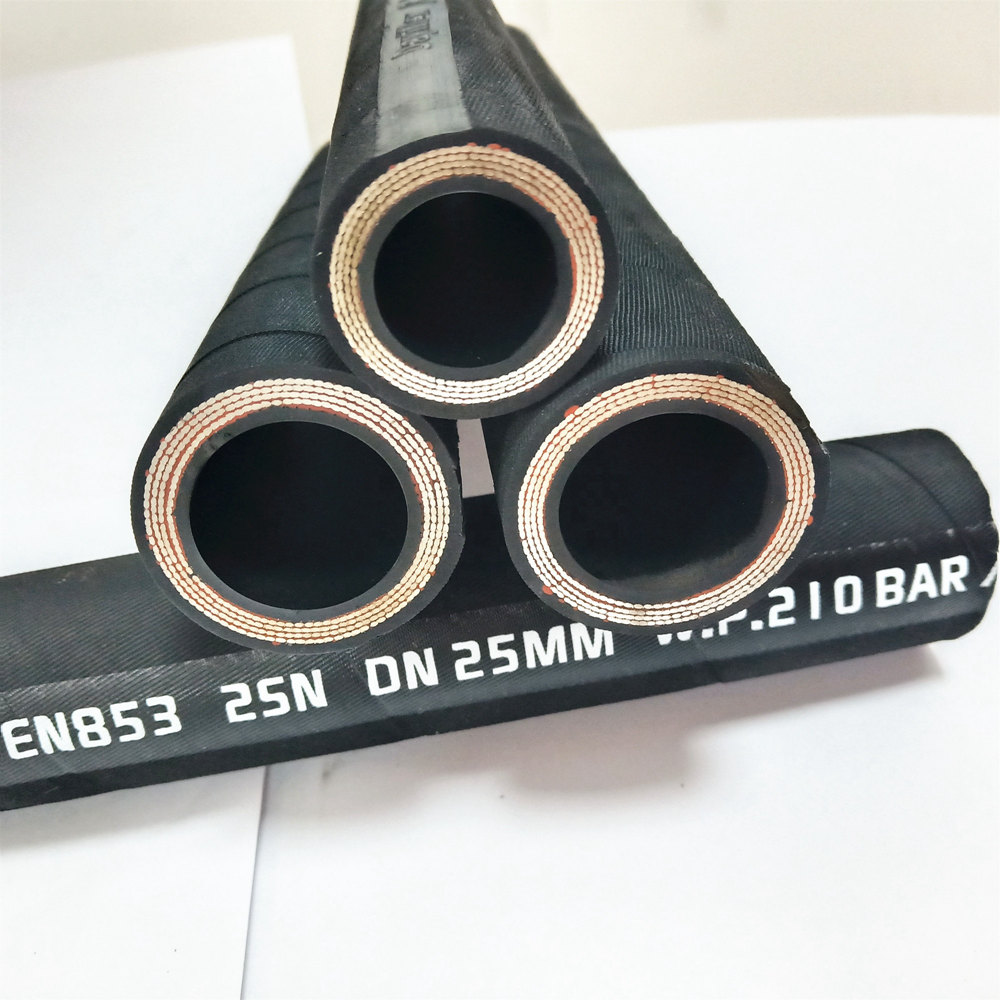
The construction of wire spiral hydraulic hose involves several key material selections and manufacturing processes. The inner tube is typically composed of synthetic rubber compounds, most commonly nitrile rubber (NBR) for its excellent oil resistance, or ethylene propylene diene monomer (EPDM) for applications requiring compatibility with phosphate ester fluids. Other options include chloroprene rubber (CR) for heat and weather resistance. The reinforcement layer consists of high-tensile steel wire, spirally wound at a precise angle to provide the necessary pressure-bearing capacity. The wire’s metallurgy is crucial; high-carbon steel is commonly used, often undergoing surface treatment (e.g., galvanization) to enhance corrosion resistance. The outer cover is usually a synthetic rubber blend offering abrasion, ozone, and weathering protection. Polyurethane (PU) is also employed for exceptional abrasion resistance. Manufacturing begins with extrusion of the inner tube. The wire spiral is then precisely wound onto the extruded tube using specialized machinery, ensuring consistent pitch and layer density. Finally, the outer cover is extruded over the reinforcement layer, followed by vulcanization – a curing process using heat and pressure to crosslink the rubber compounds and bond the layers together. Key parameter control during manufacturing includes maintaining precise wire tension, consistent extrusion temperatures, and appropriate vulcanization times. Improper vulcanization can lead to incomplete crosslinking, resulting in reduced strength and premature failure. Wire alignment during winding is critical, as misalignment introduces stress concentrations and reduces burst pressure.
Performance & Engineering
The performance of wire spiral hydraulic hose is dictated by several engineering principles. Burst pressure, the maximum pressure the hose can withstand before failure, is determined by the wire tensile strength, wire diameter, spiral angle, and the adhesion between layers. Working pressure is a fraction of burst pressure (typically a 4:1 safety factor) and represents the maximum allowable operating pressure. Fatigue life, the number of pressure cycles the hose can endure before failure, is significantly influenced by pressure amplitude, temperature, and fluid type. Force analysis considers both internal hydraulic pressure and external bending stresses. Bending radius is a critical parameter; exceeding the minimum bend radius induces stress concentrations in the reinforcement layer, leading to premature fatigue failure. Environmental resistance is another crucial consideration. Exposure to extreme temperatures (both high and low) can affect rubber compound elasticity and reduce hose flexibility. Exposure to ozone, UV radiation, and corrosive fluids can degrade the outer cover and compromise its protective function. Compliance requirements, such as those stipulated by SAE J517 and EN 856, mandate specific performance testing criteria, including pressure testing, impulse testing, and temperature cycling. Hydraulic fluid compatibility is essential; incompatible fluids can cause swelling, softening, or cracking of the inner tube, leading to leakage and system failure. Proper hose routing and support are vital to minimize bending stresses and prevent abrasion.
Technical Specifications
| Parameter | Unit | Typical Value (SAE 100R4 Type) | Typical Value (EN 856 R4 Type) |
|---|---|---|---|
| Working Pressure | MPa | 31.5 | 25 |
| Burst Pressure | MPa | 126 | 100 |
| Temperature Range | °C | -40 to +100 | -40 to +85 |
| Inner Tube Material | - | NBR (Nitrile Rubber) | NBR (Nitrile Rubber) |
| Reinforcement | - | Multiple Layers of High-Tensile Steel Wire | Multiple Layers of High-Tensile Steel Wire |
| Outer Cover Material | - | Synthetic Rubber (e.g., SBR) | Synthetic Rubber (e.g., SBR) |
Failure Mode & Maintenance
Wire spiral hydraulic hose is susceptible to several failure modes. Fatigue cracking, initiated by repeated bending and pressure cycling, often occurs at the wire/rubber interface or within the wire itself. Delamination, the separation of the reinforcement layer from the inner tube or outer cover, is frequently caused by poor adhesion or exposure to aggressive fluids. Abrasion damage to the outer cover can expose the reinforcement layer to corrosion, leading to wire failure. Oxidation of the steel wire, particularly in humid environments, weakens the reinforcement and reduces burst pressure. Kinking or twisting, resulting from improper routing or excessive bending, induces stress concentrations and accelerates fatigue cracking. Internal degradation of the inner tube, caused by fluid incompatibility or high temperatures, leads to swelling, softening, and eventual leakage. Regular inspection is crucial for identifying potential failures. Look for cracks, blisters, abrasions, and leaks. Perform pressure testing to verify the hose's integrity. Proper maintenance includes avoiding excessive bending, protecting the hose from abrasion, and using compatible hydraulic fluids. If damage is detected, the hose should be replaced immediately. Avoid repairing damaged hoses with clamps, as this is a temporary fix and can compromise safety. Periodic replacement based on operational hours or calendar time is recommended, even in the absence of visible damage. Proper storage – avoiding direct sunlight and extreme temperatures – also extends hose life.
Industry FAQ
Q: What is the difference between SAE J517 and EN 856 standards for hydraulic hose?
A: SAE J517 (United States) and EN 856 (Europe) are both widely recognized standards for hydraulic hose, but they differ in testing procedures and performance requirements. EN 856 generally specifies more stringent impulse testing and wider temperature ranges, while SAE J517 focuses more on burst pressure and working pressure at standard temperatures. Compatibility between the standards isn’t always guaranteed; a hose meeting EN 856 may not automatically meet SAE J517 requirements and vice-versa.
Q: How does wire spiral reinforcement compare to braided reinforcement in terms of pressure capacity and flexibility?
A: Wire spiral reinforcement generally provides higher pressure capacity compared to braided reinforcement for a given hose diameter. This is due to the more efficient load distribution of the spiral winding. However, braided hoses typically offer greater flexibility and easier routing, especially in tight spaces. Wire spiral hoses are more prone to kinking if bent beyond their minimum bend radius.
Q: What is the impact of hydraulic fluid type on hose life?
A: Hydraulic fluid compatibility is critical. Using an incompatible fluid can cause the inner tube to swell, soften, or crack, leading to leakage and failure. For example, using petroleum-based fluids in a hose designed for phosphate ester fluids will rapidly degrade the rubber. Always consult the hose manufacturer’s compatibility chart to ensure the fluid is suitable.
Q: What are the common causes of hose leaks at fittings?
A: Leaks at fittings are often caused by improper crimping, damaged fittings, or mismatched fittings. Improper crimping can lead to insufficient sealing force, while damaged fittings may have deformed sealing surfaces. Using fittings not specifically designed for wire spiral hose can also cause leaks. Regular inspection and proper fitting installation are essential.
Q: What preventative measures can be taken to extend the service life of wire spiral hydraulic hose?
A: Preventative measures include proper hose routing to avoid excessive bending and abrasion, using compatible hydraulic fluids, regular visual inspections for damage, periodic pressure testing, and replacing hoses based on operational hours or calendar time, even if no visible damage is present. Avoiding exposure to extreme temperatures and UV radiation also helps to prolong hose life.
Conclusion
Wire spiral high pressure hydraulic hose represents a vital component in numerous industrial applications requiring robust and reliable fluid power transmission. Its construction, leveraging high-tensile steel wire and specialized rubber compounds, delivers exceptional burst pressure and resistance to challenging operating conditions. Understanding the underlying engineering principles, material properties, and potential failure modes is paramount for ensuring system safety and maximizing hose longevity. Proper selection, installation, and maintenance are crucial factors influencing performance and operational lifespan.
Looking ahead, advancements in materials science, such as the development of more corrosion-resistant steel alloys and novel rubber compounds with enhanced temperature and fluid resistance, will continue to improve hose performance and durability. Furthermore, the integration of sensor technologies for real-time pressure and temperature monitoring will enable predictive maintenance strategies, minimizing downtime and enhancing system reliability. The future of wire spiral hydraulic hose lies in innovation focused on extending service life, improving safety, and optimizing overall system efficiency.