
Apr . 01, 2024 17:55 Back to list
wire braided high pressure hydraulic hose Performance Analysis
Introduction
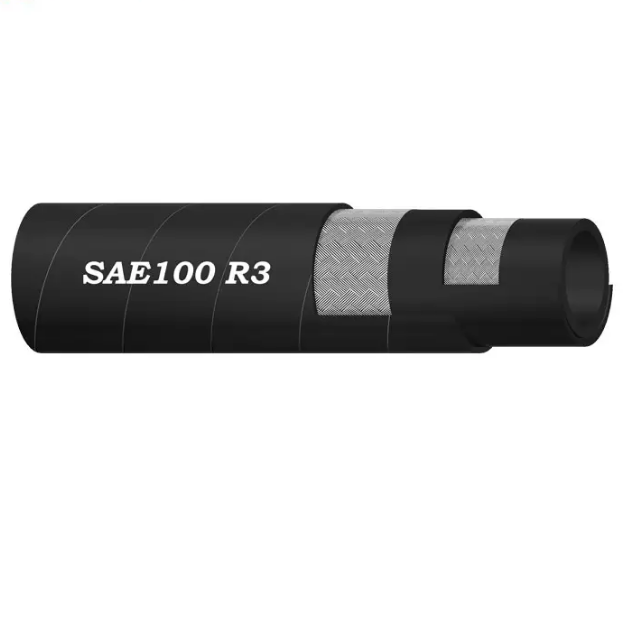
Wire braided high pressure hydraulic hose is a reinforced fluid conveyance system critical to a vast array of industrial applications. Positioned within the hydraulic system as the vital link transmitting pressurized fluid power, its performance dictates the efficiency and reliability of the overall machinery. These hoses are distinguished by their inner tube, typically composed of synthetic rubber designed for compatibility with specific hydraulic fluids, and multiple layers of high-tensile steel wire braid providing reinforcement against internal pressure and external damage. Core performance characteristics include burst pressure, working pressure, temperature range, and fluid compatibility. The industry faces ongoing challenges related to increasing operating pressures, demanding environments, and stringent safety regulations, driving continuous innovation in materials and construction techniques. This guide details the material science, manufacturing processes, performance parameters, failure modes, and maintenance protocols essential for the correct specification, installation, and longevity of these critical components.
Material Science & Manufacturing
The foundation of wire braided hydraulic hose lies in the synergistic properties of its constituent materials. The inner tube is commonly constructed from nitrile rubber (NBR), ethylene propylene diene monomer (EPDM), or fluorocarbon elastomer (FKM/Viton), selected based on fluid compatibility and temperature requirements. NBR provides excellent resistance to petroleum-based hydraulic fluids but has limited temperature range. EPDM exhibits superior resistance to heat, ozone, and weathering, making it suitable for outdoor applications. FKM offers the broadest chemical resistance and high-temperature capability, but at a higher cost. The reinforcement layer comprises high-tensile strength steel wire, typically drawn from carbon steel and surface treated for corrosion resistance – often zinc-plated or stainless steel. The outer cover utilizes a blend of synthetic rubbers, such as chloroprene (CR) or polyurethane (PU), providing abrasion, ozone, and weather resistance.
Manufacturing commences with the extrusion of the inner tube to precise dimensions. The wire braid is then applied, meticulously wound around a mandrel using automated braiding machines. Braid coverage, defined as the percentage of the hose circumference covered by the wire, is a critical parameter directly influencing burst pressure. Higher coverage translates to increased reinforcement. Following braiding, the outer cover is extruded over the reinforcement layer. Critical manufacturing parameters include extrusion temperature, braid tension, curing time and temperature, and dimensional tolerances. Post-curing inspection includes dimensional verification, pressure testing to specified burst pressures (typically 3:1 or 4:1 safety factor over working pressure), and leak testing. Improper curing can lead to rubber degradation and premature failure. Precise control of braid tension is vital; insufficient tension reduces burst strength, while excessive tension can damage the inner tube.

Performance & Engineering
The performance of wire braided hydraulic hose is governed by a complex interplay of internal pressure, temperature, fluid velocity, and external mechanical stresses. Force analysis focuses on hoop stress within the hose wall caused by internal pressure. This stress is directly proportional to the pressure and radius, and inversely proportional to the wall thickness. The steel wire braid counteracts this stress, distributing the load and preventing hose rupture. Environmental resistance is paramount; prolonged exposure to ultraviolet radiation, ozone, and extreme temperatures can degrade the rubber compounds, leading to cracking and loss of flexibility. Compliance requirements, dictated by agencies like SAE International (SAE J517), dictate minimum performance standards for burst pressure, impulse pressure (cyclic pressure fluctuations), and temperature range. Functional implementation requires consideration of hose bend radius; exceeding the minimum bend radius induces stress concentrations and can lead to premature failure. Furthermore, proper hose routing and support are essential to prevent abrasion and kinking. Impulse pressure is a particularly insidious failure mechanism, inducing fatigue in the hose materials over time, even at pressures below the static burst pressure.
Technical Specifications
| Parameter | Unit | Typical Value (DN20, 2 Wire Braid) | Typical Value (DN32, 4 Wire Braid) |
|---|---|---|---|
| Working Pressure | MPa | 31.5 | 50 |
| Burst Pressure | MPa | 105 | 150 |
| Temperature Range | °C | -40 to +100 | -40 to +100 |
| Inner Tube Material | - | NBR | EPDM |
| Reinforcement | - | 2 Steel Wire Braid | 4 Steel Wire Braid |
| Outer Cover Material | - | CR | PU |
Failure Mode & Maintenance
Failure modes in wire braided hydraulic hose are diverse and often interconnected. Fatigue cracking, induced by repeated pressure cycling and bending, is a common occurrence, initiating at stress concentration points such as braid crossovers or localized defects. Delamination, the separation of the hose layers, can occur due to inadequate adhesion between the inner tube, reinforcement, and outer cover. This is often exacerbated by exposure to incompatible fluids or extreme temperatures. Degradation of the rubber compounds, caused by ozone, UV radiation, or chemical attack, leads to hardening, cracking, and loss of flexibility. Oxidation of the steel wire braid, particularly in the absence of proper surface treatment, weakens the reinforcement and reduces burst pressure. External damage, such as abrasion, cuts, or impacts, can compromise the hose integrity.
Preventative maintenance is crucial. Regular visual inspections should identify signs of cracking, abrasion, or swelling. Hose routing should minimize bending and exposure to harsh environments. Periodic fluid analysis can detect contamination that could accelerate degradation. Hoses should be replaced based on a scheduled replacement interval, dictated by operating conditions and fluid compatibility. If a hose exhibits any signs of damage, it should be immediately removed from service. Proper hose assembly techniques, including the correct selection and installation of fittings, are essential to prevent leaks and premature failure. When storing hoses, they should be kept in a cool, dry, and dark environment, protected from ozone and UV radiation.
Industry FAQ
Q: What is the impact of impulse pressure on hose life and how can it be mitigated?
A: Impulse pressure, the rapid fluctuation of pressure within the hydraulic system, introduces cyclic stress on the hose materials, leading to fatigue failure over time. The severity of the impact depends on the magnitude and frequency of the pressure fluctuations. Mitigation strategies include selecting hoses specifically rated for impulse pressure, utilizing accumulators to dampen pressure spikes, and employing slow-closing valves to reduce water hammer effects. Regular monitoring of system pressure and vibration can also aid in identifying and addressing potential issues.
Q: How does fluid compatibility affect hose selection and what are the consequences of using an incompatible fluid?
A: Fluid compatibility is paramount. Different hydraulic fluids possess varying chemical properties and can cause swelling, softening, or degradation of the inner tube material. Using an incompatible fluid can lead to leaks, hose rupture, and system failure. Always consult a fluid compatibility chart to ensure the hose inner tube material is suitable for the intended fluid. Consider the fluid's viscosity, temperature range, and chemical composition.
Q: What are the key considerations when selecting between 2-wire and 4-wire braided hoses?
A: The choice between 2-wire and 4-wire braided hoses hinges primarily on the required working pressure and application demands. 4-wire braid hoses offer significantly higher burst pressures and are recommended for high-pressure systems or applications subject to severe shock loads. 2-wire braid hoses are suitable for lower-pressure applications where cost is a significant factor. Consider the hose diameter and bend radius; larger diameter hoses typically require more reinforcement.
Q: What are the best practices for preventing hose twisting and kinking?
A: Hose twisting and kinking induce stress concentrations and can restrict fluid flow. Best practices include ensuring proper hose routing with adequate bend radii, utilizing swivel fittings at hose connections, and providing adequate support to prevent hose movement. Avoid sharp bends or abrupt changes in direction. Regularly inspect hoses for twisting and untwist them if necessary.
Q: What role do fittings play in the overall performance and reliability of a hydraulic hose assembly?
A: Fittings are integral to the performance and reliability of the hose assembly. Improperly crimped or damaged fittings can leak, reduce flow, and compromise the hose’s structural integrity. Fittings must be compatible with the hose and fluid, and crimping must be performed according to the manufacturer’s specifications. Regular inspection of fittings for corrosion, damage, and proper torque is essential.
Conclusion
Wire braided high pressure hydraulic hose remains a foundational element in countless industrial systems, demanding a thorough understanding of its material properties, manufacturing intricacies, and operational limitations. Selecting the correct hose, based on pressure requirements, fluid compatibility, and environmental conditions, is critical for ensuring safe and reliable operation. Effective preventative maintenance, including regular inspections and scheduled replacements, is paramount in minimizing downtime and maximizing the service life of these essential components.
Looking forward, advancements in materials science, such as the development of new synthetic rubber compounds with enhanced chemical resistance and temperature stability, will drive further improvements in hose performance. The integration of sensor technology within hose assemblies to monitor pressure, temperature, and structural integrity offers the potential for predictive maintenance and enhanced system safety. Continued adherence to industry standards and best practices will remain essential for maintaining the reliability and efficiency of hydraulic systems globally.