
Apr . 01, 2024 17:55 Back to list
water suction and discharge rubber hose Performance Analysis
Introduction
Water suction and discharge rubber hoses are critical components in fluid transfer systems across numerous industrial and agricultural applications. Positioned within the fluid handling sector, these hoses serve as flexible conduits for conveying water, slurries, and other compatible fluids. Unlike rigid piping, rubber hoses offer adaptability, ease of installation, and the capacity to absorb vibration and movement. Core performance characteristics center around pressure resistance (both positive and vacuum), abrasion resistance, chemical compatibility, and maintaining fluid integrity. The industry currently faces challenges related to extending service life in harsh environments, minimizing environmental impact through material selection, and ensuring consistent performance across varying operational temperatures. This guide provides an in-depth technical overview of water suction and discharge rubber hoses, covering material science, manufacturing processes, performance parameters, potential failure modes, and relevant industry standards.
Material Science & Manufacturing
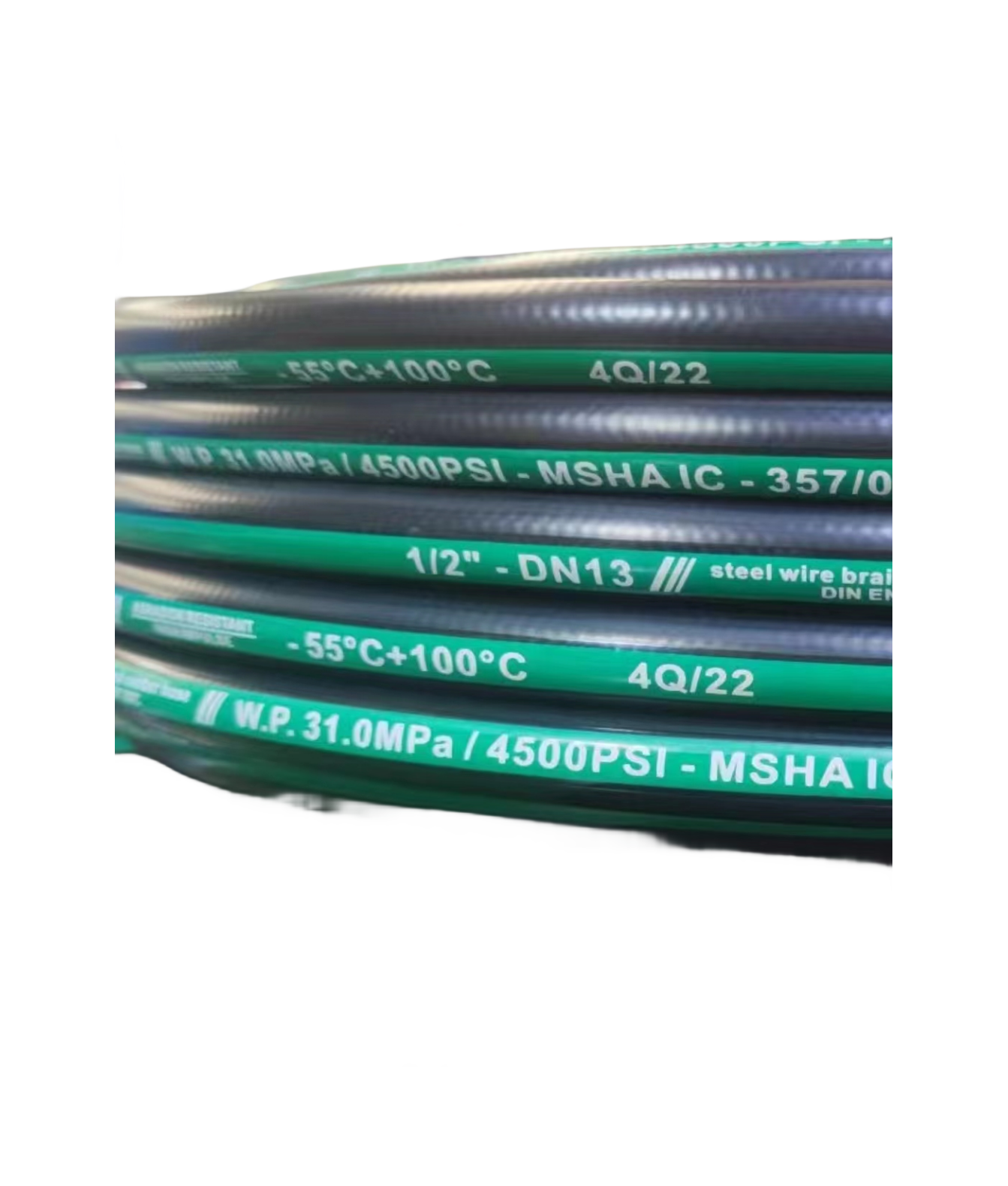
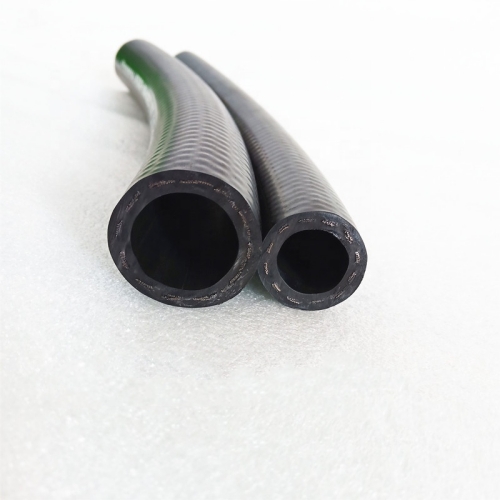
The performance of a water suction and discharge rubber hose is fundamentally dictated by the materials used in its construction. The core material is typically a synthetic rubber compound, with varying formulations based on application requirements. Common elastomers include: Natural Rubber (NR) - Excellent elasticity and abrasion resistance, suited for general-purpose water transfer; Styrene-Butadiene Rubber (SBR) - Offers good abrasion resistance and cost-effectiveness, frequently used in lower-pressure applications; Ethylene Propylene Diene Monomer (EPDM) – Exceptional resistance to weathering, ozone, and heat, ideal for outdoor applications and hot water transfer; Nitrile Rubber (NBR) – Superior oil and fuel resistance, sometimes incorporated for handling fluids containing hydrocarbons; Chloroprene Rubber (CR) – Good resistance to oil, chemicals, and weathering, providing a balance of properties. Reinforcement layers are crucial for pressure resistance and preventing hose collapse. These typically consist of plied textile cords (polyester, nylon) or spirally wound steel wire. The cover layer provides abrasion and weathering protection. Manufacturing processes vary depending on hose construction. For lower-pressure hoses, extrusion is common, where the rubber compound is forced through a die to create a seamless tube. High-pressure hoses often involve a layered manufacturing process. The inner tube is extruded, followed by the application of reinforcement layers, and finally, the outer cover is extruded. Vulcanization, a chemical process involving heating with sulfur or other curatives, is essential to cross-link the rubber molecules, enhancing strength, elasticity, and temperature resistance. Precise control of temperature, pressure, and curing time is paramount to achieve optimal material properties. Parameter control during extrusion includes maintaining consistent die temperature, screw speed, and rubber compound viscosity. Steel wire winding requires accurate tension control to ensure uniform reinforcement. Quality control checks include dimensional accuracy, pressure testing, and material hardness assessments.
Performance & Engineering
The performance of water suction and discharge hoses is assessed through a series of engineering analyses and compliance tests. Suction performance is particularly critical, as the hose must withstand negative pressure without collapsing. This is directly related to the reinforcement structure and the vacuum rating of the hose. Burst pressure testing determines the maximum pressure the hose can withstand before failure. The methodology involves gradually increasing the internal pressure until rupture occurs. Tensile strength testing evaluates the force required to break the hose material, indicating its overall strength and durability. Flex fatigue testing simulates repeated bending and flexing cycles to assess the hose's resistance to cracking and failure under dynamic conditions. Environmental resistance is another key consideration. Exposure to UV radiation, ozone, and temperature extremes can degrade the rubber material. Accelerated weathering tests are conducted to predict long-term performance in these conditions. Chemical compatibility is vital when handling fluids other than pure water. The hose material must be resistant to swelling, softening, or degradation when exposed to the specific fluid. Compliance requirements vary depending on the application and geographic region. For potable water applications, hoses must meet standards for extractable compounds to ensure water purity. Fire safety regulations may require hoses to be flame-retardant. Force analysis considers internal pressure, external loads, and bending stresses to determine the hose's structural integrity. Finite element analysis (FEA) is often employed to model stress distributions and optimize hose design. Selecting the appropriate hose construction (reinforcement type, rubber compound) is crucial to meet specific performance requirements and ensure safe and reliable operation.
Technical Specifications
| Parameter | Unit | Typical Value (Standard Duty Hose) | Typical Value (Heavy Duty Hose) |
|---|---|---|---|
| Working Pressure | PSI | 150 | 300 |
| Burst Pressure | PSI | 450 | 900 |
| Vacuum Rating | inHg | 29.9 | 29.9 |
| Tensile Strength | PSI | 1200 | 1800 |
| Temperature Range | °F | -40 to 180 | -40 to 212 |
| Inner Diameter | in | 1-4 | 1-12 |
Failure Mode & Maintenance
Water suction and discharge rubber hoses are susceptible to various failure modes depending on operational conditions. Fatigue cracking is a common issue, especially in applications involving repeated bending and flexing. This occurs when the rubber material experiences cyclic stress exceeding its endurance limit. Abrasion, caused by the flow of abrasive particles or contact with rough surfaces, can wear away the inner and outer layers of the hose. Chemical degradation occurs when the hose material reacts with the conveyed fluid, leading to swelling, softening, or cracking. Ozone cracking is a specific type of weathering degradation caused by exposure to ozone in the atmosphere. UV exposure causes the rubber to become brittle and lose its elasticity. Delamination is the separation of reinforcement layers from the rubber matrix, often due to inadequate bonding or exposure to high pressures. Improper handling and storage can also contribute to failure. Kinking, crushing, or prolonged exposure to direct sunlight can damage the hose. Maintenance strategies include regular visual inspections for signs of cracking, abrasion, or swelling. Pressure testing should be conducted periodically to verify the hose's structural integrity. Avoid sharp bends and kinks during installation and operation. Store hoses in a cool, dry, and dark place when not in use. Flush the hose with clean water after each use to remove any residual fluids. For heavily soiled hoses, a mild detergent solution can be used, but harsh chemicals should be avoided. Damaged hoses should be replaced immediately. Do not attempt to repair a damaged hose with tape or patches, as this is only a temporary fix and may compromise safety.
Industry FAQ
Q: What is the primary difference between a suction hose and a discharge hose?
A: Suction hoses are specifically designed to withstand negative pressure and prevent collapse under vacuum conditions. They typically incorporate a rigid helix or spiral reinforcement to maintain their diameter. Discharge hoses, on the other hand, are designed to handle positive pressure and focus on burst strength and abrasion resistance.
Q: How does temperature affect the performance of a rubber hose?
A: Elevated temperatures can reduce the rubber's tensile strength and elasticity, increasing the risk of failure. Conversely, low temperatures can cause the rubber to become brittle and prone to cracking. Selecting a hose with a temperature rating appropriate for the operating conditions is crucial.
Q: What is the significance of the hose's reinforcement material?
A: The reinforcement material dictates the hose's pressure rating and resistance to collapse. Textile reinforcement (polyester, nylon) is suitable for moderate pressures, while steel wire reinforcement is required for high-pressure applications. The ply count and winding angle also influence the hose's performance.
Q: How do I determine the appropriate hose diameter for my application?
A: Hose diameter should be selected based on the required flow rate and pressure drop. A smaller diameter will increase velocity and pressure drop, while a larger diameter will reduce velocity and pressure drop. Hydraulic calculations should be performed to optimize hose sizing.
Q: What are the key considerations for selecting a hose for potable water applications?
A: For potable water, the hose must be manufactured from materials that comply with relevant standards (e.g., NSF/ANSI 61) to ensure that no harmful chemicals leach into the water. The hose should also be resistant to bacterial growth and easy to sanitize.
Conclusion
Water suction and discharge rubber hoses are indispensable components in a wide range of industrial applications, demanding careful consideration of material science, manufacturing techniques, and operational parameters. Understanding the interplay between rubber compounds, reinforcement structures, and environmental factors is paramount to selecting a hose that delivers reliable performance and longevity. Proper maintenance, including regular inspections and adherence to recommended operating conditions, is essential for maximizing service life and preventing catastrophic failures.
Future developments in rubber hose technology are likely to focus on enhancing material durability, reducing weight, and improving chemical resistance. The integration of smart sensors to monitor hose condition and predict potential failures will also become increasingly prevalent. Sustainable material choices and environmentally friendly manufacturing processes will be key drivers of innovation in the industry, addressing growing concerns about environmental impact and regulatory compliance.