
Apr . 01, 2024 17:55 Back to list
two wire braided hydraulic hose supplier Performance Analysis

Introduction
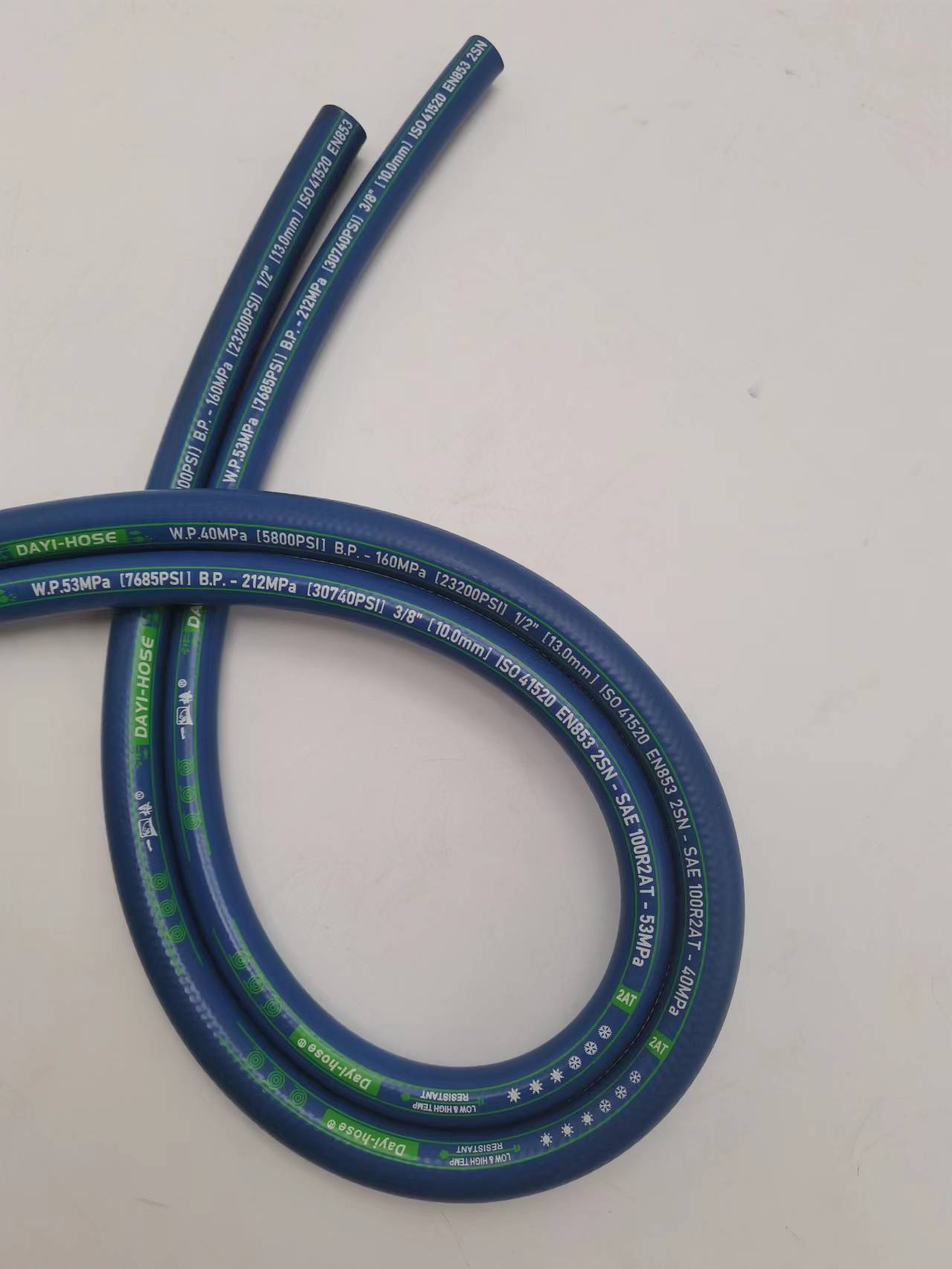
Two-wire braided hydraulic hose represents a critical component in fluid power systems across diverse industries, including construction, agriculture, manufacturing, and oil & gas. Positioned within the hydraulic system as the vessel for transmitting pressurized fluid – typically hydraulic oil – it facilitates the operation of actuators, motors, and other hydraulic machinery. Unlike thermoplastic hose, two-wire braided hose utilizes a synthetic rubber inner tube reinforced with two layers of high-tensile steel wire braid, offering a robust solution for medium to high-pressure applications. Its core performance characteristics are defined by its working pressure, burst pressure, temperature range, and fluid compatibility. A significant industry pain point revolves around premature hose failure due to improper material selection, inadequate reinforcement, or incorrect installation, leading to costly downtime and potential safety hazards. This guide provides an in-depth exploration of two-wire braided hydraulic hose, covering its material science, manufacturing processes, performance characteristics, failure modes, and relevant industry standards.
Material Science & Manufacturing
The construction of a two-wire braided hydraulic hose involves several key materials and a multi-stage manufacturing process. The inner tube is commonly composed of synthetic rubbers such as nitrile rubber (NBR), chlorinated polyether (CPE), or ethylene propylene diene monomer (EPDM). NBR offers excellent resistance to petroleum-based hydraulic fluids, CPE provides enhanced ozone and weather resistance, and EPDM excels in high-temperature applications and compatibility with phosphate ester fluids. The reinforcement layers consist of high-tensile steel wire, typically drawn from carbon steel and surface treated for corrosion resistance (zinc plating is common). The cover, protecting the reinforcement from abrasion and environmental degradation, is typically a synthetic rubber blend like SBR (styrene-butadiene rubber) or CR (chloroprene rubber).
Manufacturing begins with the extrusion of the inner tube to the required dimensions and wall thickness. The steel wire is then spirally wound around the inner tube, with precise tension control being critical to achieving the specified reinforcement density and pressure rating. This winding process is followed by the application of a bonding agent to ensure adhesion between the reinforcement and the cover. Finally, the cover is extruded over the reinforcement layer, and the hose undergoes a vulcanization (curing) process, typically using steam or hot air, to crosslink the rubber compounds and achieve the desired physical properties. Key process parameters include extrusion temperature, wire tension, curing time, and temperature uniformity. Variations in these parameters significantly impact the hose’s performance and durability.
Performance & Engineering
The performance of a two-wire braided hydraulic hose is dictated by its ability to withstand internal pressure, external forces, and environmental conditions without failure. Force analysis centers on hoop stress within the inner tube, which is directly proportional to the internal pressure and inversely proportional to the hose diameter and wall thickness. The steel wire braid provides the necessary tensile strength to counteract this hoop stress. The angle of the braid also influences performance; steeper braid angles provide greater axial strength but lower flexibility.
Environmental resistance is paramount, particularly in applications exposed to extreme temperatures, UV radiation, or corrosive substances. Rubber compounds degrade over time due to oxidation, ozone attack, and chemical reactions. Selecting the appropriate rubber compound for the specific application is therefore crucial. Compliance with industry standards, such as SAE J517 and EN 853, is essential to ensure safety and interchangeability. These standards specify requirements for burst pressure, impulse pressure, temperature range, and fluid compatibility. Hose end fittings are also critical; improper fitting installation can lead to leakage or catastrophic failure. Proper crimping procedures and fitting selection are vital considerations. Fatigue life, the number of pressure cycles the hose can endure before failure, is a key performance metric, influenced by factors such as pressure amplitude, frequency, and hose material properties.
Technical Specifications
| Parameter | Unit | Typical Value (SAE 100R2AT Equivalent) | Testing Standard |
|---|---|---|---|
| Working Pressure | MPa | 20.7 | SAE J517 |
| Burst Pressure | MPa | 82.7 | SAE J517 |
| Temperature Range | °C | -40 to +100 | SAE J517 |
| Inner Tube | Material | Synthetic Rubber (NBR) | ASTM D2000 |
| Reinforcement | Material | Steel Wire (2-ply) | ASTM A228 |
| Cover | Material | Synthetic Rubber (SBR) | ASTM D2000 |
Failure Mode & Maintenance
Two-wire braided hydraulic hose is susceptible to several failure modes. Fatigue cracking, initiated by repeated pressure cycling, occurs when stress concentrations exceed the material’s fatigue strength. Delamination, the separation of the cover or reinforcement from the inner tube, can result from inadequate bonding or thermal expansion/contraction mismatches. Oxidation and chemical degradation of the rubber compounds lead to loss of elasticity and eventual cracking. Pinholes and abrasion damage compromise the hose’s integrity.
Maintenance is crucial for extending hose life and preventing failures. Regular visual inspections should be conducted to identify signs of wear, damage, or leaks. Proper hose routing and support are essential to minimize bending stress and abrasion. Avoid sharp bends and direct contact with hot surfaces or abrasive materials. Fluid compatibility must be verified to prevent chemical attack. When replacing a hose, ensure that the new hose has the same or higher pressure rating and is compatible with the hydraulic fluid. Crimped fittings should be inspected for proper indentation and tightness. Periodic fluid analysis can help detect contaminants that accelerate hose degradation. Following manufacturer’s recommendations for hose storage and handling is also important.
Industry FAQ
Q: What is the significance of the 'dash size' in hydraulic hose nomenclature?
A: The dash size (e.g., -6, -8, -10) refers to the internal diameter of the hose in sixteenths of an inch. A dash-6 hose has a 6/16 inch (3/8 inch) internal diameter. It's a crucial parameter for determining flow capacity and pressure drop in the hydraulic system.
Q: How does temperature affect the working pressure of a hydraulic hose?
A: Elevated temperatures generally reduce the working pressure of a hydraulic hose. As temperature increases, the rubber compounds soften, decreasing their ability to withstand pressure. Therefore, it's crucial to select a hose with a temperature rating that exceeds the operating temperature of the hydraulic system.
Q: What are the key differences between SAE 100R2AT and SAE 100R1AT hose?
A: SAE 100R2AT hose offers a wider temperature range and superior abrasion resistance compared to SAE 100R1AT. It also typically features a tighter cover weave for enhanced protection. R2AT is generally preferred for more demanding applications.
Q: What is the impact of improper hose installation on performance and safety?
A: Improper installation, such as incorrect crimping of fittings or excessive bending, can significantly reduce hose life and compromise safety. Under-crimped fittings can leak, while over-crimped fittings can damage the hose reinforcement. Excessive bending introduces stress concentrations, leading to premature failure.
Q: What role does the steel wire braid play in preventing hose expansion under pressure?
A: The steel wire braid acts as a structural reinforcement, resisting the circumferential expansion of the inner tube when subjected to internal pressure. It effectively contains the pressure, preventing the hose from ballooning or rupturing. The number of braid layers directly correlates to the hose’s pressure rating.
Conclusion
Two-wire braided hydraulic hose remains a foundational component in countless hydraulic systems, offering a robust and reliable solution for fluid power transmission. Understanding the interplay between material science, manufacturing processes, and performance characteristics is paramount for ensuring optimal operation and preventing costly failures. Selecting the appropriate hose type, adhering to industry standards, and implementing a proactive maintenance program are vital considerations for maximizing hose lifespan and maintaining system safety.
Looking ahead, advancements in materials science, such as the development of more durable and chemically resistant rubber compounds, and innovative reinforcement technologies, will continue to enhance the performance and longevity of two-wire braided hydraulic hose. Further research into non-destructive testing methods for detecting internal damage will also play a crucial role in improving safety and reliability.