
Apr . 01, 2024 17:55 Back to list
two wire braided high pressure hydraulic hose Performance Analysis
Introduction
Two wire braided high pressure hydraulic hose is a critical component in fluid power systems, designed to transmit hydraulic fluid under substantial pressure to operate machinery and equipment. Positioned within the hydraulic system’s power transmission chain, it directly impacts system efficiency, reliability, and safety. Unlike simpler hose constructions, the two-wire braid provides significantly enhanced pressure capacity and resistance to deformation, making it suitable for demanding industrial, mobile hydraulic, and oil & gas applications. Core performance characteristics include burst pressure, working pressure, temperature range, and fluid compatibility. The selection criteria hinge on matching these characteristics to the specific application requirements to prevent premature failure and ensure operational longevity. The increasing demands for higher operating pressures in modern hydraulic systems and the drive for improved safety have elevated the importance of understanding the material science, manufacturing processes, and performance limitations of these critical hoses.
Material Science & Manufacturing
The construction of two wire braided high pressure hydraulic hose relies on a synergistic combination of materials. The inner tube, typically composed of a synthetic rubber compound (NBR – Nitrile Butadiene Rubber, or EPDM – Ethylene Propylene Diene Monomer), provides fluid resistance. NBR offers excellent resistance to petroleum-based fluids, while EPDM is preferred for phosphate ester fluids and higher temperature applications. The reinforcement layer consists of two braids of high-strength steel wire, precisely wound in opposing directions. This braid provides the primary pressure-containing strength. The outer cover, usually a synthetic rubber like polyurethane or neoprene, protects the reinforcement from corrosion, abrasion, and environmental degradation. Steel wire is selected for its high tensile strength and fatigue resistance, with surface treatments applied to enhance adhesion to the rubber compound.
Manufacturing begins with the extrusion of the inner tube to precise dimensions. The steel wire braids are then applied, meticulously wound using automated braiding machines. Key parameters during braiding include wire tension, braid angle (typically 55-70 degrees), and braid coverage. Deviations from optimal parameters can compromise hose strength and flexibility. The outer cover is then extruded over the braid. Vulcanization, a chemical process involving heating and curing, is critical to bond the rubber compounds to the steel wire and create a cohesive structure. Vulcanization time, temperature, and pressure are tightly controlled to achieve optimal physical properties. Post-production testing includes burst pressure testing, impulse testing, and dimensional checks to ensure conformance to industry standards. Quality control throughout the process, including raw material inspection and in-process monitoring, is vital to ensure consistent performance.
Performance & Engineering
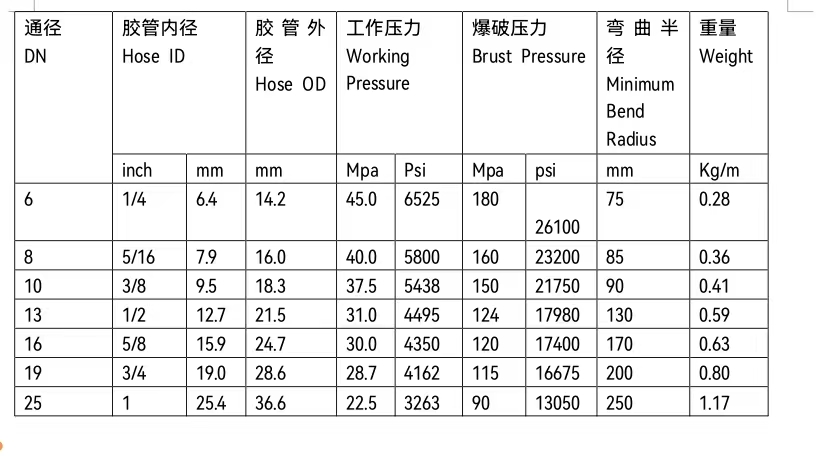
The performance of two wire braided hydraulic hose is governed by several engineering principles. Burst pressure, the maximum pressure the hose can withstand before failure, is a critical parameter determined by the wire braid’s tensile strength, the rubber compound’s properties, and the hose’s geometry. Working pressure, typically 50-75% of the burst pressure, represents the recommended operating pressure for sustained use. Fatigue resistance, the ability to withstand repeated pressure cycles, is crucial in dynamic applications. This is assessed through impulse testing, simulating cyclical loading. Environmental resistance, particularly to temperature extremes, ozone, and UV exposure, impacts the hose’s long-term durability.
Force analysis reveals that pressure within the hose creates hoop stress in the rubber liner and tensile stress in the steel wire. The braid’s geometry and tension are designed to counteract these stresses. Flexibility is a key consideration, particularly in applications involving tight bends. Excessive bending can lead to localized stress concentration and premature failure. Fluid compatibility is also paramount; incompatible fluids can cause swelling, degradation, or cracking of the rubber components. Compliance requirements, such as those mandated by SAE (Society of Automotive Engineers) and EN (European Norms), dictate minimum performance standards and testing procedures. Proper hose assembly, including the selection of compatible fittings and correct crimping procedures, is essential to maintain structural integrity and prevent leaks. Incorrect crimping can result in fitting pull-out or hose deformation.
Technical Specifications
| Parameter | Unit | SAE 100R2AT | EN 853 2SN |
|---|---|---|---|
| Working Pressure | MPa | 20.7 | 16 |
| Burst Pressure | MPa | 82.7 | 64 |
| Temperature Range | °C | -40 to +100 | -40 to +100 |
| Inner Tube | Material | NBR | NBR |
| Reinforcement | Material | Two Steel Wire Braids | Two Steel Wire Braids |
| Cover | Material | Polyurethane | Neoprene |
Failure Mode & Maintenance
Failure modes in two wire braided hydraulic hose are diverse. Fatigue cracking, initiated by repeated pressure cycles and exacerbated by bending, is a common failure mechanism. Corrosion of the steel wire, particularly in corrosive environments, reduces its tensile strength and accelerates failure. Abrasion of the outer cover exposes the reinforcement to corrosion. Delamination, the separation of the rubber layers from the steel wire, can occur due to poor bonding during vulcanization or chemical attack. Hose kinking, caused by excessive bending, creates localized stress and can lead to cracking. Improper installation, such as over-tightening or incorrect fitting selection, can introduce stress concentrations and premature failure. Oxidation of the rubber compounds over time leads to loss of elasticity and cracking.
Preventative maintenance is critical. Regular visual inspections should identify signs of abrasion, cracking, or swelling. Pressure testing can detect leaks or weakening of the hose. Avoid excessive bending and kinking. Ensure compatibility of the hydraulic fluid with the hose materials. Protect the hose from extreme temperatures and corrosive environments. Proper hose routing and support prevent chafing and abrasion. When replacing hoses, use only certified components and follow manufacturer’s installation guidelines. Maintain a record of hose replacement dates to facilitate preventative maintenance scheduling. Implement a fluid filtration system to remove contaminants that can accelerate hose degradation.
Industry FAQ
Q: What is the impact of impulse testing on hose selection for mobile hydraulic applications?
A: Impulse testing simulates the pressure pulsations common in mobile hydraulic systems, such as those found in excavators or loaders. A hose that fails impulse testing is unsuitable for these applications, as it cannot withstand the cyclical loading without premature failure. Selecting a hose with a higher impulse rating than the system’s peak pressure is a best practice to ensure durability.
Q: How does fluid compatibility impact the service life of a hydraulic hose?
A: Incompatible fluids can cause the rubber compounds to swell, soften, or crack, leading to leaks and hose failure. For example, using petroleum-based fluids in a hose designed for phosphate ester fluids will result in rapid degradation. It's essential to verify the hose material’s compatibility with the hydraulic fluid being used.
Q: What is the significance of the braid angle in a two-wire braided hose?
A: The braid angle affects the hose’s flexibility and pressure-containing capacity. A steeper angle (closer to 90 degrees) provides greater strength but reduces flexibility, while a shallower angle increases flexibility but reduces strength. A typical braid angle of 55-70 degrees provides a good balance between these properties.
Q: What are the key considerations when selecting fittings for a two-wire braided hose?
A: Fittings must be compatible with the hose material and size, and they must be correctly crimped to ensure a leak-proof seal. Using incorrect fittings or improper crimping can result in fitting pull-out or hose deformation, leading to failure. Fittings should also be rated for the same working pressure as the hose.
Q: How does temperature affect the performance of a two-wire braided hydraulic hose?
A: Extreme temperatures can degrade the rubber compounds, reducing their elasticity and strength. High temperatures can accelerate oxidation and cracking, while low temperatures can make the hose brittle. It’s crucial to select a hose with a temperature range that matches the operating conditions of the application.
Conclusion
Two wire braided high pressure hydraulic hose remains a cornerstone of modern hydraulic systems, demanding a thorough understanding of its material properties, manufacturing intricacies, and operational limitations. The interplay between the inner tube’s fluid resistance, the steel wire braid’s strength, and the outer cover’s protective qualities dictates the hose's overall performance and longevity. Selecting the appropriate hose for a specific application requires careful consideration of factors such as working pressure, temperature range, fluid compatibility, and environmental conditions.
Looking ahead, advancements in materials science and manufacturing techniques will likely lead to hoses with even higher pressure ratings, improved temperature resistance, and enhanced durability. The integration of sensor technology to monitor hose condition and predict failure modes will further enhance system reliability and reduce downtime. Continued adherence to industry standards and rigorous quality control measures will remain paramount to ensure the safe and efficient operation of hydraulic systems relying on these critical components.