
Apr . 01, 2024 17:55 Back to list
top quality hydraulic hose manufacturers Performance Engineering

Introduction
Hydraulic hose, a critical component in fluid power systems, facilitates the transmission of pressurized fluids to operate machinery across diverse industrial sectors. This technical guide focuses on the manufacturing and engineering aspects of top quality hydraulic hose, analyzing material science, performance characteristics, failure modes, and relevant industry standards. The market demands increasingly robust and reliable hoses capable of withstanding extreme pressures, temperatures, and corrosive fluids. This necessitates a detailed understanding of construction, materials, and manufacturing processes. Core performance indicators include burst pressure, working pressure, temperature range, and fluid compatibility. Addressing industry pain points related to hose failure, maintenance downtime, and ensuring consistent performance under demanding conditions is paramount. This guide provides a comprehensive overview for engineers, procurement managers, and maintenance personnel involved in selecting, specifying, and maintaining hydraulic hose systems.
Material Science & Manufacturing
Hydraulic hose construction typically involves multiple layers, each serving a specific purpose. The inner tube, in direct contact with the fluid, is commonly manufactured from synthetic rubbers such as nitrile (NBR), ethylene propylene diene monomer (EPDM), or fluorocarbon (FKM) – Viton. NBR offers excellent resistance to petroleum-based fluids, while EPDM excels in water-based hydraulic fluids. FKM provides superior chemical resistance and high-temperature performance but at a higher cost. Reinforcement layers are crucial for pressure containment and typically consist of braided steel wire (high-pressure applications) or textile materials (lower-pressure applications). The number of braids dictates the hose’s pressure rating; more braids equate to higher pressure capacity. An outer cover, usually a synthetic rubber like polyurethane or neoprene, provides protection against abrasion, weather, and chemical exposure. Manufacturing processes vary depending on hose type and materials. Tube extrusion involves forcing molten rubber through a die to create a seamless inner tube. Braiding utilizes specialized machines to intertwine steel wires around the inner tube, requiring precise tension control to ensure uniform pressure distribution. Curing, a vulcanization process, chemically crosslinks the rubber compounds, imparting strength, elasticity, and temperature resistance. Quality control at each stage, including dimensional accuracy, material composition verification, and pressure testing, is vital to ensure hose integrity. Key parameter control includes maintaining consistent rubber compound viscosity, precise wire tension during braiding, and accurate curing temperatures and times. Improper curing can lead to material degradation and premature failure.
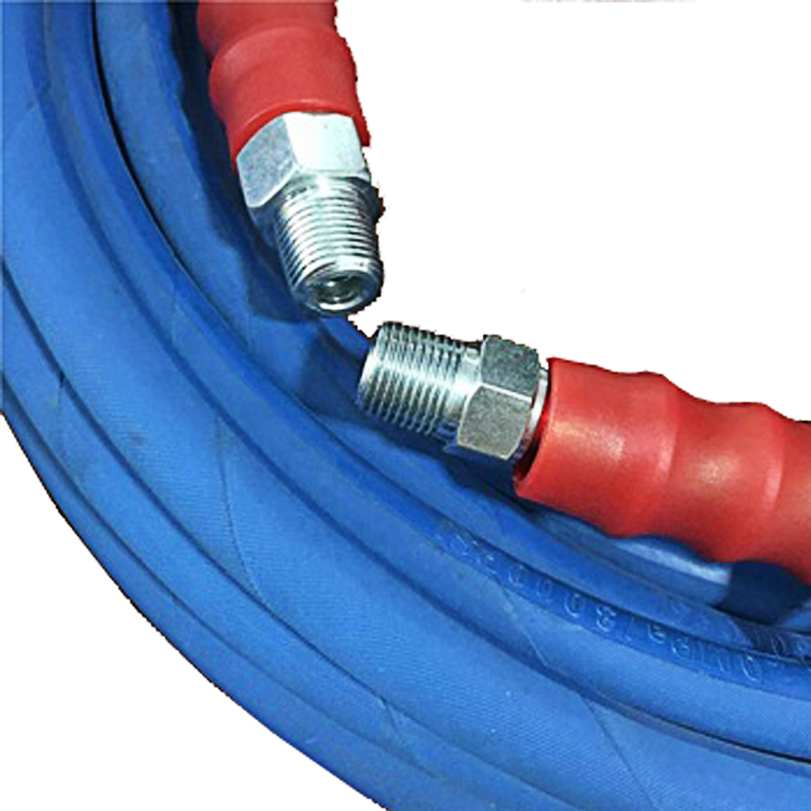
Performance & Engineering
Hydraulic hose performance is governed by several critical engineering principles. Burst pressure, the maximum pressure the hose can withstand before rupture, is a primary design parameter. Working pressure, typically 50-75% of the burst pressure, represents the safe operating limit. Hose flexibility, determined by bend radius, is crucial for installation and minimizing stress concentrations. Excessive bending can lead to kinking and eventual failure. Temperature range impacts material properties; both high and low temperatures can degrade rubber compounds. Environmental resistance is another key consideration; exposure to ozone, UV radiation, and corrosive fluids can compromise hose integrity. Force analysis involves calculating hoop stress (circumferential stress) in the hose wall under pressure. The reinforcement layer is designed to withstand this stress. Finite element analysis (FEA) is frequently employed to model hose behavior under various loading conditions and optimize reinforcement design. Compliance requirements, such as those stipulated by SAE J517 (hydraulic hose construction standards) and ISO 6898 (hydraulic fluid power – hose assemblies), dictate testing procedures and performance criteria. Furthermore, electrostatic discharge (ESD) considerations are important in certain applications to prevent ignition of flammable fluids. Proper hose assembly, including correct fitting selection and crimping, is essential for optimal performance and safety.
Technical Specifications
| Parameter | Unit | Typical Value (NBR Inner Tube, Steel Wire Braided) | Typical Value (FKM Inner Tube, Steel Wire Spiraled) |
|---|---|---|---|
| Working Pressure | MPa | 20 | 40 |
| Burst Pressure | MPa | 80 | 160 |
| Temperature Range | °C | -40 to +100 | -20 to +150 |
| Inner Diameter | mm | 19 | 25 |
| Outer Diameter | mm | 28 | 38 |
| Bend Radius (Minimum) | mm | 4D | 6D |
Failure Mode & Maintenance
Hydraulic hose failure can stem from various mechanisms. Fatigue cracking, induced by repeated pressure cycles and flexing, is a common failure mode. Delamination, the separation of layers, can occur due to improper bonding or material incompatibility. Abrasion, caused by external contact, erodes the outer cover, exposing reinforcement layers. Oxidation, particularly in rubber compounds, leads to material degradation and loss of elasticity. Chemical attack from incompatible fluids can cause swelling, softening, or cracking of the inner tube. Improper installation, such as over-bending or incorrect crimping, induces stress concentrations and accelerates failure. Maintenance strategies include regular visual inspections for cracks, abrasions, and leaks. Pressure testing can detect internal degradation. Periodic replacement based on service life and operating conditions is crucial. Proper storage, away from UV radiation and extreme temperatures, prevents premature aging. When replacing hoses, ensuring compatibility with the hydraulic fluid is paramount. Additionally, implementing a preventative maintenance schedule and adhering to manufacturer's recommendations extends hose life and minimizes downtime. Failure analysis, involving microscopic examination of fracture surfaces, helps identify the root cause of failures and informs preventative measures.
Industry FAQ
Q: What is the significance of the hose reinforcement braid angle?
A: The braid angle directly impacts the hose's pressure rating and flexibility. A shallower angle provides greater flexibility but lower pressure capacity, while a steeper angle offers higher pressure resistance but reduced flexibility. Optimal braid angle selection depends on the specific application requirements.
Q: How does fluid compatibility affect hose selection?
A: Fluid compatibility is critical. Using a hose material incompatible with the hydraulic fluid can lead to swelling, softening, cracking, and ultimately, hose failure. The inner tube material must be resistant to chemical attack from the fluid.
Q: What are the best practices for hose assembly?
A: Proper assembly involves selecting the correct fittings, ensuring a proper crimp, and avoiding over-tightening. Using calibrated crimping equipment and following manufacturer's specifications is essential. Inspect the crimp for proper indentation and ensure no gaps exist between the fitting and the hose.
Q: How can I determine the appropriate hose working pressure for my application?
A: The working pressure should be at least 1.5 to 2 times the maximum system pressure, including pressure spikes. Consider the system's relief valve setting and any potential surges. Always consult the hose manufacturer's specifications.
Q: What are the common causes of hose kinking, and how can it be prevented?
A: Kinking occurs when the hose is bent beyond its minimum bend radius. This restricts flow and can cause internal damage. Ensure adequate space for hose routing, avoid sharp bends, and use flexible hose assemblies designed for tight spaces.
Conclusion
The selection and maintenance of top quality hydraulic hose are fundamental to the reliability and safety of hydraulic systems. Understanding the intricacies of material science, manufacturing processes, and performance characteristics is crucial for engineers and maintenance personnel. Failure to properly specify and maintain hydraulic hose can result in costly downtime, environmental hazards, and potential safety risks.
Future advancements in hydraulic hose technology will likely focus on developing materials with enhanced chemical resistance, higher temperature capabilities, and improved abrasion resistance. Furthermore, incorporating smart hose technologies, such as embedded sensors for real-time pressure and temperature monitoring, will enable predictive maintenance and enhance system performance. By prioritizing robust design, rigorous testing, and proactive maintenance practices, industries can maximize the lifespan and reliability of their hydraulic hose systems.