
Apr . 01, 2024 17:55 Back to list
top quality high pressure hydraulic hose suppliers Performance Analysis

Introduction
High-pressure hydraulic hose is a critical component in numerous industrial and mobile hydraulic systems, responsible for the safe and efficient transmission of fluid power. These hoses are engineered to withstand extreme pressures, temperatures, and fluid compatibility requirements across diverse applications, including construction equipment, agricultural machinery, oil and gas exploration, and manufacturing. Top quality hydraulic hose suppliers distinguish themselves through their adherence to stringent manufacturing standards, advanced material science, and rigorous quality control processes. The performance of hydraulic hoses directly impacts system reliability, operational safety, and overall productivity; failure can result in costly downtime, environmental hazards, and potential personnel injury. This guide provides a comprehensive technical overview of high-pressure hydraulic hose, covering material science, manufacturing processes, performance characteristics, failure modes, and industry standards, focusing on the key considerations for procurement and effective system integration.
Material Science & Manufacturing
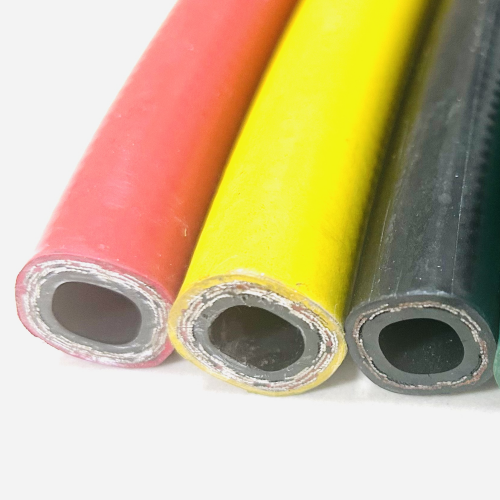
The core of a high-pressure hydraulic hose lies in its layered construction, each layer contributing specific performance attributes. The inner tube, in direct contact with the hydraulic fluid, is typically composed of a synthetic rubber compound such as nitrile (NBR), ethylene propylene diene monomer (EPDM), or fluorocarbon (FKM/Viton). NBR offers good resistance to petroleum-based fluids but limited temperature range. EPDM excels in phosphate ester fluids and provides excellent heat and ozone resistance. FKM delivers superior chemical and temperature resistance, crucial for aggressive fluids and harsh environments. The reinforcement layer is paramount to pressure capacity and is generally constructed from multiple plies of high-tensile steel wire, often spirally wound or braided. The number and configuration of these plies directly correlate with the hose’s working pressure rating. An intermediate cover layer, often a synthetic rubber blend, provides adhesion between the reinforcement and the outer cover. Finally, the outer cover provides abrasion, weather, and oil resistance, typically utilizing polyurethane or a specialized rubber compound.
Manufacturing processes vary based on hose type and reinforcement configuration. Braided hoses are created by intertwining individual wires, maximizing flexibility. Spirally wound hoses involve wrapping a single continuous wire around the inner tube, offering higher pressure ratings and increased rigidity. Key parameters during manufacturing include precise wire tension control during braiding/winding, consistent rubber compound mixing to ensure uniform properties, and meticulous adhesion between layers. Vulcanization, a crucial curing process, chemically crosslinks the rubber compounds, enhancing their strength, elasticity, and resistance to degradation. Post-vulcanization testing, including burst pressure tests and impulse tests, verifies conformance to industry standards. Extrusion of the inner tube and outer cover requires precise die design and control of temperature and pressure to ensure dimensional accuracy and consistent wall thickness.
Performance & Engineering
The performance of a hydraulic hose is governed by a complex interplay of forces and environmental factors. Burst pressure, the maximum pressure the hose can withstand before rupture, is a primary performance metric. Working pressure is significantly lower, typically a fraction of the burst pressure (often 4:1 safety factor), representing the maximum safe operating pressure. Impulse pressure, representing cyclical pressure fluctuations, is also critical, particularly in applications like hydraulic hammers. Hose flexibility, measured by bend radius, impacts ease of installation and system maneuverability. Temperature range dictates the hose’s operational limits; exceeding these limits can cause rubber degradation and reduced pressure capacity.
Finite element analysis (FEA) is employed during hose design to optimize reinforcement layer configuration and predict stress distribution under load. Engineering considerations include minimizing stress concentrations at fittings, accounting for hose elongation and contraction with pressure changes, and mitigating vibration-induced fatigue. Fluid compatibility is paramount; incompatible fluids can cause swelling, softening, or cracking of the inner tube. Environmental resistance, including UV exposure, ozone concentration, and chemical exposure, dictates the suitability of the hose for outdoor or harsh environments. Compliance with industry standards, such as SAE J517 and EN 853, ensures safety and interchangeability. Proper hose assembly, utilizing correctly sized fittings and crimping procedures, is vital to achieving rated performance and preventing premature failure.
Technical Specifications
| Parameter | SAE J517 - R1AT | SAE J517 - R1ATSK | DIN EN 853 1SN |
|---|---|---|---|
| Working Pressure (PSI) | 1000 | 1500 | 200 |
| Burst Pressure (PSI) | 4000 | 6000 | 800 |
| Reinforcement | Single Wire Braid | Spiral Wire Reinforcement | Single Wire Braid |
| Inner Tube | NBR (Nitrile Rubber) | NBR (Nitrile Rubber) | NBR (Nitrile Rubber) |
| Outer Cover | Synthetic Rubber | Polyurethane | Synthetic Rubber |
| Temperature Range (°F) | -40 to +212 | -40 to +250 | -40 to +100 |
Failure Mode & Maintenance
Hydraulic hose failure can manifest in several ways. Fatigue cracking, caused by repeated flexing and pressure cycles, is a common mode of failure, particularly near fittings. Abrasion, resulting from contact with abrasive surfaces, degrades the outer cover, exposing the reinforcement layers to corrosion. Ozone cracking, induced by exposure to ozone in the atmosphere, causes surface cracks in the rubber compounds. Permeation, the diffusion of hydraulic fluid through the hose wall, leads to fluid loss and reduced pressure. Internal degradation, caused by fluid incompatibility or thermal breakdown, weakens the inner tube. Fitting failure, often due to improper crimping or corrosion, can result in sudden hose rupture.
Preventive maintenance is crucial to extending hose life and ensuring system safety. Regular visual inspections should be conducted to identify signs of abrasion, cracking, swelling, or leakage. Hose routing should minimize bending and contact with abrasive surfaces. Proper fitting selection and crimping are essential. Hydraulic fluid should be regularly analyzed for contamination and degradation. Hoses should be replaced at recommended intervals, even if no visible damage is apparent. If a hose shows any signs of damage, it should be immediately removed from service and replaced. Implement a hose management program, including hose identification, tracking of service history, and adherence to safety protocols.
Industry FAQ
Q: What is the impact of impulse pressure on hose lifespan?
A: Impulse pressure, or pressure spikes, significantly reduces hose lifespan. Each spike introduces dynamic stress on the reinforcement layers, leading to fatigue. Hoses specifically rated for high impulse applications utilize specialized reinforcement constructions and materials designed to withstand these cyclical loads. Regularly monitoring and mitigating impulse pressure within the system through accumulators or dampeners is vital for extending hose service life.
Q: How does fluid compatibility affect hose selection?
A: Fluid compatibility is critical. Using an incompatible fluid can cause the inner tube to swell, soften, or degrade, leading to leakage, reduced pressure capacity, and premature failure. Always consult the hose manufacturer’s fluid compatibility chart to ensure the hose material is compatible with the intended hydraulic fluid. Consider the fluid’s chemical composition, temperature range, and operating pressure.
Q: What are the key differences between braided and spirally wound hoses?
A: Braided hoses offer greater flexibility and are typically used in applications requiring frequent bending. Spirally wound hoses provide higher pressure ratings and are more resistant to elongation under pressure. Braided hoses are generally less expensive, while spirally wound hoses offer superior performance in high-pressure, high-temperature environments.
Q: What is the proper procedure for crimping hose fittings?
A: Proper crimping is essential for a reliable hose assembly. The correct crimp size and shape must be used, based on the hose type, fitting type, and hose diameter. An improperly crimped fitting can lead to leakage, blow-off, or premature failure. Utilize calibrated crimping equipment and follow the fitting manufacturer’s recommendations precisely.
Q: How important is the outer cover material in hose durability?
A: The outer cover plays a crucial role in protecting the reinforcement layers from environmental damage and abrasion. Polyurethane covers offer superior abrasion resistance and are ideal for harsh environments. Synthetic rubber covers provide good general protection but may be less resistant to abrasion and oil exposure. Selecting the appropriate cover material based on the application environment is crucial for maximizing hose lifespan.
Conclusion
The selection and implementation of high-pressure hydraulic hose require a thorough understanding of material science, manufacturing processes, performance characteristics, and potential failure modes. Top quality hydraulic hose suppliers provide not just products, but also technical expertise and support to ensure optimal system performance and safety. By prioritizing fluid compatibility, proper hose assembly, and preventative maintenance, users can significantly extend hose life, minimize downtime, and reduce the risk of costly failures.
Future trends in hydraulic hose technology include the development of lightweight materials, self-sealing hose constructions, and integrated condition monitoring systems. Advancements in rubber compounding and reinforcement materials will continue to improve hose performance and durability. Adopting a proactive approach to hose management, incorporating predictive maintenance strategies, and staying abreast of industry innovations will be critical for maintaining hydraulic system reliability and efficiency in the years to come.