
Apr . 01, 2024 17:55 Back to list
top quality high pressure hydraulic hose manufacturers Performance Analysis
Introduction
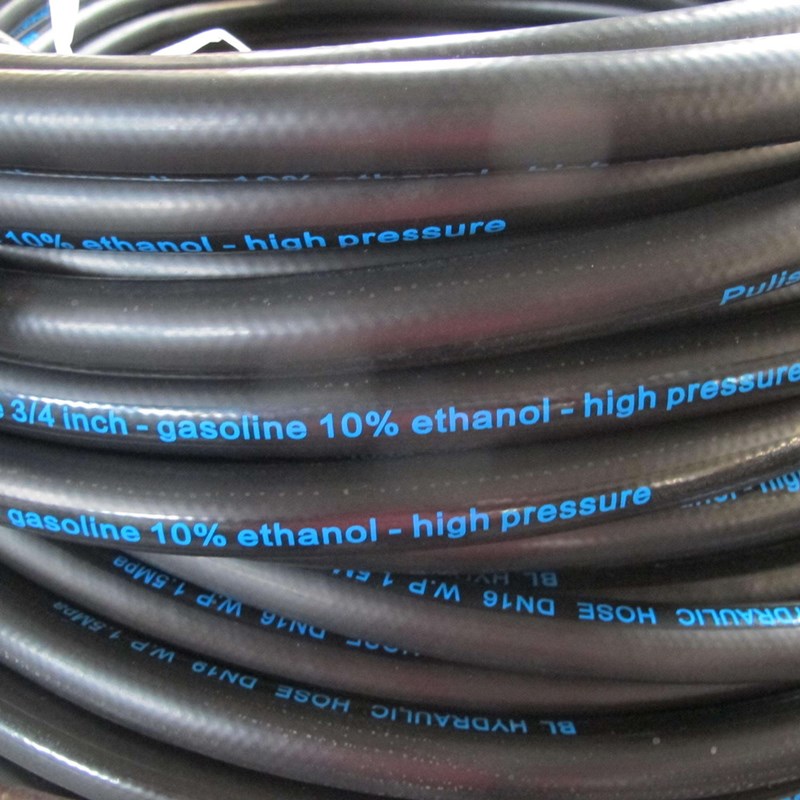
High pressure hydraulic hose is a critical component in fluid power systems, transmitting hydraulic fluid to actuators and other components. These hoses are engineered to withstand extreme pressures, temperatures, and challenging operational environments. Top quality high pressure hydraulic hose manufacturers differentiate themselves through material selection, precise manufacturing processes, and adherence to rigorous industry standards. The performance and reliability of these hoses directly impact the efficiency and safety of the systems they serve, spanning industries from construction and agriculture to manufacturing and aerospace. This guide provides an in-depth analysis of hydraulic hose technology, encompassing material science, manufacturing techniques, performance characteristics, failure modes, and relevant industry regulations. The core pain points in this industry center around ensuring consistent pressure ratings, preventing premature failure due to environmental factors, and maintaining compatibility with evolving hydraulic fluids.
Material Science & Manufacturing
The construction of high pressure hydraulic hose typically involves multiple layers, each contributing to its overall performance. The inner tube, in direct contact with the hydraulic fluid, is commonly manufactured from nitrile rubber (NBR), ethylene propylene diene monomer (EPDM), or polytetrafluoroethylene (PTFE), selected for their chemical resistance and flexibility. NBR offers good resistance to petroleum-based fluids, while EPDM excels in phosphate ester fluid compatibility. PTFE provides exceptional chemical inertness but is more expensive. The reinforcement layer, responsible for withstanding the pressure, is typically constructed from high-tensile steel wire, spirally wound or braided. The number of layers and the wire diameter dictate the hose's working pressure. An exterior cover, usually made of synthetic rubber like polyurethane, provides abrasion and weather resistance. Manufacturing processes include extrusion for the inner tube and cover, calendaring for rubber sheets, and precision winding/braiding for reinforcement. Critical parameters include maintaining consistent rubber compound viscosity during extrusion, achieving uniform wire tension during braiding, and ensuring proper adhesion between layers. Curing processes, involving temperature and pressure control, are vital for vulcanizing the rubber and developing the desired mechanical properties. The steel wire itself undergoes surface treatment to improve adhesion to the rubber matrix. Improper curing leads to reduced tensile strength and accelerated degradation.
Performance & Engineering
The performance of a high pressure hydraulic hose is fundamentally governed by its ability to contain fluid under pressure without failure. Force analysis considers hoop stress within the hose wall, calculated using the thin-walled cylinder formula (σ = Pr/t, where P is pressure, r is radius, and t is wall thickness). Fatigue analysis is crucial, as hoses are subjected to cyclic pressure loading. Finite element analysis (FEA) is widely used to model stress distribution and predict potential failure points, particularly at fittings and bends. Environmental resistance is paramount; exposure to ozone, UV radiation, and extreme temperatures can degrade the rubber components. Hydraulic fluid compatibility is also critical; incompatible fluids can cause swelling, softening, or cracking of the inner tube. Compliance requirements, such as those stipulated by SAE J517 and EN 856, dictate minimum burst pressure, working pressure, and temperature ranges. Bends and fittings introduce localized stress concentrations, requiring careful design and material selection. The bend radius should be minimized to reduce stress, and fittings must be securely crimped to prevent leakage and separation. Additionally, electrostatic discharge (ESD) considerations are important in certain applications to prevent ignition of flammable fluids.
Technical Specifications
| Parameter | Unit | Standard Specification (SAE J517 R1AT) | High-Performance Specification |
|---|---|---|---|
| Working Pressure | MPa | 20.7 | 35.0 |
| Burst Pressure | MPa | 82.7 | 140.0 |
| Temperature Range | °C | -40 to +100 | -55 to +125 |
| Inner Tube Material | - | NBR | PTFE |
| Reinforcement | Layers | 2 Spiral Wire | 4 Spiral Wire |
| Cover Material | - | Synthetic Rubber | Polyurethane |
Failure Mode & Maintenance
Failure modes in high pressure hydraulic hose are diverse. Fatigue cracking, caused by cyclic pressure loading, often initiates at flaws in the reinforcement or at the bond between the reinforcement and the rubber. Bursting occurs when the working pressure exceeds the hose's rated capacity or due to a weakness in the hose wall. Blow-out occurs at fittings if the crimp is insufficient or if the fitting is corroded. Pinholing, characterized by small leaks in the inner tube, is often caused by fluid incompatibility or degradation of the rubber. Abrasion damage to the cover can expose the reinforcement to corrosion. Oxidation and ozone cracking degrade the rubber compounds, reducing their flexibility and strength. Maintenance best practices include regular visual inspections for signs of wear, cracks, or leaks. Hose assemblies should be checked for proper routing and support to prevent kinking and abrasion. Fluid contamination should be minimized through filtration. Periodic pressure testing can identify hoses nearing the end of their service life. Damaged hoses should be replaced immediately. Correct storage is crucial; hoses should be stored in a cool, dry place, away from direct sunlight and ozone sources. Proper handling during installation, avoiding excessive bending or twisting, is also essential.
Industry FAQ
Q: What is the impact of hydraulic fluid type on hose selection?
A: Hydraulic fluid compatibility is paramount. Different fluids have varying chemical properties. For example, phosphate ester fluids require EPDM inner tubes, while petroleum-based fluids are typically compatible with NBR. Using an incompatible fluid can lead to swelling, softening, cracking, and ultimately, hose failure. Always consult fluid compatibility charts and manufacturer recommendations.
Q: How does temperature affect the performance and lifespan of hydraulic hose?
A: Extreme temperatures accelerate rubber degradation. High temperatures can cause hardening and cracking, while low temperatures reduce flexibility and increase the risk of cracking under pressure. Exceeding the hose's specified temperature range significantly reduces its lifespan and compromises its safety. Consider the operating temperature range when selecting hose materials and ensure adequate cooling or insulation is provided.
Q: What are the key considerations for hose fitting selection and crimping?
A: Fittings must be compatible with the hose type and fluid being used. Proper crimping is essential to create a leak-proof seal and ensure the fitting can withstand the operating pressure. Insufficient crimping can lead to blow-out failures, while excessive crimping can damage the hose reinforcement. Use calibrated crimping tools and follow manufacturer's specifications.
Q: How does hose layline marking contribute to safety and traceability?
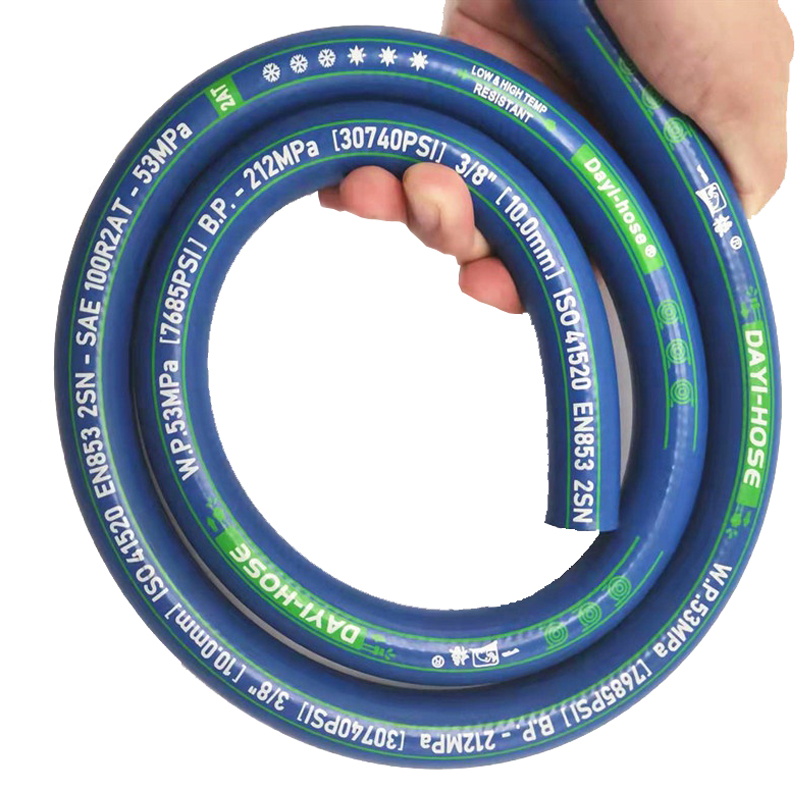
A: Layline markings provide crucial information about the hose, including manufacturer, date of manufacture, working pressure, and hose type. This information aids in traceability and allows for proper identification during inspections and maintenance. It is a critical component of ensuring system safety and accountability.
Q: What is the role of spiral reinforcement versus braided reinforcement in high-pressure hose?
A: Spiral reinforcement generally provides higher pressure ratings and greater flexibility compared to braided reinforcement. Braided reinforcement offers better kink resistance. Spiral hoses are typically used in applications requiring higher pressures and tighter bend radii, while braided hoses are preferred where kink resistance is critical.
Conclusion
Top quality high pressure hydraulic hose is a complex engineered product vital for the safe and efficient operation of numerous industrial systems. Selection requires careful consideration of material science, manufacturing processes, and performance characteristics, with a primary focus on pressure ratings, fluid compatibility, and environmental resistance. Understanding potential failure modes and implementing proactive maintenance procedures are essential for maximizing hose lifespan and preventing costly downtime.
Future advancements in hydraulic hose technology will likely focus on the development of lighter-weight materials, improved abrasion resistance, and enhanced sensor integration for real-time monitoring of hose condition. The integration of smart materials and predictive maintenance algorithms will further enhance the reliability and efficiency of hydraulic systems, minimizing failures and optimizing performance. Adherence to stringent industry standards remains crucial for ensuring product safety and quality.