
Apr . 01, 2024 17:55 Back to list
Thermoplastic Hose Pipe Performance Analysis

Introduction
Thermoplastic hose pipe represents a significant advancement in fluid transfer technology, offering a versatile and cost-effective alternative to traditional rubber and metallic hoses. These hoses are constructed from a range of thermoplastic materials, predominantly polyvinyl chloride (PVC), thermoplastic polyurethane (TPU), and thermoplastic polyolefin (TPO), engineered to exhibit flexibility, durability, and resistance to a variety of chemicals. Their application spans diverse industries including agriculture, irrigation, construction, automotive, and industrial fluid handling. The technical position of thermoplastic hose within the fluid transfer industry is defined by its balance of performance characteristics, ease of manufacturing, and relative cost-effectiveness. Core performance characteristics include pressure resistance, temperature tolerance, chemical compatibility, and abrasion resistance. Unlike rubber hoses, thermoplastic hoses do not require vulcanization, streamlining production and minimizing environmental impact. This guide provides an in-depth exploration of the material science, manufacturing processes, performance engineering, failure modes, and industry standards associated with thermoplastic hose pipe.
Material Science & Manufacturing
The material selection for thermoplastic hose pipe is paramount, dictating its final performance characteristics. PVC, the most commonly used material, offers excellent chemical resistance and low cost, but limited flexibility at low temperatures. TPU provides superior abrasion resistance, flexibility, and low-temperature performance, making it suitable for demanding applications. TPO balances cost and performance, offering good UV resistance and chemical compatibility. Raw material properties, including molecular weight, glass transition temperature (Tg), and crystallinity, directly influence hose flexibility, tensile strength, and permeability. Manufacturing typically involves extrusion, where the thermoplastic material is melted and forced through a die to form a continuous tube. Key parameters during extrusion include melt temperature, screw speed, and die pressure, all of which impact wall thickness uniformity and material density. Reinforcement layers, typically constructed from textile braids (polyester, nylon) or spiral-wound wire (steel, stainless steel), are often incorporated to enhance pressure resistance. The braiding process involves interlacing yarns or wires around the extruded tube, providing hoop strength to prevent bursting under pressure. Post-extrusion processes may include cooling, coiling, and cutting to length. Quality control during manufacturing focuses on dimensional accuracy (inner diameter, outer diameter, wall thickness), burst pressure testing, and visual inspection for defects such as bubbles, voids, or surface imperfections. Chemical compatibility of the thermoplastic material with the intended fluid is critical; improper material selection can lead to swelling, degradation, and eventual hose failure.
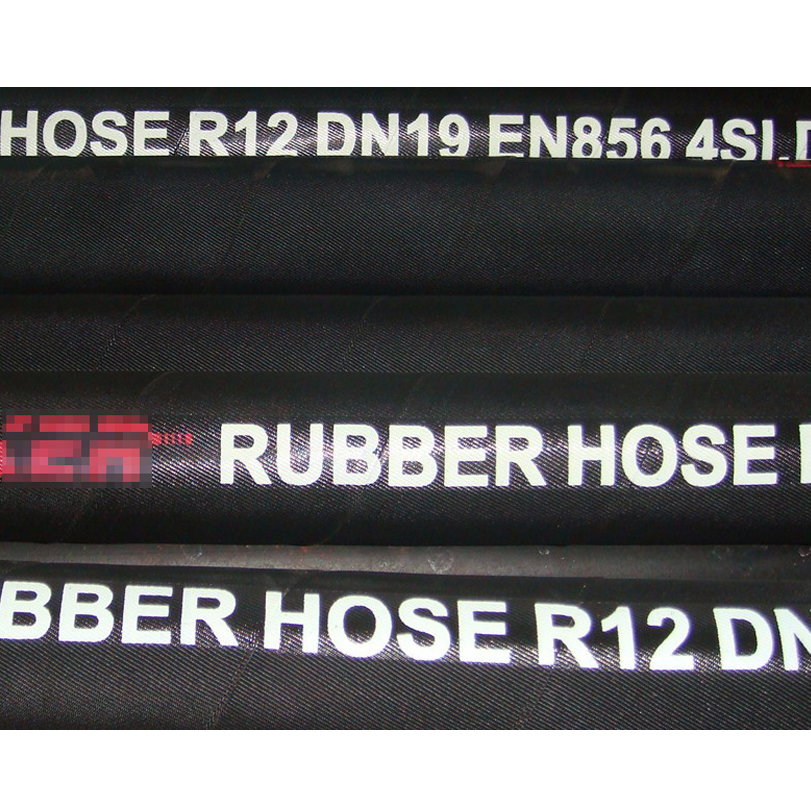
Performance & Engineering
The performance of thermoplastic hose pipe is governed by a complex interplay of material properties, geometric parameters, and operating conditions. Force analysis under pressure considers hoop stress (circumferential stress) and longitudinal stress. Hoop stress is directly proportional to the internal pressure and radius of the hose, and inversely proportional to the wall thickness. Reinforcement layers significantly reduce hoop stress, allowing for higher operating pressures. Fatigue analysis is crucial for applications involving cyclical pressure fluctuations, as repeated stress can lead to crack initiation and propagation. Environmental resistance is another critical performance factor. UV exposure can cause degradation of PVC and TPO, leading to embrittlement and cracking. Temperature extremes can affect material flexibility and strength. Chemical compatibility dictates the hose's resistance to swelling, dissolution, or permeation by the conveyed fluid. Compliance requirements vary depending on the intended application. For potable water applications, hoses must comply with NSF/ANSI 61 standards, ensuring they do not leach harmful contaminants into the water. For food-grade applications, compliance with FDA regulations is mandatory. Automotive hoses must meet SAE specifications for temperature, pressure, and fluid resistance. Functional implementation requires careful consideration of hose routing, connection methods (fittings, clamps), and support structures. Proper installation and support are essential to prevent kinking, abrasion, and excessive stress concentrations.
Technical Specifications
| Material | Operating Pressure (PSI) | Temperature Range (°F) | Burst Pressure (PSI) |
|---|---|---|---|
| PVC | 150 | -20 to 140 | 600 |
| TPU | 300 | -40 to 176 | 1200 |
| TPO | 200 | -40 to 158 | 800 |
| Reinforced PVC (Textile Braid) | 250 | -20 to 176 | 1000 |
| Reinforced TPU (Spiral Wire) | 500 | -67 to 212 | 2000 |
| Reinforced TPO (Spiral Wire) | 350 | -40 to 194 | 1400 |
Failure Mode & Maintenance
Thermoplastic hose pipe can experience various failure modes during operation. Fatigue cracking, particularly at fittings or bends, is a common failure mechanism caused by repeated stress cycles. Delamination, separation of reinforcement layers from the thermoplastic matrix, can occur due to inadequate bonding or exposure to harsh chemicals. Degradation, caused by UV exposure, ozone attack, or chemical reactions, leads to embrittlement and loss of flexibility. Oxidation, particularly at elevated temperatures, can cause cross-linking and cracking. Abrasion, caused by rubbing against surfaces, can wear through the hose wall. Kinking, caused by sharp bends, restricts flow and can lead to localized stress concentrations and failure. Maintenance strategies include regular visual inspection for cracks, abrasions, and signs of degradation. Pressure testing can identify leaks or weaknesses. Proper storage in a cool, dry, and dark environment can minimize UV degradation and oxidation. Avoid sharp bends and excessive tension during installation. Use appropriate fittings and clamps to ensure secure connections. Flush the hose periodically to remove sediment and prevent clogging. Replace hoses exhibiting signs of significant wear or damage. Consider using protective sleeves or guards to shield hoses from abrasion and UV exposure in harsh environments. Maintaining accurate records of hose usage and maintenance can aid in predicting failure rates and optimizing replacement schedules.
Industry FAQ
Q: What is the primary difference between PVC and TPU thermoplastic hose in terms of abrasion resistance?
A: TPU (Thermoplastic Polyurethane) exhibits significantly superior abrasion resistance compared to PVC (Polyvinyl Chloride). PVC, while cost-effective, is prone to wear and tear from abrasive materials or environments. TPU's inherent material properties provide a more durable surface that can withstand higher levels of friction and impact without significant degradation, making it ideal for applications involving slurry transfer or high-wear conditions.
Q: How does temperature affect the performance of TPO hose, and what precautions should be taken?
A: TPO (Thermoplastic Polyolefin) performance is moderately affected by temperature. While it offers good low-temperature flexibility, exceeding its maximum operating temperature (typically around 158°F / 70°C) can lead to softening, reduced pressure resistance, and ultimately, failure. Precautions include ensuring the conveyed fluid remains within the hose’s specified temperature range, avoiding direct exposure to heat sources, and selecting a higher-temperature-rated material (like TPU) for demanding thermal applications.
Q: What reinforcement options are available for thermoplastic hose, and how do they impact pressure ratings?
A: Common reinforcement options include textile braids (typically polyester or nylon) and spiral-wound wire (steel or stainless steel). Textile braids offer moderate pressure enhancement and flexibility, increasing pressure ratings by 50-100% compared to unreinforced hoses. Spiral-wound wire provides significantly higher pressure resistance, often doubling or tripling the pressure rating. The choice depends on the required pressure, flexibility needs, and the conveyed fluid’s compatibility with the reinforcement material.
Q: What are the critical chemical compatibility considerations when selecting a thermoplastic hose for a specific application?
A: Chemical compatibility is paramount. Exposure to incompatible chemicals can cause swelling, softening, cracking, or dissolution of the hose material, leading to premature failure. It’s crucial to consult chemical resistance charts specific to the thermoplastic material (PVC, TPU, TPO) and the conveyed fluid. Consider the concentration of the chemical, temperature, and duration of exposure. In cases of uncertainty, conducting a compatibility test is highly recommended.
Q: What are the key NSF/ANSI 61 requirements for thermoplastic hoses used in potable water applications?
A: NSF/ANSI 61 certification ensures that the thermoplastic hose does not leach harmful levels of contaminants into the potable water supply. Key requirements include stringent testing of extractable compounds, ensuring compliance with maximum contaminant levels (MCLs) established by regulatory agencies. The materials used in the hose construction must meet specific compositional requirements, and the manufacturing process must be controlled to prevent contamination. Certification provides assurance of product safety and compliance with public health standards.
Conclusion
Thermoplastic hose pipe represents a versatile and increasingly crucial component in numerous industrial and commercial fluid handling systems. Its advantages in terms of cost-effectiveness, ease of manufacturing, and adaptability to a wide range of applications have driven its adoption across diverse sectors. Understanding the underlying material science, manufacturing nuances, and performance characteristics is paramount for ensuring optimal selection, installation, and longevity. Careful consideration of factors such as operating pressure, temperature, chemical compatibility, and environmental conditions will enable engineers and procurement managers to specify the most appropriate thermoplastic hose for their specific needs.
Looking forward, advancements in thermoplastic materials and manufacturing techniques will continue to enhance the performance and durability of these hoses. The development of more sustainable thermoplastic formulations, coupled with innovative reinforcement technologies, will address growing concerns regarding environmental impact and extended service life. Furthermore, the integration of smart sensing technologies into thermoplastic hoses will enable real-time monitoring of pressure, temperature, and flow rate, facilitating predictive maintenance and minimizing downtime. Continued research and development will solidify the role of thermoplastic hose pipe as a cornerstone of modern fluid transfer infrastructure.

