
Apr . 01, 2024 17:55 Back to list
Thermoplastic Hose Manufacturers Performance Analysis
Introduction
Thermoplastic hoses represent a critical component across numerous industrial sectors, including automotive, agriculture, chemical processing, and fluid transfer. Unlike rubber hoses relying on vulcanization, thermoplastic hoses are manufactured from polymers that become pliable upon heating and solidify upon cooling, allowing for complex geometries and consistent material properties. This manufacturing process grants them superior resistance to a wide range of chemicals, abrasion, and temperature extremes. Their position in the industrial chain falls between raw polymer production (polypropylene, polyethylene, PVC, TPU, etc.) and end-user applications requiring reliable fluid conveyance. Core performance characteristics revolve around pressure rating, chemical compatibility, flexibility, temperature resistance, and burst strength, dictated by polymer selection and manufacturing parameters. A key industry pain point centers around achieving consistent wall thickness and dimensional stability during extrusion, impacting long-term performance and increasing the risk of catastrophic failure.
Material Science & Manufacturing
The most common thermoplastic polymers used in hose manufacturing include Polyvinyl Chloride (PVC), Polypropylene (PP), Polyethylene (PE – including HDPE and LDPE), Thermoplastic Polyurethane (TPU), and Polyamide (Nylon). PVC offers excellent chemical resistance and low cost but limited temperature range. PP provides good chemical resistance and higher temperature capability but lower flexibility. PE is cost-effective and flexible but suffers from limited temperature and pressure ratings. TPU delivers exceptional abrasion resistance, flexibility, and oil resistance, making it suitable for demanding applications. Nylon offers high strength and temperature resistance but is susceptible to moisture absorption.
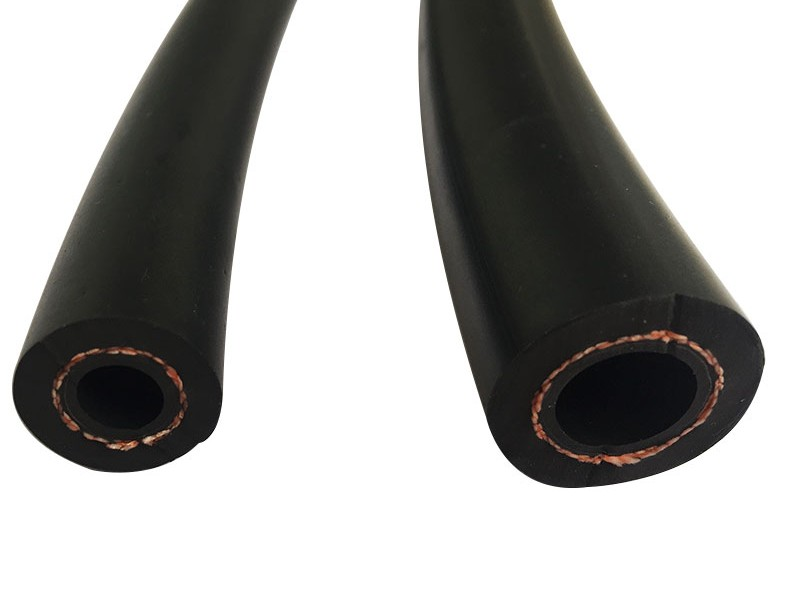
Manufacturing typically involves extrusion, where molten polymer is forced through a die to create the hose shape. Critical parameters include melt temperature, die pressure, extrusion speed, and cooling rate. Reinforcement layers, often comprised of textile braiding (polyester, nylon) or wire spiraling (steel, stainless steel), are frequently incorporated to enhance pressure resistance and prevent kinking. The reinforcement process requires precise tension control to avoid distortions. Post-extrusion processes often include sizing (maintaining diameter), printing (identification markings), and cutting to length. Maintaining consistent material viscosity is paramount; polymer degradation due to excessive heat or shear stress can lead to reduced strength and increased permeability. Properly calibrated dies and consistent cooling are critical for achieving uniform wall thickness and preventing ovality. For multi-layer hoses, co-extrusion techniques are employed, requiring careful control of layer adhesion and interface compatibility.

Performance & Engineering
Performance analysis of thermoplastic hoses necessitates consideration of several key engineering principles. Burst pressure is determined by the tensile strength of the polymer and reinforcement material, coupled with hose diameter and wall thickness, calculated using Barlow's formula (P = 2St/D, where P=Pressure, S=Tensile Strength, t=wall thickness, D=Diameter). Flexibility is governed by the polymer’s modulus of elasticity and the hose’s construction (reinforcement type and pitch). Fatigue life is critical for applications involving repeated bending and flexing, requiring assessment through cyclic tensile testing. Chemical compatibility is evaluated by immersing hose samples in target fluids for extended periods and monitoring for swelling, softening, or degradation. Temperature resistance dictates the upper and lower operating limits, determined by the polymer's glass transition temperature (Tg) and degradation temperature. Environmental resistance demands consideration of UV exposure (leading to polymer chain scission), ozone cracking (particularly relevant for unsaturated polymers), and hydrolysis (water absorption affecting mechanical properties). Compliance requirements often include adherence to industry standards for potable water safety (NSF/ANSI 61) or food-grade applications (FDA 21 CFR 177). Finite Element Analysis (FEA) is frequently used to model stress distribution under various loading conditions and optimize hose design.
Technical Specifications
| Parameter | PVC Hose | PP Hose | TPU Hose | Nylon Hose |
|---|---|---|---|---|
| Operating Temperature (°C) | -20 to +60 | -10 to +90 | -40 to +80 | -40 to +120 |
| Burst Pressure (MPa) | 1.0 - 3.5 | 2.0 - 5.0 | 3.0 - 8.0 | 5.0 - 15.0 |
| Tensile Strength (MPa) | 50 - 70 | 60 - 80 | 65 - 90 | 80 - 120 |
| Elongation at Break (%) | 150 - 300 | 200 - 400 | 300 - 600 | 250 - 500 |
| Chemical Resistance | Good (acids, bases) | Excellent (most chemicals) | Excellent (oils, fuels) | Good (hydrocarbons) |
| Abrasion Resistance | Moderate | Moderate | Excellent | Good |
Failure Mode & Maintenance
Thermoplastic hose failure modes are diverse and dependent on operating conditions. Fatigue cracking, particularly at flex points, is common due to repeated stress cycles. Environmental stress cracking (ESC) occurs when the hose is exposed to chemicals that reduce its tensile strength. Kinking, leading to localized stress concentration and eventual rupture, can occur if the hose lacks sufficient reinforcement. Permeation, or the leakage of fluids through the hose wall, arises from polymer degradation or insufficient barrier properties. Hydrolysis, especially in nylon hoses, weakens the material and reduces its burst pressure. Oxidation, accelerated by elevated temperatures and UV exposure, causes embrittlement and cracking.
Preventative maintenance is crucial for extending hose lifespan. Regular visual inspections should identify cuts, abrasions, swelling, or discoloration. Pressure testing can detect leaks or weakening of the hose wall. Avoid exceeding the maximum operating pressure and temperature. Store hoses in a cool, dry place away from direct sunlight and harsh chemicals. For critical applications, implement a hose replacement schedule based on operating hours or fluid exposure. When replacing hoses, ensure compatibility with the conveyed fluid and proper installation techniques, avoiding sharp bends or excessive tension. Proper handling and storage, coupled with diligent inspection, minimize the risk of premature failure and ensure reliable operation.
Industry FAQ
Q: What is the impact of different reinforcement materials (textile vs. wire) on hose performance?
A: Textile reinforcement (polyester, nylon) provides flexibility and resistance to kinking, making it suitable for low-to-medium pressure applications. Wire spiraling (steel, stainless steel) offers significantly higher burst pressure and prevents kinking in high-pressure systems, but reduces flexibility and increases weight. The choice depends on the specific application’s pressure and flexibility requirements.
Q: How does the polymer selection affect chemical compatibility?
A: Polymer selection is paramount for chemical compatibility. PVC offers good resistance to acids and bases, but is vulnerable to solvents. PP excels with many chemicals but struggles with chlorinated hydrocarbons. TPU boasts broad chemical resistance, particularly to oils and fuels. Nylon provides decent resistance to hydrocarbons, but is susceptible to degradation by strong acids and alkalis. Always consult chemical resistance charts before selecting a hose for a specific fluid.
Q: What are the common causes of premature hose failure in hydraulic systems?
A: Premature failure in hydraulic systems often stems from exceeding pressure limits, fluid contamination, improper installation (sharp bends, twisting), or using incompatible hose materials. Regular fluid analysis and filter maintenance are essential to prevent contamination. Ensuring correct hose routing and avoiding stress concentrations during installation will extend service life.
Q: How can I determine the appropriate hose temperature range for my application?
A: Consider both the fluid temperature and the ambient temperature. The hose’s operating temperature range must exceed both values. Refer to the polymer's glass transition temperature (Tg) and degradation temperature to ensure the hose maintains its mechanical properties within the operating conditions. Continuous exposure to temperatures near the upper limit will shorten hose lifespan.
Q: What testing standards should I look for when evaluating a thermoplastic hose manufacturer?
A: Reputable manufacturers should demonstrate compliance with relevant standards such as ISO 3099 (hydraulic hoses), SAE J30R (fuel injection hoses), and EN ISO 1307 (textile reinforced hoses). Testing should include burst pressure testing, tensile strength testing, chemical resistance testing, and accelerated aging tests. Evidence of third-party certification is a positive indicator of quality control.
Conclusion
Thermoplastic hose technology offers a versatile and robust solution for fluid transfer across a broad spectrum of industrial applications. The careful selection of polymer materials, optimized manufacturing processes, and thorough performance analysis are crucial for ensuring long-term reliability and preventing premature failure. Understanding the interplay between material properties, operating conditions, and relevant industry standards is paramount for successful implementation.
Future advancements in thermoplastic hose technology are likely to focus on the development of novel polymer blends with enhanced chemical resistance, temperature stability, and abrasion resistance. Smart hose technologies incorporating embedded sensors for pressure monitoring, leak detection, and condition assessment will also gain prominence, enabling predictive maintenance and optimizing operational efficiency. The continued emphasis on sustainable materials and manufacturing processes will drive the development of bio-based thermoplastic hoses, reducing environmental impact and promoting circular economy principles.