
Apr . 01, 2024 17:55 Back to list
teflon hose Performance Analysis
Introduction
Polytetrafluoroethylene (PTFE) hose, commonly referred to as Teflon hose, is a fluoropolymer-lined flexible conduit employed in a diverse array of industrial applications. Its technical position in the industry chain lies between raw material suppliers (PTFE resin manufacturers) and end-user sectors including automotive, chemical processing, food & beverage, medical, and aerospace. Core performance characteristics are defined by its exceptional chemical inertness, high-temperature resistance (typically -100°F to +500°F depending on construction), low coefficient of friction, and excellent dielectric properties. This combination makes Teflon hose crucial for transferring corrosive fluids, high-purity substances, and sensitive materials where contamination must be avoided. Unlike rubber or metallic hoses, Teflon hose resists degradation from a wide spectrum of aggressive chemicals, contributing to prolonged service life and reduced maintenance costs. The fundamental pain point addressed by Teflon hose is the reliable and safe transfer of challenging media that would rapidly compromise other hose materials.
Material Science & Manufacturing
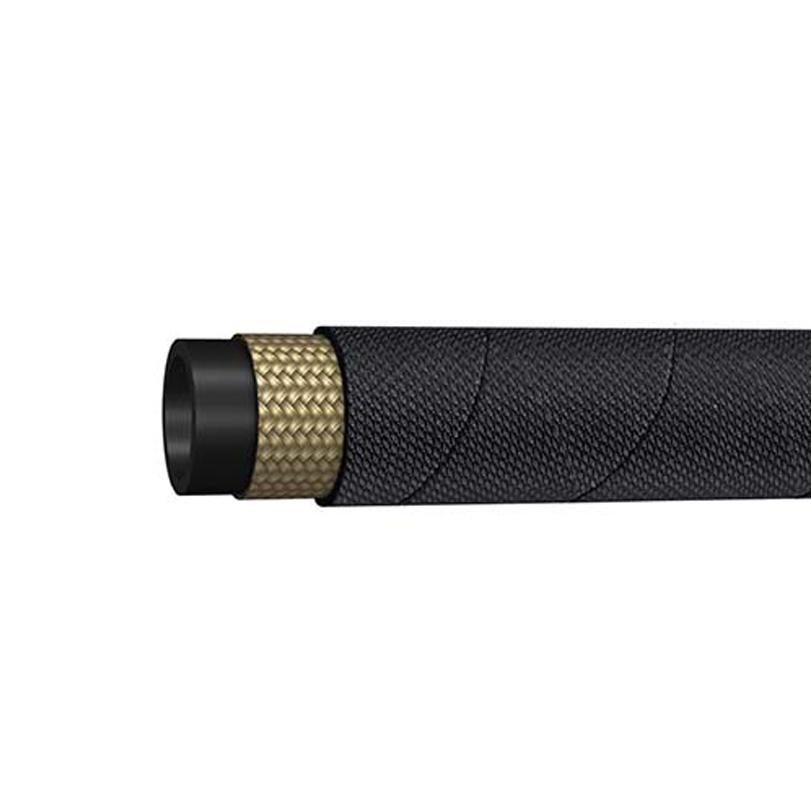
The primary raw material is PTFE resin, a synthetic fluoropolymer comprised of repeating carbon-fluorine bonds. This bonding structure imparts exceptional chemical resistance and low surface energy. PTFE resin is inherently difficult to process due to its high melt viscosity and lack of melt flow. Manufacturing Teflon hose necessitates specialized techniques. A common method is extrusion, where PTFE resin powder is compacted and sintered. Sintering involves heating the material below its melting point, causing the particles to fuse together. Controlling the sintering temperature and duration is critical for achieving desired density and mechanical properties. Another process is lining a braided reinforcement (typically stainless steel or other high-strength alloys) with PTFE. The braid provides burst strength, while the PTFE inner layer offers chemical compatibility. Key parameters controlled during manufacturing include resin molecular weight (affecting processability and final properties), sintering temperature profile (impacts density and crystallinity), braid density (determines pressure rating), and dimensional tolerances (ensuring proper fit and sealing). Additional materials incorporated include bronze or nickel alloy in specific applications to enhance conductivity or permeability characteristics. Post-manufacturing quality control typically involves burst pressure testing, leak testing, and dimensional inspection to verify conformance to specifications.
Performance & Engineering
Teflon hose performance is governed by several critical engineering principles. Burst pressure, determined by the reinforcement braid and PTFE wall thickness, is a primary safety factor, calculated using Barlow’s formula (P = 2St/D, where P is pressure, S is tensile strength, t is wall thickness, and D is diameter). Flexural fatigue resistance is essential for applications involving repeated bending. This is assessed through cyclical bending tests, evaluating the number of cycles to failure. Permeability, the rate at which gases or liquids pass through the hose wall, is a concern for certain applications (e.g., fuel lines). Permeability is inversely proportional to wall thickness and dependent on the PTFE resin grade. Chemical compatibility is paramount; PTFE exhibits broad resistance but can be affected by highly alkaline metals and fluorinated solvents under extreme conditions. Temperature cycling presents a challenge due to PTFE’s relatively high coefficient of thermal expansion. Proper fitting design and hose routing are necessary to accommodate dimensional changes without inducing stress. Compliance requirements, such as FDA regulations for food-grade applications or USP Class VI certification for medical use, dictate material purity and manufacturing processes. Electrical resistance is also a key factor in certain applications, and conductive PTFE liners are available incorporating carbon or other additives.
Technical Specifications
| Parameter | Unit | Typical Value (Standard Grade PTFE) | Typical Value (Conductive PTFE) |
|---|---|---|---|
| Working Pressure | psi | 300 | 250 |
| Burst Pressure | psi | 900 | 750 |
| Temperature Range | °F | -100 to +500 | -100 to +500 |
| Tensile Strength | psi | 4000 | 3500 |
| Elongation at Break | % | 200 | 180 |
| Permeability (Nitrogen) | cc-mil/ft²/day | 0.05 | 0.05 |
Failure Mode & Maintenance
Common failure modes in Teflon hose include permeation (especially at elevated temperatures or with certain solvents), permeation leading to embrittlement of the PTFE, fatigue cracking in the reinforcement braid due to repeated flexing, and degradation of end fittings. Permeation occurs when gases or liquids slowly diffuse through the PTFE wall, potentially compromising the integrity of the contained fluid or causing dimensional swelling. Fatigue cracking manifests as small cracks in the braid, eventually leading to complete failure under pressure. End fitting failure often results from corrosion, improper installation (over-tightening or under-tightening), or material incompatibility between the fitting and hose. Oxidation can occur at very high temperatures, causing surface degradation. Maintenance recommendations include regular visual inspection for cracks, swelling, or discoloration. Pressure testing should be performed periodically to verify hose integrity. Proper installation with compatible fittings is critical. Avoid exceeding the rated pressure and temperature limits. If corrosion is a concern, use stainless steel or chemically resistant fittings. For applications involving highly abrasive fluids, consider using a hose with a thicker PTFE wall or incorporating a protective sleeve.
Industry FAQ
Q: What is the impact of PTFE molecular weight on hose performance?
A: Higher molecular weight PTFE generally results in improved tensile strength, creep resistance, and chemical inertness. However, it can also increase processing difficulty and cost. Lower molecular weight PTFE is easier to process but may exhibit reduced mechanical properties.
Q: Can Teflon hose be used with highly concentrated acids?
A: Generally, yes. PTFE demonstrates excellent resistance to most acids. However, prolonged exposure to extremely concentrated hydrofluoric acid or oleum (fuming sulfuric acid) can cause some degradation.
Q: How does the braid material affect the hose’s pressure rating?
A: The tensile strength and construction of the braid directly correlate with the hose's burst pressure. Stainless steel 304 and 316 are common choices, with 316 offering superior corrosion resistance. Increased braid density also enhances pressure capabilities.
Q: What are the considerations for using Teflon hose in vacuum applications?
A: PTFE can exhibit outgassing, especially at elevated temperatures, which may be undesirable in vacuum systems. Selecting a low-outgassing PTFE formulation and pre-baking the hose can mitigate this issue. Permeability can also be a concern.
Q: How do I determine the correct hose size for my application?
A: Consider the flow rate, fluid viscosity, and pressure drop. Calculate the required internal diameter based on these parameters. Account for any fittings or restrictions in the system and ensure compatibility with the connection types.
Conclusion
Teflon hose represents a critical enabling technology for numerous industries demanding reliable and chemically resistant fluid transfer. Its unique combination of properties – stemming from the fundamental chemistry of PTFE – allows it to function effectively in environments where other materials would rapidly fail. The manufacturing process, while challenging, is well-established and yields products with consistent performance characteristics.
The ongoing development of specialized PTFE formulations, including conductive grades and those with enhanced permeation resistance, continues to expand the application scope of Teflon hose. Future trends will likely focus on reducing manufacturing costs, improving sustainability through recycling initiatives, and incorporating smart sensing capabilities for real-time performance monitoring.