
Apr . 01, 2024 17:55 Back to list
teflon flex hose Performance Analysis
Introduction
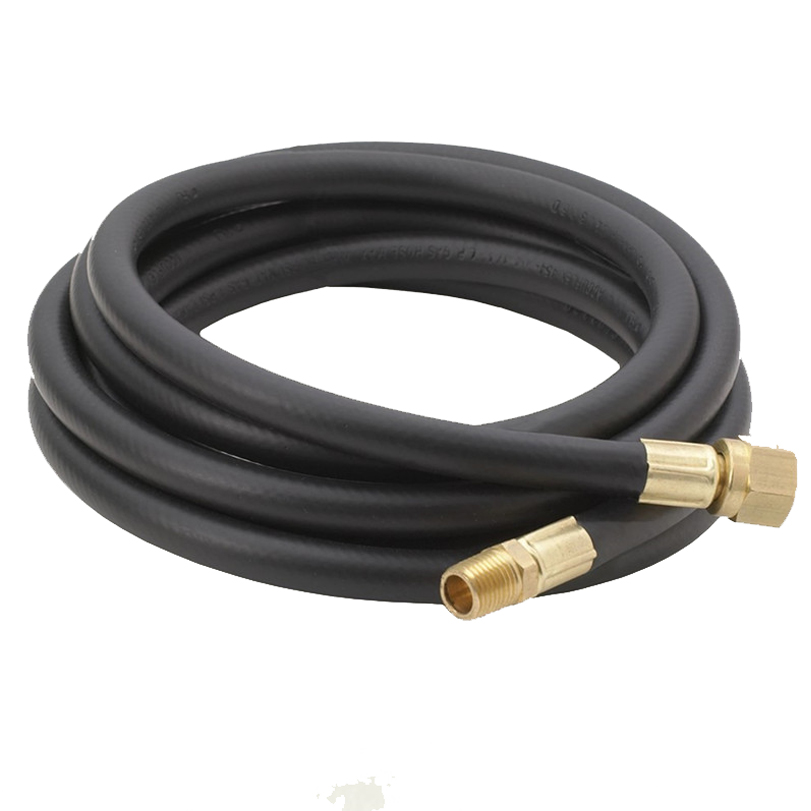
Teflon flex hose, commonly known as PTFE (Polytetrafluoroethylene) lined hose, represents a critical component in fluid transfer systems across a diverse range of industrial applications. Positioned within the industrial chain as a flexible conduit, it serves as an alternative to rigid piping, offering advantages in environments demanding resistance to corrosive chemicals, high temperatures, and extreme pressures. Its core performance characteristics center around its chemical inertness, broad temperature range (-100°F to +500°F), and low coefficient of friction, enabling the safe and efficient transport of aggressive media. The increasing demand for Teflon flex hose stems from heightened safety regulations and the need for reliable performance in challenging industrial processes, particularly within chemical processing, pharmaceutical manufacturing, and automotive applications. A key pain point addressed by these hoses is the prevention of contamination in sensitive processes and minimizing downtime due to material degradation and failure.
Material Science & Manufacturing
The primary raw material for Teflon flex hose is PTFE resin, renowned for its exceptional chemical resistance, dielectric properties, and low friction coefficient. The PTFE resin’s molecular structure, a long chain of carbon atoms bonded to fluorine, imparts its inertness and thermal stability. Beyond PTFE, typical constructions involve an inner layer of PTFE, a braided reinforcement layer (often stainless steel, providing pressure resistance), and an outer protective cover (typically polyurethane or PVC, offering abrasion resistance). Manufacturing begins with the extrusion of the PTFE resin into a seamless tube. This process demands precise control of extrusion temperature (around 380°C) and die geometry to ensure uniform wall thickness and minimize defects. Subsequently, the stainless steel braid is helically wound around the PTFE tube, often using automated braiding machines. The braid angle is critical; steeper angles provide higher burst pressure resistance but reduced flexibility. Finally, the outer cover is extruded over the braided structure. Key parameters controlled during outer cover extrusion include melt temperature, screw speed, and cooling rate. Improper cooling can lead to surface imperfections and reduced durability. Sintering, a heat treatment process applied to the PTFE tube post-extrusion, is crucial for achieving optimal mechanical properties and dimensional stability. Quality control involves hydrostatic testing to verify burst pressure, dielectric strength testing, and chemical resistance verification.
Performance & Engineering
The performance of Teflon flex hose is dictated by several engineering considerations, primarily concerning pressure handling, temperature resilience, and chemical compatibility. Force analysis involves evaluating hoop stress within the PTFE liner under internal pressure, as well as tensile stress in the braided reinforcement. The braid's material and construction (wire diameter, braid angle) directly influence the hose’s burst pressure rating. Finite Element Analysis (FEA) is frequently employed to model stress distributions under various operating conditions. Environmental resistance is paramount; prolonged exposure to UV radiation can degrade the outer cover, reducing its protective capabilities. Therefore, UV-stabilized polymers are often used for the outer layer. Temperature cycling induces expansion and contraction, placing stress on the PTFE liner and braid interface. The coefficient of thermal expansion mismatch between PTFE and stainless steel must be accounted for in the design. Chemical compatibility is assessed by exposing the hose to specific chemicals of interest for extended periods, monitoring for swelling, cracking, or loss of mechanical properties. Compliance requirements vary by industry. For example, in the pharmaceutical industry, hoses must comply with USP Class VI standards for biocompatibility. In the food and beverage industry, FDA compliance is essential, ensuring the absence of harmful leachables. Bend radius is a critical engineering parameter; exceeding the minimum bend radius can induce kinking and reduce flow capacity, while repeated bending contributes to fatigue failure of the braid.
Technical Specifications
| Parameter | Standard Grade | Premium Grade | High-Temperature Grade |
|---|---|---|---|
| Working Pressure (PSI) | 300 | 500 | 200 |
| Burst Pressure (PSI) | 900 | 1500 | 600 |
| Temperature Range (°F) | -100 to +450 | -100 to +500 | -20 to +600 |
| Inner Diameter (Inches) | 0.25 - 4 | 0.25 - 6 | 0.5 - 3 |
| Outer Diameter (Inches) | 0.375 - 4.5 | 0.5 - 6.5 | 0.625 - 3.5 |
| Braid Material | 304 Stainless Steel | 316 Stainless Steel | Inconel 625 |
Failure Mode & Maintenance
Teflon flex hose, while robust, is susceptible to several failure modes. Fatigue cracking of the stainless steel braid is a common issue, particularly in applications involving repeated bending or pressure cycling. This is exacerbated by corrosion in harsh environments. Delamination, the separation of the PTFE liner from the braid, can occur due to inadequate bonding during manufacturing or prolonged exposure to high temperatures and aggressive chemicals. Degradation of the PTFE liner itself, though slow, can occur with exposure to certain highly reactive chemicals or prolonged UV exposure. Oxidation of the stainless steel braid is also a potential failure point, leading to weakening of the reinforcement. Permeation, the diffusion of fluids through the PTFE liner, can occur with certain gases or volatile organic compounds, although PTFE offers excellent barrier properties. Maintenance protocols should include regular visual inspections for signs of cracking, swelling, or delamination. Pressure testing should be performed periodically to verify the hose’s integrity. Avoid exceeding the recommended working pressure and bend radius. When handling corrosive chemicals, verify the hose’s compatibility with the specific medium. Damaged hoses should be replaced immediately; repair is generally not recommended due to the risk of compromising the hose’s structural integrity. Storage should be in a cool, dry place, away from direct sunlight and exposure to ozone.
Industry FAQ
Q: What is the impact of chemical concentration on the lifespan of a Teflon flex hose?
A: Chemical concentration is directly proportional to the rate of degradation. Higher concentrations of aggressive chemicals accelerate permeation, swelling, and potential cracking of the PTFE liner. It’s crucial to consult a chemical compatibility chart and select a hose specifically rated for the anticipated chemical exposure. Continuous exposure to even moderately aggressive chemicals will shorten the hose’s service life compared to intermittent exposure.
Q: How does the braid construction affect the hose's resistance to kinking?
A: A tighter braid (higher braid density) provides increased rigidity and resistance to kinking, but at the expense of flexibility. The braid angle also plays a role; a shallower braid angle offers greater flexibility but reduced burst pressure capability. Selecting the appropriate braid construction requires a trade-off between flexibility, kink resistance, and pressure requirements.
Q: What are the considerations for using Teflon flex hose in vacuum applications?
A: PTFE is inherently low-permeability, making it suitable for vacuum applications. However, maintaining a tight seal at the hose connections is critical. The hose must be able to withstand the implosive forces associated with vacuum. Collapsible hoses should be avoided. Reinforcement with a spring or helix may be necessary to prevent collapse.
Q: What are the cleaning procedures for Teflon flex hose after exposure to process fluids?
A: Cleaning procedures depend on the nature of the process fluid. Generally, a mild detergent solution and warm water are sufficient for removing residue. Avoid abrasive cleaners that could damage the PTFE liner. For stubborn residues, compatible solvents can be used, but always verify chemical compatibility first. Thorough rinsing with water is essential to remove all traces of cleaning agents.
Q: What is the role of the outer cover in protecting the hose?
A: The outer cover provides critical protection against abrasion, UV radiation, and environmental factors. It shields the stainless steel braid from corrosion and prevents damage from external impacts. The material of the outer cover (polyurethane, PVC, etc.) should be selected based on the specific environmental conditions and potential hazards.
Conclusion
Teflon flex hose remains a vital component in numerous industrial fluid transfer systems, offering a unique combination of chemical inertness, temperature resistance, and flexibility. Understanding the material science, manufacturing processes, and engineering considerations outlined in this guide is crucial for selecting the appropriate hose for specific applications. Proper maintenance and adherence to operating guidelines are essential for maximizing the hose’s lifespan and ensuring safe, reliable performance.
As industrial processes become more demanding and regulations more stringent, the role of high-performance fluid transfer solutions like Teflon flex hose will continue to grow. Future developments may focus on enhanced materials, improved manufacturing techniques, and integrated sensor technologies for real-time monitoring of hose condition and performance. Careful attention to detail throughout the entire lifecycle – from material selection to maintenance – will ensure the continued effectiveness and safety of these critical industrial components.

