
Apr . 01, 2024 17:55 Back to list
steel wire spiral hydraulic hose supplier Performance Analysis
Introduction
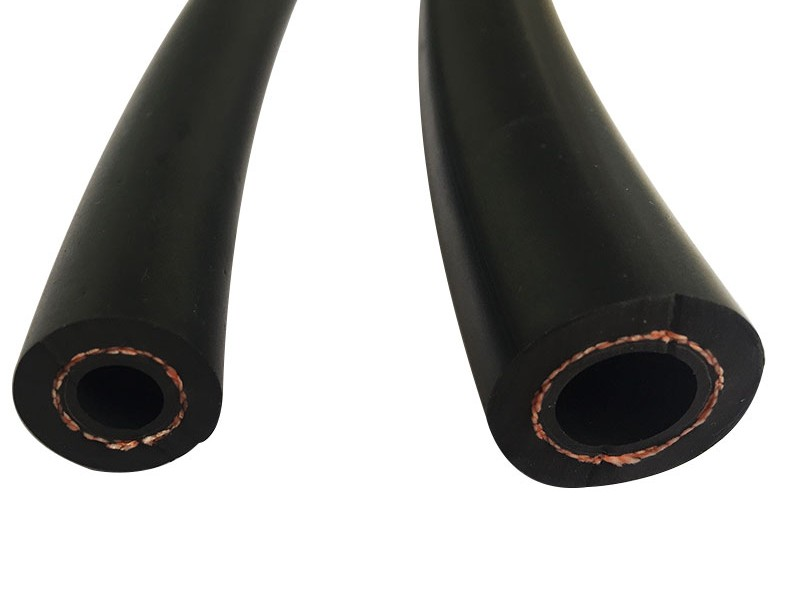
Steel wire spiral hydraulic hose represents a critical component in fluid power systems across diverse industries including construction, agriculture, mining, and manufacturing. These hoses are engineered to convey hydraulic fluid under high pressure, enabling the efficient transmission of power for operating heavy machinery. Unlike low-pressure hoses, steel wire spiral reinforcement provides enhanced pressure capability, kink resistance, and dimensional stability. The construction comprises an inner tube, multiple layers of high-tensile steel wire spiraled between rubber reinforcement layers, and an outer cover providing abrasion and environmental protection. Key performance characteristics include burst pressure, working pressure, temperature range, and fluid compatibility. The selection of an appropriate hose is paramount to system reliability, safety, and longevity; improper hose specification can lead to catastrophic failure and significant downtime. This guide provides an in-depth technical analysis of steel wire spiral hydraulic hoses, covering material science, manufacturing processes, performance parameters, failure modes, and relevant industry standards.
Material Science & Manufacturing
The performance of a steel wire spiral hydraulic hose is intrinsically linked to the properties of its constituent materials. The inner tube is commonly formulated from nitrile rubber (NBR) for general oil-based hydraulic fluids, offering excellent resistance to petroleum-based products, abrasion, and moderate temperatures (typically -40°C to +100°C). For more demanding applications involving phosphate ester fluids, fluoroelastomers (FKM/Viton) are employed, providing superior chemical resistance and a wider temperature operating range (-30°C to +150°C). The reinforcement layers consist of high-tensile steel wire, typically carbon steel, treated with zinc plating for corrosion protection. The wire’s tensile strength is a critical parameter; higher strength equates to increased burst pressure capability. The outer cover is usually constructed from Chloroprene rubber (CR) or Ethylene Propylene Diene Monomer (EPDM) rubber. CR provides excellent resistance to ozone, weathering, and abrasion, while EPDM excels in heat resistance and compatibility with certain specialized fluids.
Manufacturing involves a continuous process. The inner tube is extruded, followed by the spiraling of steel wire layers around it. Each wire layer is encased in a rubber compound, building up the reinforcement structure. Critical parameters during this process include wire tension, pitch (the distance between wire spirals), and rubber extrusion consistency. Variations in these parameters directly impact hose pressure rating and structural integrity. After reinforcement, the hose undergoes vulcanization – a curing process using heat and pressure – to crosslink the rubber polymers, enhancing its elasticity, strength, and resistance to degradation. Precise temperature and time control are essential during vulcanization to achieve optimal rubber properties. Finally, the outer cover is extruded and cured, completing the hose assembly. Quality control throughout the process includes dimensional checks, pressure testing to specified burst pressures (typically 3:1 or 4:1 safety factor), and visual inspection for defects.

Performance & Engineering
The performance of steel wire spiral hydraulic hose is governed by several key engineering principles. Hoop stress, arising from internal fluid pressure, is a primary concern. The steel wire reinforcement is strategically designed to counteract this stress, preventing hose expansion and failure. The number of spiral layers and the wire tensile strength directly influence the hose’s burst pressure. Finite element analysis (FEA) is often employed during the design phase to optimize the reinforcement structure and predict stress distribution under various loading conditions. Fatigue resistance is another critical consideration, particularly in applications involving pulsating pressure. Repeated pressure cycles can lead to fatigue cracking in the steel wire or rubber components. The hose’s bend radius must also be carefully considered; exceeding the minimum bend radius can induce stress concentrations and reduce the hose’s lifespan. Environmental factors, such as temperature extremes, exposure to UV radiation, and chemical exposure, can also impact performance. Temperature affects rubber elasticity and can lead to hardening or softening, while UV radiation can cause rubber degradation. Compatibility with the hydraulic fluid is paramount; incompatible fluids can cause swelling, softening, or cracking of the inner tube. Industry standards, such as SAE J517 and EN 853, define performance requirements and testing procedures to ensure hose safety and reliability.
Technical Specifications
| Parameter | Unit | SAE 100R4 | SAE 100R6 |
|---|---|---|---|
| Working Pressure | MPa | 31.5 | 21.0 |
| Burst Pressure | MPa | 105 | 63 |
| Temperature Range | °C | -40 to +100 | -40 to +100 |
| Inner Tube | Material | NBR (Nitrile Rubber) | NBR (Nitrile Rubber) |
| Reinforcement | Material | Multiple Steel Wire Spiral | Single Steel Wire Spiral |
| Outer Cover | Material | CR (Chloroprene Rubber) | CR (Chloroprene Rubber) |
Failure Mode & Maintenance
Steel wire spiral hydraulic hoses are susceptible to various failure modes. One common failure is ‘wire set’ – the gradual relaxation of the steel wire spirals, leading to loss of pressure capability and eventual hose rupture. This is often accelerated by exposure to high temperatures and prolonged flexing. Another frequent failure mode is abrasion of the outer cover, caused by contact with abrasive surfaces or debris. This can expose the reinforcement layers to corrosion, weakening the hose structure. Internal degradation of the inner tube due to fluid incompatibility or aging can also lead to failure, resulting in leaks or blockages. Fatigue cracking, especially in high-vibration applications, can initiate at stress concentrations around fittings or bends. Improper installation, such as over-tightening fittings or exceeding the minimum bend radius, can also induce premature failure. Corrosion of the steel wire, particularly in marine environments or exposure to corrosive chemicals, can significantly reduce its tensile strength.
Preventative maintenance is crucial for maximizing hose lifespan. Regular visual inspections should be conducted to identify signs of abrasion, cracking, or leaks. Hose assemblies should be periodically pressure tested to verify their integrity. Proper hose routing is essential to avoid contact with hot surfaces, sharp edges, or moving parts. The hydraulic fluid should be regularly analyzed to ensure it remains clean and compatible with the hose materials. When replacing hoses, it is vital to use hoses with the correct specifications for the application, including pressure rating, temperature range, and fluid compatibility. Fittings should be properly installed and tightened to the manufacturer’s specifications. Bent hoses should be inspected for kinks and any sign of structural damage. Damaged hoses should be replaced immediately, never repaired, as repairs can compromise the hose’s integrity.
Industry FAQ
Q: What is the impact of fluid velocity on hose lifespan?
A: Higher fluid velocity can significantly reduce hose lifespan due to increased erosion of the inner tube and increased heat generation. Erosion is caused by the abrasive action of fluid particles, while heat can degrade the rubber compounds. Careful consideration should be given to fluid velocity limitations specified by the hose manufacturer.
Q: How does impulse pressure affect hose selection?
A: Impulse pressure, or pressure spikes, can create significant stress on the hose reinforcement. Hoses designed for intermittent service, with frequent pressure fluctuations, require a higher fatigue resistance than those used in steady-state applications. Selecting a hose with an adequate impulse pressure rating is crucial for preventing premature failure.
Q: What is the importance of proper fitting selection?
A: Incorrectly sized or incompatible fittings can create stress concentrations and leaks, compromising hose integrity. Fittings must be properly crimped onto the hose to ensure a secure and leak-proof connection. Using fittings that do not meet the hose manufacturer’s specifications can void the warranty and increase the risk of failure.
Q: Can steel wire spiral hoses be used with biodegradable hydraulic fluids?
A: Compatibility with biodegradable hydraulic fluids varies depending on the fluid type and hose material. Some biodegradable fluids can cause swelling or degradation of the inner tube. It is essential to consult the hose manufacturer's compatibility chart to ensure the hose is suitable for use with the specific biodegradable fluid.
Q: What is the recommended storage procedure for hydraulic hoses?
A: Hydraulic hoses should be stored in a cool, dry, and dark environment, away from direct sunlight and heat sources. Hoses should be stored in a coiled position, avoiding sharp bends or kinks. Protect hoses from ozone and other corrosive substances. Regularly inspect stored hoses for signs of degradation.
Conclusion
Steel wire spiral hydraulic hoses are essential components in numerous industrial applications, demanding careful consideration of material properties, manufacturing processes, and performance characteristics. The selection process requires a thorough understanding of operating pressures, temperatures, fluid compatibility, and environmental factors. Improper specification or maintenance can lead to catastrophic failures, resulting in downtime and safety hazards. By adhering to industry standards, employing rigorous quality control procedures, and implementing preventative maintenance programs, the lifespan and reliability of these critical components can be maximized.
Future advancements in hydraulic hose technology are focused on developing lighter-weight materials, enhancing fatigue resistance, and improving fluid compatibility. The integration of smart sensors into hose assemblies for real-time monitoring of pressure, temperature, and structural integrity is also emerging. These innovations promise to further enhance the safety, efficiency, and longevity of hydraulic systems. Continuous research and development in material science and manufacturing techniques will be crucial for meeting the evolving demands of modern industrial applications.