
Apr . 01, 2024 17:55 Back to list
steel wire spiral hydraulic hose manufacturer Performance Analysis
Introduction
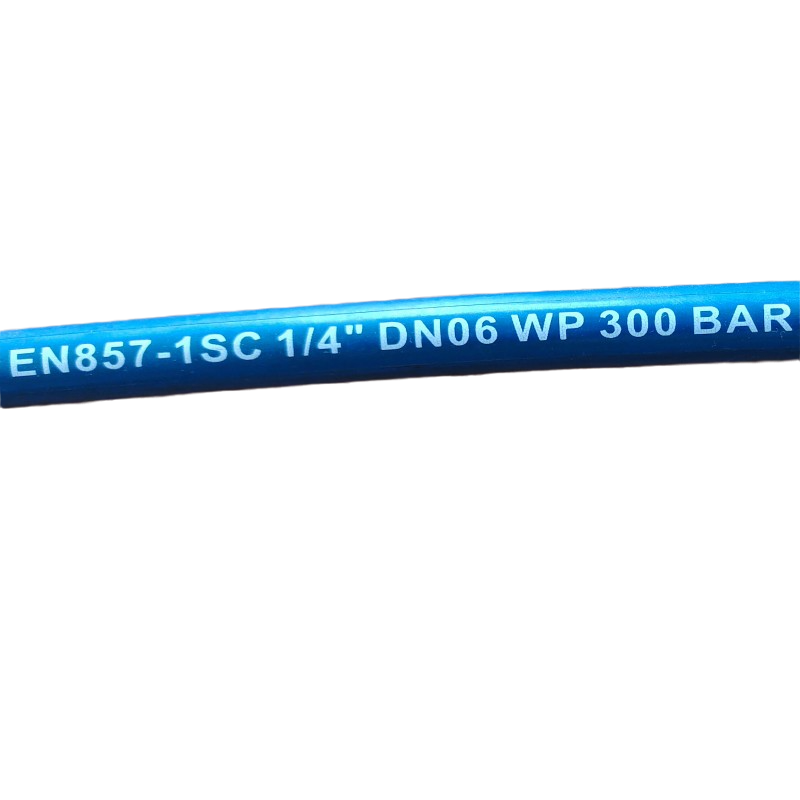
Steel wire spiral hydraulic hose constitutes a critical component in fluid power systems across diverse industries, including construction, agriculture, manufacturing, and oil & gas. This type of hose is engineered to convey hydraulic fluid under high pressure, utilizing a combination of synthetic rubber, reinforcing layers of high-tensile steel wire, and protective outer coverings. Its core function is to transmit force, enabling efficient operation of hydraulic machinery. Unlike smoothbore or braided hose constructions, the spiral wire reinforcement provides superior flexibility, higher pressure capabilities, and enhanced resistance to kinking and abrasion. Understanding the nuances of its material composition, manufacturing processes, performance characteristics, and potential failure modes is paramount for ensuring operational safety, minimizing downtime, and maximizing the service life of hydraulic systems. This guide provides a comprehensive technical overview for engineers, procurement managers, and maintenance personnel involved with steel wire spiral hydraulic hose selection, implementation, and long-term management.
Material Science & Manufacturing
The performance of steel wire spiral hydraulic hose is intrinsically linked to the properties of its constituent materials and the precision of its manufacturing process. The inner tube is typically constructed from a synthetic rubber compound, most commonly nitrile rubber (NBR) for its excellent oil resistance, or ethylene propylene diene monomer (EPDM) for applications requiring resistance to heat, ozone, and weathering. These rubbers are compounded with reinforcing fillers like carbon black and processing aids to optimize tensile strength, elongation, and abrasion resistance. The reinforcement layer is composed of spirally wound, high-tensile steel wire, often galvanized or stainless steel to inhibit corrosion. The wire gauge and pitch (spacing) are critical parameters determining the hose's pressure rating and flexibility. The outer cover is generally formulated from chloroprene rubber (CR) for its excellent resistance to abrasion, ozone, and weathering, providing protection against external environmental factors.
Manufacturing involves a complex layering process. The inner tube is extruded through a die to achieve the desired bore diameter and wall thickness. Simultaneously, the steel wire is spirally wound onto the outer surface of the inner tube. This precise winding is critical for maintaining consistent pressure capacity and preventing localized stress concentrations. Following wire application, the outer cover is extruded over the reinforced structure. Curing (vulcanization) is then conducted under controlled temperature and pressure to cross-link the rubber compounds, imparting the final desired physical and chemical properties. Critical process parameters include extrusion temperature, curing time, wire tension during winding, and adherence to dimensional tolerances. Post-curing, hoses undergo rigorous testing including hydrostatic pressure testing, impulse testing, and dimensional checks to ensure compliance with industry standards.
Performance & Engineering
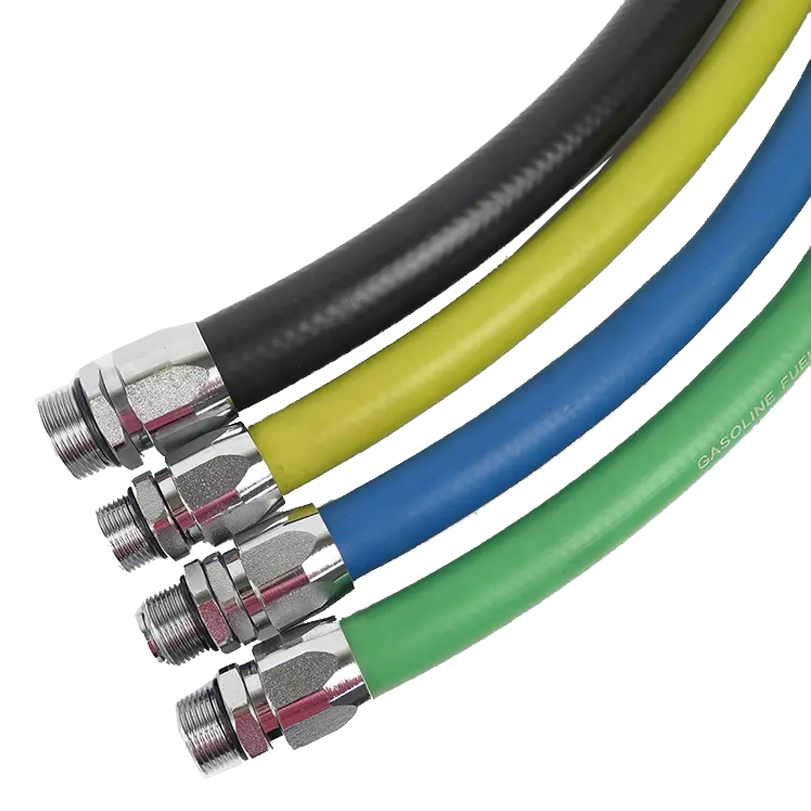
The performance of steel wire spiral hydraulic hose is governed by several key engineering principles. Burst pressure, working pressure, and impulse pressure ratings are critical parameters dictated by the hose’s construction. Burst pressure represents the maximum pressure the hose can withstand before rupture, while working pressure is a fraction of the burst pressure (typically 50-75%) representing the safe operating limit. Impulse pressure refers to the hose’s ability to withstand pressure surges and fluctuations. These ratings are directly influenced by the steel wire gauge, pitch, and the rubber compound’s tensile strength. Flexibility, measured by bend radius, is a vital consideration for installation and operation in confined spaces. The spiral wire construction provides excellent flexibility, minimizing stress on the hose and fittings during bending.
Environmental resistance is another crucial performance aspect. Exposure to extreme temperatures, UV radiation, ozone, and corrosive fluids can degrade the rubber compounds, reducing hose life. Selecting appropriate rubber formulations (e.g., EPDM for ozone resistance) and incorporating UV stabilizers are essential for mitigating these effects. Furthermore, ensuring proper fitting selection and installation techniques is vital. Incorrect fittings can create stress concentrations, leading to premature failure. Standards such as SAE J517 and EN 856 dictate testing procedures and performance criteria for hydraulic hoses, ensuring safety and reliability.
Technical Specifications
| Parameter | Unit | SAE 100R4 | SAE 100R12 |
|---|---|---|---|
| Working Pressure | MPa | 31.5 | 21 |
| Burst Pressure | MPa | 105 | 69 |
| Temperature Range | °C | -40 to +100 | -40 to +70 |
| Reinforcement | - | Multiple spiral steel wire | Single steel wire spiral |
| Inner Tube | - | NBR (Nitrile Rubber) | Synthetic Rubber |
| Outer Cover | - | CRM (Chloroprene Rubber) | CRM (Chloroprene Rubber) |
Failure Mode & Maintenance
Steel wire spiral hydraulic hose is susceptible to several failure modes. Fatigue cracking, resulting from repeated flexing and pressure cycling, is a common occurrence. This typically initiates at points of high stress concentration, such as near fittings or where the hose is sharply bent. Abrasion, caused by rubbing against abrasive surfaces, can wear through the outer cover, exposing the reinforcement layer to corrosion. Kinking, particularly in tight spaces, can damage the reinforcement and inner tube, leading to leaks. Corrosion of the steel wire can occur in humid or corrosive environments, reducing its tensile strength and contributing to failure. Finally, chemical degradation of the rubber compounds due to incompatible fluids can compromise the hose’s integrity.
Preventative maintenance is crucial for extending hose life and preventing catastrophic failures. Regular visual inspections should be conducted to identify signs of abrasion, cracking, kinking, or leaks. Hoses should be replaced immediately if any damage is detected. Proper fitting installation is essential, ensuring that fittings are correctly sized and torqued. Avoid sharp bends and ensure adequate clearance to prevent kinking. Select hose materials compatible with the hydraulic fluid being used. Implement a regular hose replacement schedule based on operating conditions and manufacturer recommendations. Proper storage of hoses in a cool, dry, and dark environment can also help prevent degradation.
Industry FAQ
Q: What is the primary difference between SAE 100R4 and SAE 100R12 hoses in terms of application suitability?
A: SAE 100R4 hoses are designed for higher pressure applications and offer greater flexibility due to their multiple spiral wire reinforcement. They are ideal for demanding applications like construction equipment and heavy machinery. SAE 100R12 hoses, with their single steel wire spiral, are typically used in lower-pressure systems and applications where space constraints are a concern, such as mobile hydraulics and agricultural equipment.
Q: How does the choice of inner tube material (NBR vs. EPDM) impact hose performance?
A: NBR provides superior resistance to petroleum-based hydraulic fluids, making it suitable for most standard hydraulic systems. EPDM, conversely, exhibits excellent resistance to heat, ozone, and weathering, making it the preferred choice for outdoor applications or systems using phosphate ester fluids.
Q: What are the key indicators that a steel wire spiral hose is nearing the end of its service life?
A: Signs include visible cracking in the rubber cover, swelling or softening of the rubber, abrasion exposing the steel wire, evidence of leakage, difficulty in bending the hose without kinking, or any noticeable decrease in pressure capacity during testing.
Q: What is the importance of using the correct fittings with a steel wire spiral hose?
A: Incorrect fittings can create stress concentrations at the connection points, leading to premature failure. Fittings must be specifically designed for steel wire spiral hose and properly sized to match the hose bore. Improperly torqued fittings can also cause leaks or damage the hose.
Q: How can corrosion of the steel wire reinforcement be prevented?
A: Using galvanized or stainless steel wire provides inherent corrosion resistance. Regularly inspecting hoses for signs of corrosion and replacing them promptly if corrosion is detected are essential. Avoiding exposure to corrosive fluids or environments and ensuring proper hose storage can also mitigate corrosion risk.
Conclusion
Steel wire spiral hydraulic hose is a vital component in a wide range of hydraulic systems, offering superior performance characteristics due to its robust construction and flexibility. Understanding the interplay between material science, manufacturing processes, and engineering principles is crucial for selecting the appropriate hose for a specific application. Proper maintenance, including regular inspections and timely replacement, is paramount for ensuring operational safety and maximizing the hose’s service life.
Advancements in rubber compounding and wire manufacturing continue to drive improvements in hose performance and durability. Future developments may focus on incorporating smart sensing technologies to monitor hose condition in real-time and predict potential failures, further enhancing the reliability of hydraulic systems. Adherence to relevant industry standards, such as those defined by SAE and EN, remains critical for ensuring quality and safety.