
Apr . 01, 2024 17:55 Back to list
steel wire spiral hydraulic hose factory Performance Analysis

Introduction
Steel wire spiral hydraulic hose is a reinforced flexible conduit designed to transmit hydraulic fluid under high pressure. It occupies a critical position within fluid power systems, serving as the vital connection between hydraulic pumps, valves, actuators, and other components. These hoses are distinguished by their multi-layered construction incorporating an inner tube for fluid compatibility, multiple layers of high-tensile steel wire spirally wound for pressure containment, and an outer cover providing environmental protection and abrasion resistance. Core performance characteristics include burst pressure, working pressure, temperature range, and fluid compatibility. A key industry pain point is ensuring consistent hose performance across varying operating conditions and preventing catastrophic failure due to fatigue, corrosion, or improper installation. The demand for increased efficiency and reliability in hydraulic systems drives the need for advanced hose designs and rigorous quality control.
Material Science & Manufacturing
The manufacturing of steel wire spiral hydraulic hose involves a complex interplay of material properties and precise process control. The inner tube is typically constructed from synthetic rubbers like nitrile (NBR), ethylene propylene diene monomer (EPDM), or fluorocarbon (FKM), selected for their compatibility with specific hydraulic fluids (mineral oil, synthetic fluids, phosphate ester fluids, etc.). NBR offers excellent resistance to petroleum-based fluids, while EPDM excels in water and steam environments. FKM provides superior resistance to high temperatures and aggressive chemicals. The steel wire used in reinforcement is typically high-carbon steel, heat-treated to achieve optimal tensile strength and fatigue resistance. The steel wire's surface treatment, often involving galvanization or phosphating, is crucial for preventing corrosion and ensuring adhesion to the rubber matrix.
The manufacturing process generally begins with the extrusion of the inner tube. Subsequently, steel wire is spirally wound onto the inner tube under precise tension. Multiple layers of steel wire are applied to achieve the desired pressure rating. Each layer is adhered to the preceding layer with a specially formulated rubber compound. The outer cover is then extruded over the steel wire reinforcement, providing abrasion resistance and protection from environmental factors. Critical parameters during manufacturing include wire tension control (impacts burst pressure and flexibility), rubber compound mixing (affects fluid resistance and temperature performance), vulcanization temperature and time (determines rubber crosslink density and mechanical properties), and dimensional accuracy (ensures proper fitment and prevents leaks). Proper vulcanization is critical; under-vulcanization leads to poor mechanical properties, while over-vulcanization results in brittleness and reduced flexibility. Quality control includes hydrostatic testing to verify burst pressure, impulse testing to assess fatigue life, and dimensional inspection to confirm adherence to specifications.
Performance & Engineering
The performance of steel wire spiral hydraulic hose is governed by principles of fluid mechanics, material science, and structural engineering. Burst pressure, a critical parameter, is determined by the tensile strength of the steel wire and the adhesion between the wire and the rubber matrix. Working pressure is typically specified as a fraction (e.g., 1/4) of the burst pressure, providing a safety factor. Fatigue life is a key consideration, as hoses are subjected to cyclical pressure fluctuations during operation. Impulse testing, simulating these fluctuations, is used to evaluate the hose's resistance to fatigue cracking. Environmental resistance, including temperature range and fluid compatibility, significantly impacts hose performance. Exposure to extreme temperatures can cause rubber degradation, leading to loss of flexibility and eventual failure. Incompatible fluids can cause swelling, softening, or cracking of the inner tube.
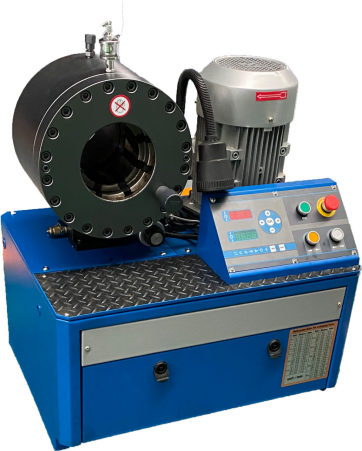
Force analysis is critical in determining the required steel wire reinforcement. The hoop stress in the hose wall, due to internal pressure, must be counteracted by the tensile force of the steel wire. Finite element analysis (FEA) is often employed to model the stress distribution within the hose and optimize the reinforcement design. Compliance requirements, such as those stipulated by SAE (Society of Automotive Engineers) and EN (European Norms), dictate testing procedures and performance standards. Installation practices are also critical. Proper hose routing, avoiding sharp bends and abrasion, is essential for maximizing service life. Furthermore, correct coupling selection and crimping procedures are crucial for preventing leaks and ensuring a secure connection.
Technical Specifications
| Parameter | Unit | SAE 100R4 | SAE 100R6 |
|---|---|---|---|
| Working Pressure | MPa | 31.5 | 21.0 |
| Burst Pressure | MPa | 126 | 84 |
| Temperature Range | °C | -40 to +100 | -40 to +121 |
| Inner Tube | Material | NBR | NBR |
| Reinforcement | Material | Multiple layers of high-tensile steel wire | Single layer of high-tensile steel wire |
| Outer Cover | Material | Synthetic Rubber (e.g., SBR) | Synthetic Rubber (e.g., SBR) |
Failure Mode & Maintenance
Common failure modes in steel wire spiral hydraulic hoses include burst failure due to exceeding the working pressure, fatigue cracking due to cyclical pressure fluctuations, pinhole leaks due to abrasion or corrosion, and end fitting failure due to improper crimping or material degradation. Fatigue cracking typically initiates at stress concentration points, such as bends or near end fittings. Corrosion can occur due to exposure to moisture, salt, or corrosive fluids, leading to weakening of the steel wire and eventual failure. Delamination can occur between the rubber layers and the steel wire reinforcement, reducing the hose's ability to withstand pressure. Oxidation of the rubber material, particularly at elevated temperatures, can lead to hardening and cracking.
Preventive maintenance is crucial for extending hose life and preventing catastrophic failures. Regular visual inspections should be conducted to identify signs of damage, such as abrasions, cracks, bulges, or leaks. Hose routing should be checked to ensure that the hose is not subjected to excessive bending or abrasion. Fluid compatibility should be verified to ensure that the hose material is compatible with the hydraulic fluid being used. End fittings should be inspected for signs of corrosion or damage. Hoses should be replaced at regular intervals, based on operating conditions and manufacturer recommendations. If a hose fails, a thorough failure analysis should be conducted to determine the root cause and prevent recurrence. Proper storage of hoses, away from direct sunlight and extreme temperatures, is also important for maintaining their integrity.
Industry FAQ
Q: What is the impact of hydraulic fluid type on hose selection?
A: Hydraulic fluid compatibility is paramount. Incompatible fluids can cause the inner tube to swell, soften, or crack, leading to leaks and premature failure. Nitrile (NBR) is generally suitable for mineral oil-based fluids, while EPDM is preferred for phosphate ester fluids and water-based systems. Fluorocarbon (FKM) offers the broadest compatibility, including resistance to aggressive chemicals and high temperatures, but it is significantly more expensive.
Q: How does hose layline marking contribute to maintenance?
A: Layline markings, typically embossed onto the hose cover, provide critical information such as manufacturer, hose type, manufacturing date, and working pressure. This information enables proper identification, traceability, and informed maintenance decisions, facilitating timely replacement based on service life and compliance requirements.
Q: What are the key considerations when selecting hose couplings?
A: Coupling selection must match the hose type, working pressure, and fluid compatibility. The coupling material should be corrosion-resistant and compatible with both the hose and the hydraulic system. Proper crimping procedures are essential to ensure a leak-free seal. Over-crimping can damage the hose reinforcement, while under-crimping can lead to leaks.
Q: What role does impulse pressure play in hose failure?
A: Impulse pressure, or pressure spikes, creates cyclical stresses in the hose wall. Repeated exposure to high impulse pressures can lead to fatigue cracking, particularly near end fittings or bends. Selecting a hose with a sufficient impulse rating is crucial for applications with frequent pressure fluctuations.
Q: How can I mitigate the risk of hose twisting during installation?
A: Hose twisting reduces the hose’s bend radius and increases stress concentration, leading to premature failure. Ensure adequate hose length to accommodate movement and avoid sharp bends. Utilize swivel fittings where appropriate to allow for rotational freedom. Regularly inspect hoses for twisting and rectify any issues promptly.
Conclusion
Steel wire spiral hydraulic hose remains a critical component in numerous industrial applications. Its robust construction, providing high pressure capability and durability, makes it indispensable in demanding hydraulic systems. However, optimal performance and longevity depend heavily on careful material selection, precise manufacturing processes, proper installation techniques, and diligent maintenance practices. Understanding the interplay of material properties, structural engineering principles, and relevant industry standards is essential for ensuring the safe and reliable operation of hydraulic machinery.
Future developments in hydraulic hose technology are likely to focus on enhancing performance characteristics such as temperature resistance, chemical compatibility, and fatigue life. The integration of smart sensors for real-time condition monitoring will enable predictive maintenance and prevent unexpected failures. Furthermore, the development of more sustainable and environmentally friendly hose materials will address growing concerns regarding environmental impact. Continued research and innovation in this field will be critical for meeting the evolving needs of the fluid power industry.