
Apr . 01, 2024 17:55 Back to list
steel wire spiral hydraulic hose factories Performance Analysis
Introduction
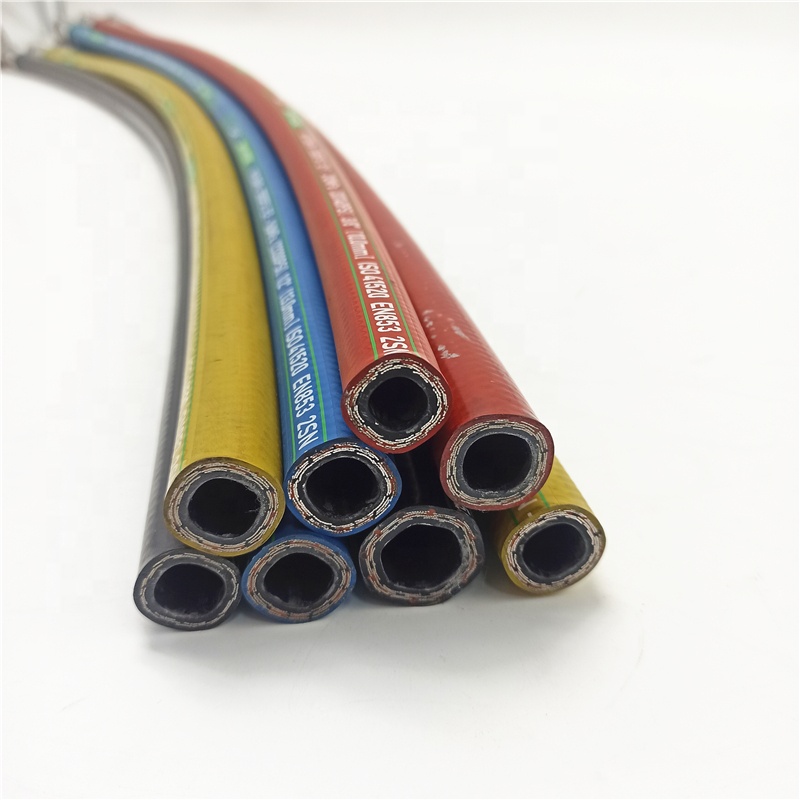
Steel wire spiral hydraulic hose constitutes a critical component in fluid power systems across diverse industries, including construction, agriculture, manufacturing, and mining. These hoses are designed to transmit hydraulic fluid under high pressure, facilitating the operation of machinery and equipment. Their construction features multiple layers – an inner tube providing fluid compatibility, layers of high-tensile steel wire spirally wound for pressure containment and burst strength, and an outer cover offering environmental protection and abrasion resistance. The technical position within the supply chain is positioned between raw material suppliers (rubber compounds, steel wire, polymers) and Original Equipment Manufacturers (OEMs) who integrate them into final products like excavators, loaders, and hydraulic presses. Core performance characteristics include working pressure, burst pressure, temperature range, fluid compatibility, and flexibility, all dictated by stringent industry standards and application requirements. A key pain point for manufacturers and end-users is ensuring long-term reliability and minimizing potential failures, particularly in demanding operating environments.
Material Science & Manufacturing
The manufacturing of steel wire spiral hydraulic hose relies on the precise selection and processing of several key materials. The inner tube is typically composed of synthetic rubber compounds, such as nitrile rubber (NBR), ethylene propylene diene monomer (EPDM), or chloroprene rubber (CR), chosen for their resistance to specific hydraulic fluids (petroleum-based, synthetic, phosphate ester). NBR offers good abrasion resistance and oil compatibility, EPDM excels in heat and weather resistance, while CR provides excellent ozone and weathering properties. Steel wire utilized in the reinforcement spiral is high-carbon steel, often spring steel, drawn to precise diameters and treated for corrosion resistance (galvanization or phosphating). Outer cover materials commonly include synthetic rubbers like polyurethane or a blended rubber compound designed for abrasion, ozone, UV, and weathering resistance.
The manufacturing process begins with the extrusion of the inner tube. Subsequently, the steel wire is spirally wound onto the inner tube using specialized machinery that maintains consistent pitch and tension. This is a critical parameter; incorrect winding can lead to stress concentrations and premature failure. Multiple layers of reinforcement wire may be applied depending on the required pressure rating. Following reinforcement, the outer cover is extruded over the wire spiral. Critical process controls include maintaining precise rubber compound temperatures, wire tension, and cooling rates. Vulcanization, a chemical process involving heat and pressure, cures the rubber compounds, creating the final hose structure. Post-vulcanization, hoses undergo rigorous testing for dimensional accuracy, pressure resistance, and leakage.
Performance & Engineering
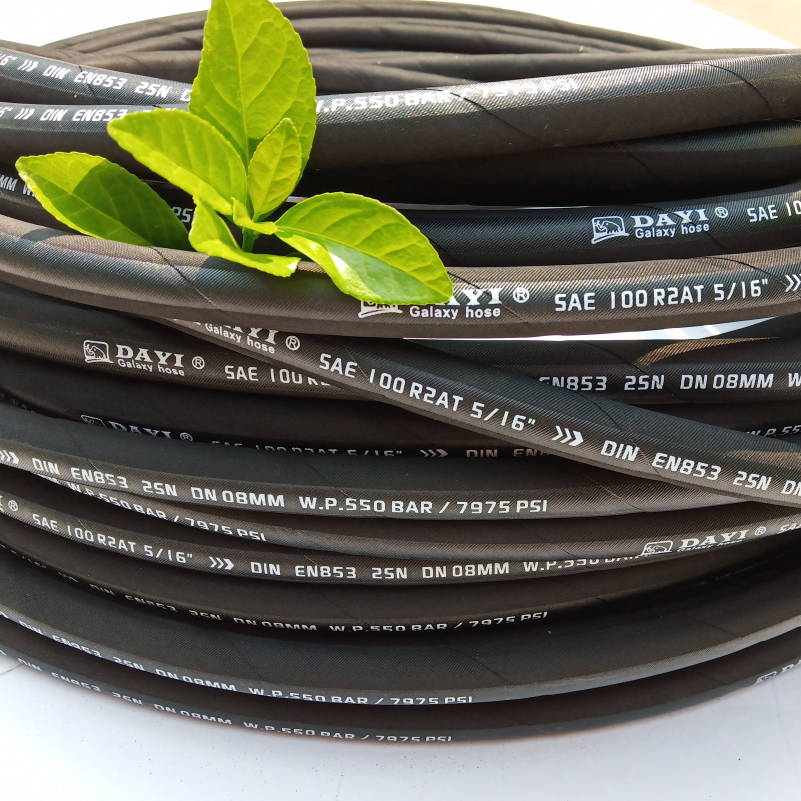
The performance of steel wire spiral hydraulic hose is governed by complex engineering principles related to stress analysis, fluid dynamics, and material behavior. The steel wire spiral bears the majority of the hoop stress generated by internal fluid pressure. The number of layers, wire diameter, and spiral pitch are carefully engineered to withstand specified working and burst pressures. Finite Element Analysis (FEA) is frequently employed during the design phase to optimize the hose structure and predict its response under various loading conditions. Flexibility is another critical performance parameter, affected by the hose diameter, wire pitch, and rubber compound durometer. Hoses must bend and flex repeatedly without kinking or experiencing excessive stress at the bend radius.
Environmental resistance is also paramount. Exposure to extreme temperatures, UV radiation, ozone, and corrosive fluids can degrade the rubber compounds, reducing their elasticity and strength. Hose covers are formulated with UV stabilizers and antioxidants to mitigate these effects. Fluid compatibility is critical; using an incompatible fluid can cause the inner tube to swell, soften, or degrade, leading to leakage and failure. Compliance requirements, such as those set forth by SAE (Society of Automotive Engineers) and EN (European Norm), dictate minimum performance standards for burst pressure, impulse pressure, temperature range, and fluid resistance. The hydraulic hose must not only withstand static pressure but also handle pressure pulsations commonly found in hydraulic systems, which can lead to fatigue failure.
Technical Specifications
| Parameter | Unit | Specification Range (Example) | Testing Standard |
|---|---|---|---|
| Working Pressure | MPa | 10 - 35 | SAE J517 |
| Burst Pressure | MPa | 30 - 105 | SAE J517 |
| Temperature Range | °C | -40 to +100 | SAE J517 |
| Inner Tube Material | - | NBR, EPDM, CR | ASTM D2000 |
| Reinforcement Wire | - | High-Carbon Steel | ASTM A228 |
| Outer Cover Material | - | Polyurethane, Rubber Blend | ASTM D2000 |
Failure Mode & Maintenance
Steel wire spiral hydraulic hoses are susceptible to various failure modes. Fatigue cracking, initiated by repeated pressure pulsations and bending, is a common cause of failure, typically occurring in the steel wire spiral. Corrosion, particularly in environments with moisture and salt spray, can weaken the steel wire and lead to brittle fracture. Abrasion damage to the outer cover can expose the reinforcement wire to corrosion and eventually compromise the hose’s integrity. Internal degradation of the rubber compounds, caused by incompatible fluids or prolonged exposure to high temperatures, results in loss of flexibility and eventual leakage. Delamination, or separation of the rubber layers from the steel wire, can occur due to inadequate bonding during manufacturing or exposure to extreme temperatures. Oxidation of the rubber compounds leads to hardening and cracking over time.
Preventative maintenance is crucial for maximizing hose lifespan and preventing catastrophic failures. Regular visual inspections should be conducted to identify signs of abrasion, cracking, swelling, or leakage. Hoses should be protected from excessive bending and kinking. Proper routing and support are essential to minimize stress concentrations. Regular fluid analysis can detect contamination or fluid degradation, allowing for timely fluid replacement. Hose assemblies should be replaced at recommended intervals or when signs of damage are detected. When replacing hoses, it is critical to use compatible fittings and ensure proper crimping to prevent leakage or fitting failure.
Industry FAQ
Q: What is the impact of impulse pressure on hose life?
A: Impulse pressure, or pressure spikes, significantly reduces hose life. Repeated pressure surges create cyclical stress on the steel wire spiral, accelerating fatigue crack initiation and propagation. Hoses designed for higher impulse pressure ratings utilize construction features like closer wire spacing and optimized rubber compound formulations to mitigate these effects. Proper accumulator sizing and dampening within the hydraulic system also reduces impulse pressure.
Q: How does fluid temperature affect hose performance?
A: Elevated fluid temperatures can accelerate the degradation of rubber compounds, reducing their elasticity and strength. High temperatures also increase the fluid’s vapor pressure, potentially leading to cavitation and damage to the hose. Conversely, low temperatures can cause rubber compounds to become brittle and more susceptible to cracking. Selecting a hose with a temperature range compatible with the operating fluid and environment is crucial.
Q: What are the key considerations for selecting a hose for phosphate ester fluids?
A: Phosphate ester fluids are chemically aggressive and require hoses with specialized inner tube materials that are resistant to swelling and degradation. Typically, fluoropolymers (FKM/Viton) are the preferred inner tube material for phosphate ester applications. Standard NBR or EPDM hoses are not suitable and will quickly fail.
Q: What is the proper procedure for crimping hose fittings?
A: Proper crimping is vital for a leak-free connection. The crimp must create a sufficient interference fit between the hose and the fitting without damaging the hose reinforcement. Crimping machines should be calibrated regularly, and the correct die set must be used for the specific hose and fitting combination. Over-crimping can damage the steel wire, while under-crimping results in leakage.
Q: What are the advantages of polyurethane outer covers?
A: Polyurethane outer covers offer superior abrasion resistance compared to standard rubber compounds, making them ideal for applications where hoses are exposed to harsh environments or frequent contact with abrasive surfaces. They also provide excellent resistance to oil, chemicals, and weathering. However, they can be more expensive than standard rubber covers.
Conclusion
Steel wire spiral hydraulic hose represents a highly engineered product critical for safe and efficient operation of hydraulic systems. Its performance is dictated by a complex interplay of material science, manufacturing precision, and adherence to stringent industry standards. Understanding the underlying principles of stress analysis, fluid compatibility, and environmental resistance is paramount for selecting the correct hose for a specific application and ensuring long-term reliability.
Future advancements in hydraulic hose technology are likely to focus on the development of lighter-weight materials, improved abrasion resistance, and enhanced monitoring capabilities (e.g., integrated sensors for pressure and temperature monitoring). Proper maintenance practices, including regular inspections and timely replacement of damaged hoses, remain the most effective strategy for preventing failures and maximizing the service life of these essential components. Continued adherence to evolving industry standards and best practices is crucial for maintaining the integrity and safety of hydraulic systems.