
Apr . 01, 2024 17:55 Back to list
steel wire braided hydraulic hose supplier Performance Analysis

Introduction
Steel wire braided hydraulic hose represents a critical component in fluid power systems across numerous industries, including construction, agriculture, manufacturing, and automotive. Its primary function is the safe and efficient transmission of hydraulic fluid under high pressure, enabling the operation of hydraulic machinery. Unlike non-reinforced or fiber-braided hoses, steel wire reinforcement provides substantially increased pressure capacity and resistance to kinking, collapsing, and abrasion. This guide provides a comprehensive technical overview of steel wire braided hydraulic hose, covering material science, manufacturing processes, performance characteristics, potential failure modes, and relevant industry standards. The core performance metric lies in its ability to maintain fluid containment and pressure integrity while withstanding demanding operational conditions, a direct result of its multi-layered construction and carefully selected materials. The industry faces challenges around hose longevity in increasingly harsh environments, evolving fluid compatibility requirements (particularly with newer synthetic fluids), and the need for consistent, traceable quality control.
Material Science & Manufacturing
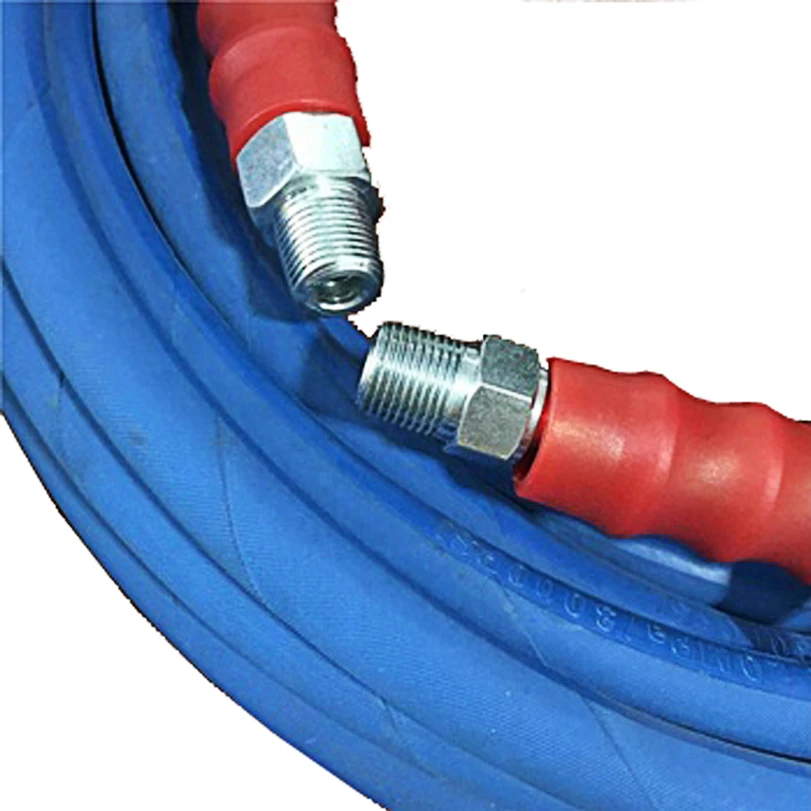
The construction of a steel wire braided hydraulic hose typically involves four key layers: the inner tube, the reinforcement layer, the outer cover, and the bonding agent. The inner tube is commonly composed of synthetic rubber compounds such as nitrile (NBR), ethylene propylene diene monomer (EPDM), or fluorocarbon (FKM, Viton) selected for their compatibility with the hydraulic fluid being used. NBR offers excellent resistance to petroleum-based fluids, EPDM excels in phosphate ester fluids, and FKM provides superior resistance to high temperatures and aggressive chemicals. The reinforcement layer consists of one or more braids of high-strength steel wire. The wire’s tensile strength, typically ranging from 1770 MPa to 2170 MPa, is a critical factor in determining the hose’s pressure rating. The wire is often coated with zinc or other corrosion-resistant materials. The outer cover is usually constructed from a synthetic rubber compound, such as chloroprene (CR) or polyurethane (PU), providing abrasion resistance, weather protection, and resistance to oil and chemicals. The bonding agent is crucial for ensuring adhesion between the inner tube, reinforcement, and outer cover, preventing separation under pressure. The manufacturing process typically involves extrusion of the inner tube and outer cover, followed by spiraling or braiding the steel wire around the inner tube, and finally, curing the entire assembly in a heated mold. Critical parameters controlled during manufacturing include rubber compound formulation, wire tension during braiding, curing temperature and time, and dimensional accuracy of each layer.
Performance & Engineering
The performance of steel wire braided hydraulic hose is dictated by several key engineering considerations. Burst pressure, working pressure, and kink radius are paramount. Burst pressure is the pressure at which the hose fails catastrophically, typically tested to 3.5-4 times the working pressure. Working pressure represents the maximum continuous operating pressure. Kink radius is the minimum bend radius the hose can withstand without collapsing and restricting flow. Finite element analysis (FEA) is frequently used to optimize hose geometry and reinforcement configuration for specific pressure and temperature requirements. Environmental resistance, particularly to ozone, UV radiation, and temperature extremes, is also vital. Hose materials must maintain their flexibility and integrity across a wide temperature range (-40°C to +100°C is common). Compliance with industry standards, such as SAE J517 (USA), EN 856 (Europe), and GB/T 3682.1 (China), is essential. These standards dictate testing procedures, performance criteria, and marking requirements. The hose's ability to resist axial stretch under pressure is a critical engineering property, directly impacting the efficiency and responsiveness of the hydraulic system. Furthermore, fatigue life—the number of pressure cycles the hose can withstand before failure—is a major concern in dynamic applications. Proper hose assembly, including correct fitting selection and crimping, significantly impacts performance and safety.
Technical Specifications
| Parameter | Unit | Typical Value (1" ID Hose, 2 Wire Braid) | Test Standard |
|---|---|---|---|
| Working Pressure | MPa | 20.7 | SAE J517 |
| Burst Pressure | MPa | 82.7 | SAE J517 |
| Minimum Bend Radius | mm | 406 | Manufacturer Specification |
| Tensile Strength (Steel Wire) | MPa | 2000 | ASTM A228 |
| Temperature Range | °C | -40 to +100 | SAE J517 |
| Inner Tube Material | - | NBR | Manufacturer Specification |
Failure Mode & Maintenance
Common failure modes in steel wire braided hydraulic hose include burst failure due to exceeding pressure limits, kink failure caused by excessive bending, abrasion damage to the outer cover, and corrosion of the steel wire reinforcement. Internal degradation of the rubber compounds can also lead to leaks and reduced performance. Burst failures often originate at imperfections in the inner tube or at the bond between layers. Kink failures are typically observed near fittings or tight bends. Abrasion can compromise the outer cover, exposing the reinforcement to corrosion. Corrosion, particularly in marine or industrial environments, weakens the steel wire and ultimately leads to failure. Failure analysis frequently involves microscopic examination of the fracture surface to determine the root cause. Maintenance recommendations include regular visual inspections for signs of wear, abrasion, or leaks. Hose assemblies should be replaced if any damage is detected. Correct routing and support of the hose are essential to prevent kinking and abrasion. Proper fluid maintenance (filtration and fluid changes) minimizes internal degradation. Avoid exceeding the hose’s working pressure and temperature limits. Periodic pressure testing, where feasible, can identify potential weaknesses before catastrophic failure occurs. Storage conditions are also important; hoses should be stored in a cool, dry place away from direct sunlight and ozone sources.
Industry FAQ
Q: What is the impact of hydraulic fluid type on hose selection?
A: The compatibility of the inner tube material with the hydraulic fluid is paramount. Using an incompatible fluid can cause the rubber to swell, soften, or degrade, leading to leaks and failure. For example, phosphate ester fluids require EPDM inner tubes, while petroleum-based fluids are generally compatible with NBR. It is critical to consult the fluid manufacturer’s recommendations and hose compatibility charts.
Q: How does the number of wire braids affect hose performance?
A: Increasing the number of wire braids directly increases the hose’s pressure rating and burst strength. A single-wire braid hose is suitable for lower-pressure applications, while two or four-wire braid hoses are required for higher-pressure systems. However, increasing the braid count also reduces the hose’s flexibility.
Q: What is the correct procedure for crimping hose fittings?
A: Proper crimping is essential for a leak-free and reliable connection. The crimp size must be precisely matched to the hose and fitting dimensions, as specified by the fitting manufacturer. Using incorrect crimp dimensions can lead to over-crimping (damaging the hose) or under-crimping (resulting in leaks). Calibrated crimping tools and regular inspection of crimp dies are crucial.
Q: How can I identify potential corrosion issues in steel wire braided hoses?
A: Regularly inspect the external surface of the hose for signs of rust or corrosion, particularly near the ends and in areas exposed to harsh environments. If corrosion is detected, the hose should be replaced immediately. Internal corrosion is more difficult to detect but can be indicated by a change in fluid color or the presence of metallic particles in the fluid.
Q: What is the significance of hose traceability and marking requirements?
A: Traceability allows for identifying the hose’s manufacturer, date of manufacture, and material specifications, which is critical for quality control and failure analysis. Marking requirements, as defined by standards like SAE J517, ensure that essential information is permanently imprinted on the hose for easy identification and proper use.
Conclusion
Steel wire braided hydraulic hose remains a cornerstone of hydraulic power transmission, offering a robust and reliable solution for a diverse range of applications. Understanding the intricate interplay between material science, manufacturing processes, and engineering principles is crucial for ensuring optimal performance, longevity, and safety. The selection of appropriate materials, adherence to industry standards, and implementation of proper maintenance procedures are paramount to mitigating potential failure modes.
Moving forward, advancements in materials science, such as the development of new corrosion-resistant steel alloys and high-performance rubber compounds, will continue to enhance the capabilities of these hoses. Furthermore, increased adoption of smart hose technologies, incorporating sensors for pressure and temperature monitoring, will enable predictive maintenance and further improve system reliability. Continued focus on quality control and traceability will remain vital in maintaining the integrity of hydraulic systems worldwide.