
Apr . 01, 2024 17:55 Back to list
steel wire braided hydraulic hose Performance Analysis
Introduction
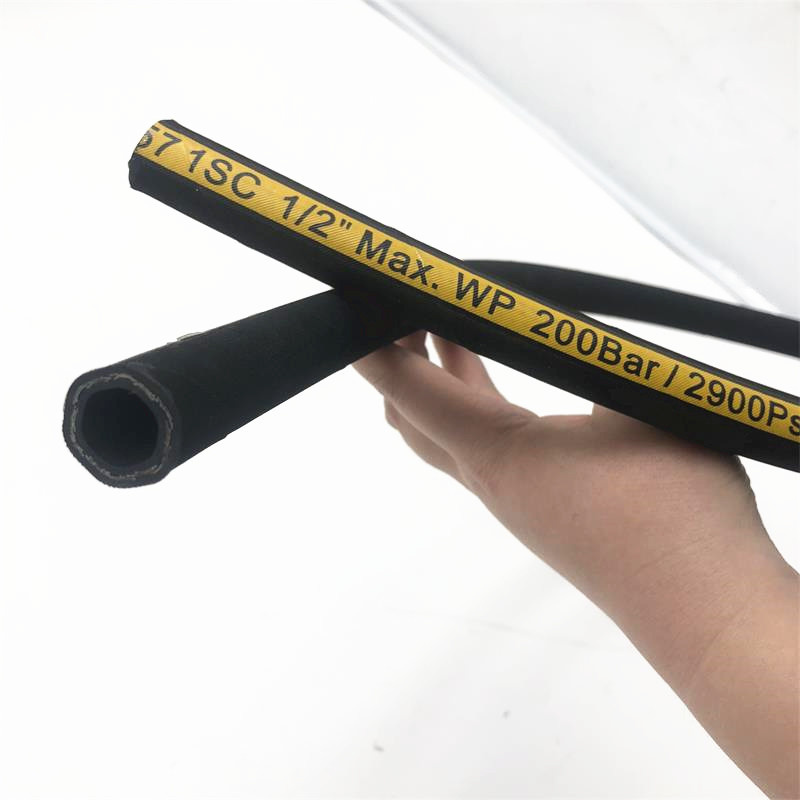
Steel wire braided hydraulic hose is a reinforced flexible assembly designed to convey hydraulic fluid under significant pressure in a variety of industrial and mobile applications. Positioned within the fluid power transmission chain, it acts as a critical link between hydraulic pumps, valves, actuators, and other components. Unlike non-reinforced rubber hoses, the steel wire braiding provides substantial burst and kink resistance, enabling operation in harsh environments and demanding cycles. Core performance characteristics include pressure rating, temperature range, fluid compatibility, and bend radius. The selection of appropriate hose construction—including reinforcement type, tube material, and cover material—is paramount to ensuring system reliability, longevity, and safety. Failure of hydraulic hose constitutes a significant safety hazard and can result in substantial downtime and costly repairs, driving demand for durable and rigorously tested products.
Material Science & Manufacturing
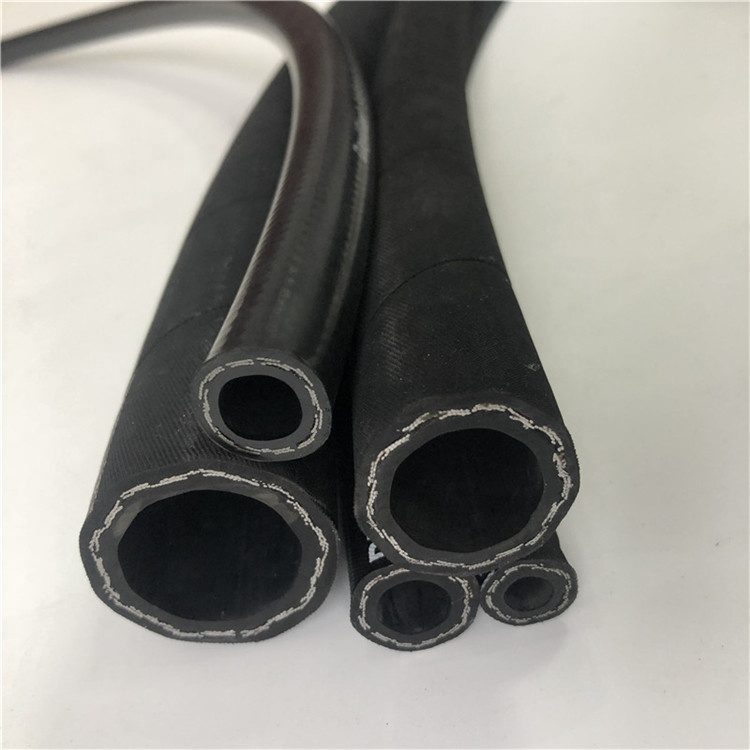
The composition of steel wire braided hydraulic hose involves several key material considerations. The inner tube, typically constructed from nitrile rubber (NBR), ethylene-propylene diene monomer (EPDM), or polytetrafluoroethylene (PTFE), determines fluid compatibility. NBR offers excellent resistance to petroleum-based fluids but limited temperature resistance; EPDM excels in high-temperature applications and offers superior resistance to weathering and ozone. PTFE provides exceptional chemical resistance but is more costly. The reinforcement layer comprises high-strength steel wire, typically carbon steel, although stainless steel is employed in corrosive environments. The wire is spirally wound around the inner tube, providing the pressure resistance. The outer cover, often utilizing chloroprene rubber (CR) or polyurethane (PU), provides abrasion, weather, and oil resistance.
Manufacturing involves a multi-step process. Firstly, the inner tube is extruded to the required dimensions. Secondly, the steel wire is simultaneously wound onto the tube using specialized braiding machinery. The braid angle and wire density are critical parameters controlling pressure capacity. Precise tension control during braiding is essential to prevent distortion and ensure uniform reinforcement. Thirdly, an adhesive layer is applied between the braid and the cover to bond them securely. Finally, the outer cover is extruded over the braided structure, followed by curing in a vulcanization oven. Curing parameters – temperature, time, and pressure – significantly influence the final mechanical properties and dimensional stability. Quality control involves rigorous testing throughout the process, including burst pressure testing, impulse testing, and dimensional inspection.
Performance & Engineering
The performance of steel wire braided hydraulic hose is governed by several engineering principles. Burst pressure, defined as the pressure at which the hose fails catastrophically, is determined by the steel wire density, braid angle, and tube material strength. A lower braid angle results in higher axial strength but lower flexibility. Impulse pressure, the ability to withstand pressure pulsations, is a critical consideration in applications such as hydraulic hammers. Fatigue life is affected by the frequency and magnitude of pressure cycles. Environmental resistance, encompassing temperature extremes, UV exposure, and chemical attack, significantly impacts hose longevity. Bend radius, the minimum permissible bend diameter, influences the hose’s ability to navigate tight spaces without kinking or experiencing excessive stress.
Force analysis involves calculating hoop stress within the hose wall under pressure. Hoop stress is directly proportional to pressure and radius and inversely proportional to wall thickness. Finite Element Analysis (FEA) is frequently employed to model stress distribution and optimize hose design for specific applications. Compliance with industry standards, such as SAE J517 and EN 857, ensures that hoses meet minimum performance criteria and safety requirements. Proper hose assembly, including the selection of compatible fittings and correct crimping procedures, is crucial to achieving rated performance and preventing leaks.
Technical Specifications
| Parameter | Unit | SAE J517 – R1AT | SAE J517 – R1AT (High Pressure) |
|---|---|---|---|
| Working Pressure | MPa | 20.7 | 34.5 |
| Burst Pressure | MPa | 82.7 | 138.0 |
| Temperature Range | °C | -40 to +100 | -40 to +121 |
| Reinforcement | - | Single Steel Wire Braid | Double Steel Wire Braid |
| Tube Material | - | NBR (Nitrile Rubber) | NBR (Nitrile Rubber) |
| Cover Material | - | CR (Chloroprene Rubber) | CR (Chloroprene Rubber) |
Failure Mode & Maintenance
Steel wire braided hydraulic hose is susceptible to several failure modes. Abrasion of the outer cover leads to exposure of the steel wire braid, increasing the risk of corrosion and eventual failure. Kinking, caused by exceeding the minimum bend radius, can damage the reinforcement and restrict flow. Fatigue cracking, initiated by repeated pressure cycles, propagates through the tube or reinforcement, leading to leakage. Corrosion, particularly in environments with moisture and salt, weakens the steel wire braid. Internal degradation of the tube material, caused by incompatible fluids or excessive temperature, results in swelling, cracking, and loss of flexibility. Fitting failure, due to improper crimping or material incompatibility, is a common point of leakage.
Preventive maintenance includes regular visual inspection for abrasion, kinks, leaks, and corrosion. Hose assemblies should be replaced at scheduled intervals, even if no visible damage is present. Fluid compatibility must be verified before use. Correct hose routing and support are essential to prevent abrasion and kinking. Regularly check fitting connections for tightness. When replacing hoses, use only certified components and follow the manufacturer’s recommended crimping procedures. Implementing a hose management program, including tracking hose age and usage, can significantly reduce the risk of failure and enhance system reliability.
Industry FAQ
Q: What is the impact of exceeding the minimum bend radius on hose life?
A: Exceeding the minimum bend radius introduces significant stress concentration in the hose wall, particularly at the bend. This stress accelerates fatigue cracking in both the reinforcement and the tube material. Repeated bending beyond the specified radius can lead to premature failure, even at pressures well below the rated working pressure. Proper hose routing and support are critical to maintaining the specified bend radius.
Q: How does fluid compatibility affect hose performance?
A: Incompatible fluids can cause swelling, softening, or chemical attack of the inner tube material, leading to leakage and reduced pressure capacity. For example, using petroleum-based fluids with an EPDM tube can cause significant swelling and degradation. Always verify fluid compatibility before selecting a hose, referring to chemical resistance charts provided by the manufacturer.
Q: What are the key considerations when selecting fittings for steel wire braided hose?
A: Fittings must be compatible with both the hose tube and cover material. The fitting material (e.g., carbon steel, stainless steel) should be selected based on the fluid being conveyed and the operating environment. Proper crimping is crucial to ensure a leak-proof seal and maintain the hose’s rated pressure capacity. Using incorrect crimp specifications can result in fitting slippage or hose blow-off.
Q: What is the difference between single and double wire braid reinforcement?
A: Double wire braid reinforcement provides significantly higher pressure capacity and improved impulse resistance compared to single wire braid. The increased wire density and coverage enhance the hose’s ability to withstand pressure surges and maintain dimensional stability. Double braid hoses are typically used in applications requiring higher safety factors or operating at higher pressures.
Q: How can corrosion of the steel wire braid be prevented?
A: Corrosion can be mitigated by selecting stainless steel wire braid in corrosive environments. Applying a protective coating to the steel wire before braiding can also enhance corrosion resistance. Regular inspection for signs of corrosion and prompt replacement of corroded hoses are essential. Properly sealing hose ends and preventing exposure to moisture and salt can further reduce the risk of corrosion.
Conclusion
Steel wire braided hydraulic hose is a critical component in countless hydraulic systems, providing a reliable and robust solution for fluid power transmission. Its performance is inextricably linked to material selection, manufacturing precision, and adherence to stringent industry standards. Understanding the potential failure modes and implementing proactive maintenance strategies are essential for maximizing hose life and ensuring system safety. The ongoing development of advanced materials and manufacturing techniques continues to improve the performance and durability of these vital components.
Looking forward, increased focus will be placed on developing more sustainable and environmentally friendly hose materials, along with advanced monitoring systems for real-time condition assessment. The integration of smart sensors within hose assemblies will enable predictive maintenance and minimize downtime. Continued refinement of hose design and manufacturing processes will further enhance pressure capacity, impulse resistance, and overall reliability, ensuring the continued efficacy of steel wire braided hydraulic hose in demanding applications.