
Apr . 01, 2024 17:55 Back to list
steel wire braided hydraulic hose manufacturers Performance Engineering
Introduction
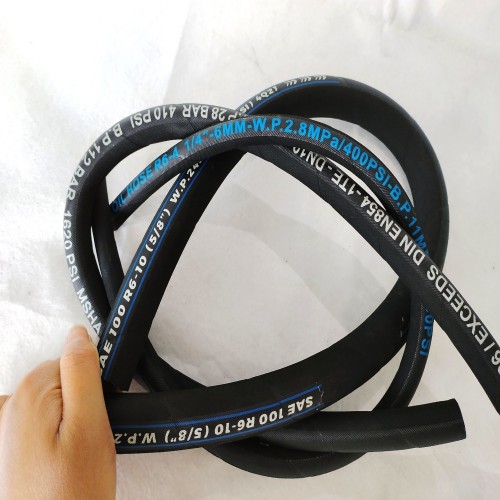
Steel wire braided hydraulic hoses are critical components in fluid power systems, facilitating the transmission of hydraulic fluid to actuators and other components. They are distinguished from other hose types by the high-strength steel wire reinforcement layers embedded within a rubber matrix, providing exceptional pressure capacity and burst resistance. Positioned within the industrial chain as a vital link between pumps, valves, and cylinders, these hoses are integral to machinery operation across diverse sectors including construction, agriculture, mining, and manufacturing. Core performance characteristics center around withstanding high pressures, resisting abrasion and corrosion, maintaining flexibility for routing, and ensuring leak-free operation. The selection of appropriate hose construction and materials is paramount to system reliability and longevity, addressing common industry pain points like premature failure due to exceeding pressure limits, incompatibility with fluids, and environmental degradation.
Material Science & Manufacturing
The construction of steel wire braided hydraulic hoses relies on a careful selection of materials and a multi-stage manufacturing process. The inner tube is typically composed of oil-resistant synthetic rubber compounds, such as nitrile (NBR), chloroprene (CR), or ethylene propylene diene monomer (EPDM), selected based on fluid compatibility and operating temperature requirements. NBR provides excellent resistance to petroleum-based oils, while CR offers superior resistance to heat and ozone. EPDM is frequently chosen for its compatibility with phosphate ester fluids. The reinforcement layer consists of one or more braids of high-tensile steel wire, typically carbon steel, providing strength and resistance to pressure. The wire’s tensile strength and helical angle directly influence the hose's burst pressure. An outer cover, often made of chloroprene or polyurethane, provides abrasion, weathering, and chemical resistance. Manufacturing begins with extrusion of the inner tube, followed by the helical winding of steel wire. Precise tension control during wire winding is crucial to prevent distortion and ensure uniform pressure distribution. The outer cover is then extruded over the reinforcement, and the hose is vulcanized – a process involving heat and pressure to crosslink the rubber compounds and bond the layers together. Critical parameters include temperature uniformity, curing time, and pressure control to achieve optimal mechanical properties. Post-vulcanization, hoses undergo rigorous testing, including pressure testing to verify burst pressure and impulse testing to assess fatigue life. The selection of rubber compounds must also account for elongation at break and hardness to ensure long-term flexibility and durability.

Performance & Engineering
The performance of steel wire braided hydraulic hoses is heavily dependent on a thorough understanding of force analysis and environmental resistance. The hose’s ability to withstand pressure is governed by the tensile strength of the steel wire, the number of braids, the hose diameter, and the rubber compound’s tensile strength. Hoop stress, the circumferential stress acting on the hose wall, increases with pressure and diameter. Finite element analysis (FEA) is commonly used to model stress distribution and optimize hose design. Environmental factors, such as temperature, humidity, and exposure to chemicals, can significantly impact performance. High temperatures can accelerate rubber degradation, reducing its elasticity and strength. Exposure to ozone can cause cracking, while certain chemicals can cause swelling or softening of the rubber. Compliance requirements vary by region and application. SAE J517 and EN 856 standards define performance criteria for hydraulic hoses, including pressure ratings, temperature ranges, and impulse testing procedures. Furthermore, industries like aerospace and defense often impose stricter requirements for fluid compatibility and flame resistance. The routing of hoses is also a critical engineering consideration; minimizing bending stress and avoiding sharp turns is essential to prevent premature failure. Proper fitting selection and installation are equally important, as incorrect fittings can lead to leaks and reduce the hose's overall pressure capacity. Impulse testing, simulating pressure surges and pulsations, is crucial for validating the hose’s ability to withstand dynamic loading conditions.
Technical Specifications
| Parameter | Unit | SAE 100R2 AT | SAE 100R6 |
|---|---|---|---|
| Working Pressure | MPa | 10.5 | 21.0 |
| Burst Pressure | MPa | 31.5 | 63.0 |
| Temperature Range | °C | -40 to +100 | -40 to +100 |
| Reinforcement | - | Single Steel Wire Braid | Double Steel Wire Braid |
| Inner Tube | - | NBR | NBR |
| Outer Cover | - | CR | CR |
Failure Mode & Maintenance
Steel wire braided hydraulic hoses are subject to various failure modes in practical applications. Fatigue cracking, often initiated at the braid-to-fitting interface, is a common failure mechanism caused by repeated pressure cycles and flexing. Delamination, the separation of rubber layers, can occur due to insufficient bonding during vulcanization or exposure to aggressive chemicals. Rubber degradation, manifested as cracking, hardening, or swelling, results from exposure to heat, ozone, UV radiation, or incompatible fluids. Corrosion of the steel wire can weaken the reinforcement and lead to catastrophic failure, particularly in environments with high humidity or corrosive fluids. Fitting failures, such as loosening or corrosion, can result in leaks and pressure loss. Preventative maintenance is crucial for extending hose life. Regular visual inspections should be conducted to identify signs of cracking, abrasion, or swelling. Pressure testing can verify the hose's integrity. Fluid analysis can identify contamination that may accelerate degradation. Hoses should be replaced if they exhibit any signs of damage or exceed their service life. Proper storage, away from direct sunlight and extreme temperatures, is also essential. When replacing hoses, it is critical to use compatible fittings and follow proper installation procedures, including tightening to the manufacturer's specified torque. Consider using hose guards to protect against abrasion in high-wear applications. Furthermore, implementing a preventative maintenance schedule based on operating conditions and fluid type can significantly reduce the risk of unexpected failures.
Industry FAQ
Q: What is the impact of exceeding the maximum working pressure on a steel wire braided hose?
A: Exceeding the maximum working pressure significantly reduces the hose’s lifespan and dramatically increases the risk of catastrophic failure. The steel wire reinforcement can yield, leading to permanent deformation or rupture. Repeatedly operating above the rated pressure causes fatigue, initiating cracks that propagate over time. Even brief excursions beyond the limit can weaken the hose structure, making it susceptible to failure under subsequent normal operating conditions.
Q: How does fluid compatibility affect the performance and longevity of the inner tube?
A: Fluid incompatibility is a major cause of inner tube degradation. Certain fluids can cause swelling, softening, or cracking of the rubber compound, leading to leaks and reduced pressure capacity. For example, using a nitrile hose with a phosphate ester fluid will result in rapid deterioration. It is essential to select a hose with an inner tube material specifically designed for the intended fluid application, consulting compatibility charts and manufacturer recommendations.
Q: What is the difference between single and double steel wire braid hoses, and when should each be used?
A: Single braid hoses offer good flexibility and are suitable for moderate pressure applications. Double braid hoses provide significantly higher pressure capacity and are preferred for high-pressure systems and applications subject to severe impulse loads. The double braid construction distributes stress more effectively, enhancing burst resistance and fatigue life.
Q: How do I determine the correct hose length, and what are the implications of incorrect length?
A: Correct hose length is crucial to avoid excessive bending, kinking, and strain on the hose and fittings. Measure the distance between fitting mounting points, accounting for any required slack for movement and vibration. Hoses that are too short will be subjected to excessive tension, while hoses that are too long can rub against other components, causing abrasion and damage. Excessive bending reduces the hose’s flow capacity and can lead to premature failure.
Q: What is the role of proper fitting selection and installation in ensuring hose performance?
A: Proper fitting selection and installation are paramount. Fittings must be compatible with the hose and fluid, and correctly sized to prevent leaks. Incorrectly crimped fittings can compromise the hose’s pressure capacity, while overtightened fittings can damage the hose and fittings. Always follow the manufacturer’s instructions for fitting installation, including torque specifications and crimping procedures.
Conclusion
Steel wire braided hydraulic hoses represent a sophisticated engineering solution for fluid power transmission, demanding careful consideration of material science, manufacturing processes, and operational conditions. The hose’s performance is dictated by a complex interplay of factors including pressure, temperature, fluid compatibility, and mechanical stress. A thorough understanding of these parameters is essential for selecting the appropriate hose for a given application and ensuring long-term reliability and safety.
Looking ahead, advancements in materials science, such as the development of more durable and chemically resistant rubber compounds, and the implementation of smart hose technologies incorporating sensors for pressure and temperature monitoring, will further enhance the performance and longevity of these critical components. Continued adherence to industry standards and best practices in maintenance and installation will remain paramount to maximizing system efficiency and minimizing downtime.