
Apr . 01, 2024 17:55 Back to list
steel wire braided hydraulic hose factory Performance Analysis
Introduction
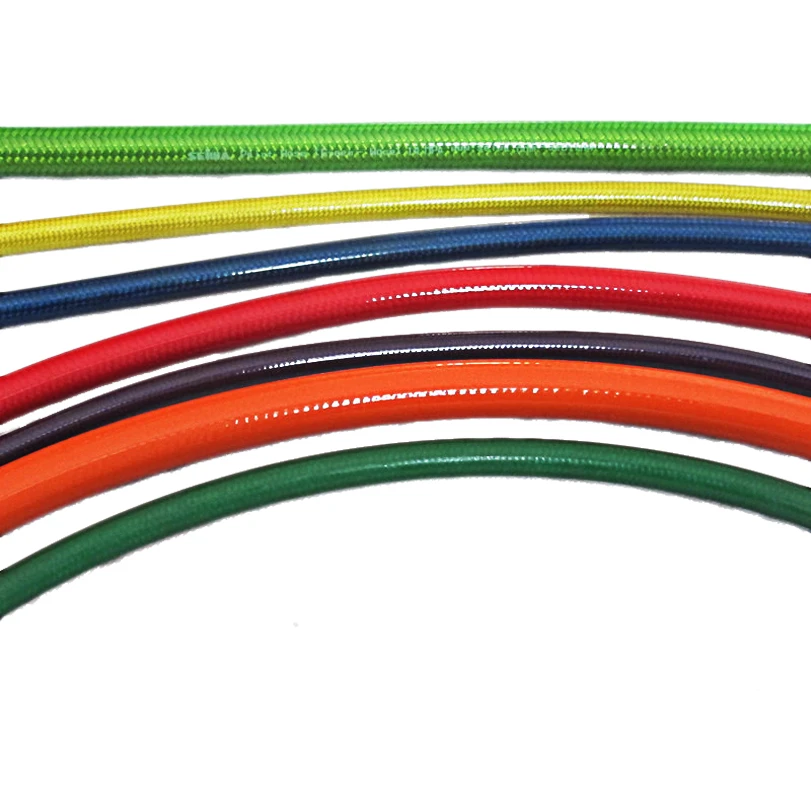
Steel wire braided hydraulic hose is a reinforced flexible assembly designed to convey pressurized fluids in a wide range of industrial and mobile hydraulic systems. Positioned as a critical component within the fluid power industry, these hoses connect pumps, valves, cylinders, and other fluid-handling components. Their performance is defined by their ability to withstand high pressures, resist abrasion, and maintain flexibility across operational temperatures. Unlike non-reinforced rubber hoses, the steel wire braiding significantly enhances burst strength and resistance to kinking, making them suitable for demanding applications. Core performance indicators include working pressure, burst pressure, temperature range, and fluid compatibility, which are paramount for ensuring system reliability and safety. The industry faces challenges related to consistent material quality, maintaining dimensional accuracy during manufacturing, and meeting increasingly stringent safety regulations. This guide provides an in-depth technical overview of steel wire braided hydraulic hose, covering material science, manufacturing processes, performance characteristics, failure modes, and relevant industry standards.
Material Science & Manufacturing
The construction of steel wire braided hydraulic hose relies on a layered system of materials, each contributing to the overall performance. The inner tube is typically composed of a synthetic rubber compound, such as nitrile rubber (NBR), chlorinated polyethylene (CPE), or fluorocarbon (FKM), selected for compatibility with the intended fluid. NBR provides excellent resistance to petroleum-based fluids, CPE excels in weathering and ozone resistance, and FKM offers superior chemical and temperature resistance. The reinforcement layer consists of one or more braids of high-strength steel wire. The steel used is typically carbon steel, although stainless steel is employed in corrosive environments. Wire diameter and braiding angle are critical parameters influencing hose pressure rating and flexibility. The outer cover is generally constructed from a synthetic rubber compound, often a blend of synthetic rubbers like SBR and NBR, providing abrasion resistance, weather protection, and oil resistance. Manufacturing begins with extrusion of the inner tube to the required dimensions. Following extrusion, the steel wire is meticulously braided around the inner tube using specialized braiding machines. The braid coverage percentage – the proportion of the tube surface covered by the wires – directly affects burst pressure. The outer cover is then extruded over the braided layer, and the hose is cured using a vulcanization process to crosslink the rubber compounds, enhancing their mechanical properties. Key parameter controls include rubber compound formulation, wire tensile strength, braiding tension, and cure time/temperature. Maintaining consistent batch-to-batch material properties is crucial for ensuring product uniformity and reliability.
Performance & Engineering
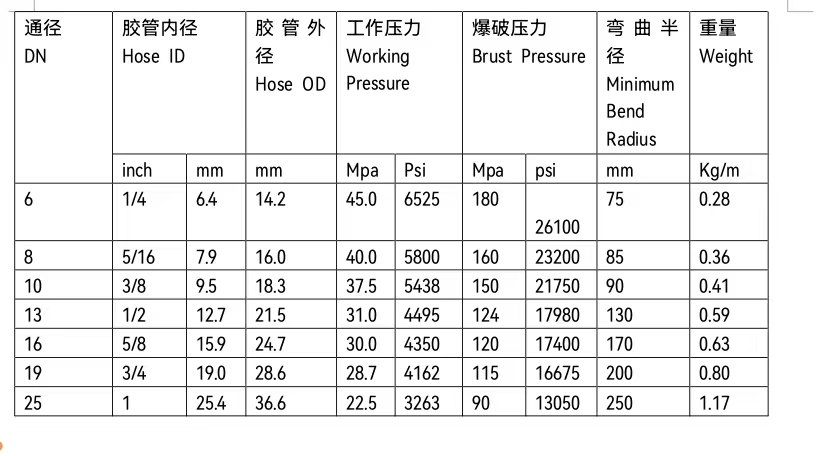
The performance of steel wire braided hydraulic hose is dictated by its ability to withstand internal pressure without failure. Burst pressure, working pressure, and safety factor are key engineering considerations. Burst pressure is the pressure at which the hose fails catastrophically, while working pressure is a fraction of the burst pressure (typically 1/4) representing the maximum allowable operating pressure. A safety factor of 4:1 provides a margin of safety against unexpected pressure surges. Force analysis involves evaluating the tensile stress in the steel wire and the shear stress in the rubber layers under pressure. Finite element analysis (FEA) is often employed to model hose behavior under various loading conditions. Environmental resistance is another critical aspect. Exposure to extreme temperatures, UV radiation, ozone, and corrosive fluids can degrade the rubber compounds, reducing hose life. Abrasion resistance is also important, particularly in applications involving contact with moving parts. Compliance requirements vary by region and application. For example, SAE J517 and EN 856 standards define performance specifications for hydraulic hose. Hose end fittings play a crucial role in overall system performance. Proper crimping of fittings onto the hose is essential to ensure a leak-free, high-strength connection. Incorrect crimping can lead to premature failure. The hose's flexibility must be sufficient to accommodate bending and routing constraints within the hydraulic system, preventing kinking and stress concentration.
Technical Specifications
| Parameter | Unit | Typical Value (1" ID Hose, 2 Wire Braid) | Test Standard |
|---|---|---|---|
| Working Pressure | psi | 3000 | SAE J517 |
| Burst Pressure | psi | 12000 | SAE J517 |
| Temperature Range | °F | -40 to +212 | SAE J517 |
| Inner Tube Material | - | NBR (Nitrile Rubber) | ASTM D2000 |
| Reinforcement Material | - | High-Strength Steel Wire | ASTM A228 |
| Outer Cover Material | - | SBR/NBR Blend | ASTM D2000 |
Failure Mode & Maintenance
Steel wire braided hydraulic hose is subject to several failure modes. Fatigue cracking, resulting from repeated pressure cycling, is a common cause of failure, often initiating at the braid crossover points. Delamination, the separation of rubber layers, can occur due to poor bonding or exposure to aggressive fluids. Degradation of the rubber compounds, caused by oxidation, ozone attack, or chemical exposure, reduces their elasticity and strength. Abrasion can wear away the outer cover, exposing the braid to corrosion. Kinking, caused by excessive bending, can damage the inner tube and reinforcement. Corrosion of the steel wire can significantly reduce its tensile strength. Failure analysis typically involves visual inspection, microscopic examination of fracture surfaces, and chemical analysis of rubber compounds. Preventive maintenance is crucial. Regular visual inspections should be conducted to identify signs of wear, cracking, or leakage. Hoses should be replaced if they show any signs of damage. Proper hose routing and support are essential to prevent kinking and abrasion. Fluid compatibility must be verified to prevent rubber degradation. Crimped fittings should be inspected for tightness and integrity. Recommended maintenance practices include periodic pressure testing and fluid analysis. Proper storage conditions – cool, dry, and away from direct sunlight – are also important for preserving hose life.
Industry FAQ
Q: What is the impact of fluid temperature on hose life?
A: Elevated temperatures accelerate the degradation of rubber compounds, reducing their elasticity and tensile strength. Conversely, extremely low temperatures can cause rubber to become brittle and crack. Selecting a hose with a temperature rating that exceeds the operating temperature range is crucial for maximizing service life. Specialized rubber formulations, such as FKM, are recommended for high-temperature applications.
Q: How does the number of wire braids affect pressure rating?
A: Increasing the number of wire braids directly increases the hose's burst pressure. Each additional braid layer adds more reinforcement, allowing the hose to withstand higher internal pressures. However, adding more braids also reduces flexibility. The optimal number of braids is a trade-off between pressure rating and flexibility requirements.
Q: What are the common causes of hose kinking, and how can it be prevented?
A: Kinking occurs when the hose is bent beyond its minimum bend radius, causing the inner tube to collapse and restrict fluid flow. Improper hose routing, inadequate support, and excessive bending forces are common causes. Prevention involves ensuring sufficient clearance for bending, using hose supports to prevent sagging, and selecting a hose with a bend radius appropriate for the application.
Q: What is the role of the outer cover in hose performance?
A: The outer cover provides crucial protection against abrasion, weathering, ozone, and oil exposure. It shields the steel wire braid from corrosion and helps maintain the hose's flexibility. Selecting an outer cover material compatible with the operating environment is essential for maximizing hose life and preventing premature failure.
Q: How do I determine the correct hose size for my application?
A: Hose size is determined by the required flow rate and operating pressure. The inner diameter (ID) must be sufficient to accommodate the desired flow rate without excessive pressure drop. The pressure rating must exceed the maximum operating pressure with an adequate safety factor. Consideration should also be given to fitting size and compatibility.
Conclusion
Steel wire braided hydraulic hose remains a vital component in countless hydraulic systems, offering a robust and reliable solution for fluid power transmission. Understanding the interplay between material science, manufacturing processes, and performance characteristics is paramount for ensuring optimal system performance and longevity. Proper selection, installation, and maintenance are crucial for mitigating potential failure modes and maximizing the service life of these critical components.
The continuous drive towards improved efficiency, safety, and sustainability will likely drive further advancements in hydraulic hose technology. This includes the development of new rubber compounds with enhanced resistance to degradation, innovative braiding techniques to improve pressure ratings and flexibility, and smart hose technologies incorporating sensors for real-time condition monitoring. Adherence to industry standards and best practices remains essential for ensuring the reliability and safety of hydraulic systems.