
Apr . 01, 2024 17:55 Back to list
steel braided teflon hose Performance Analysis
Introduction
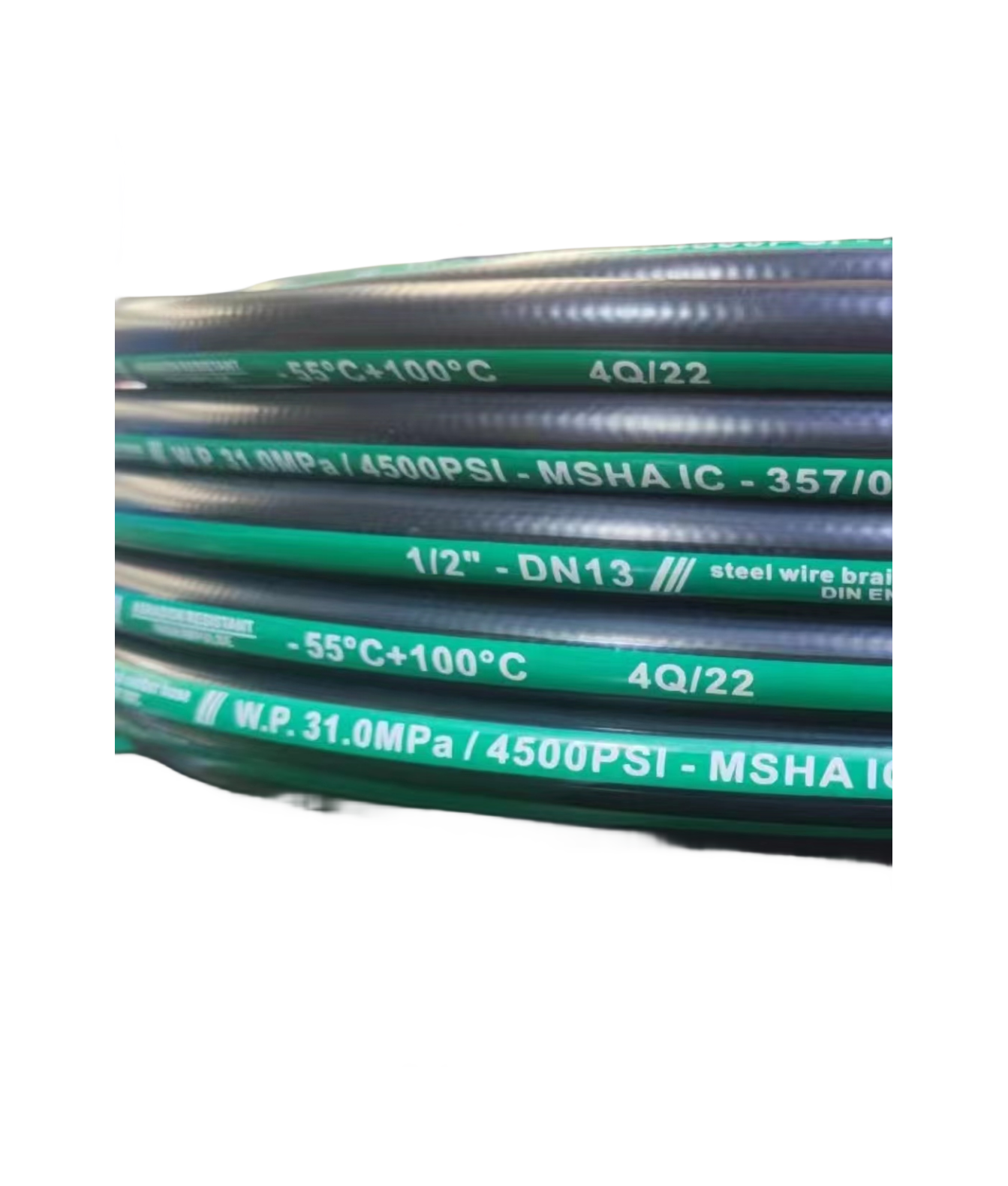
Steel braided Teflon hose, also known as PTFE hose with stainless steel reinforcement, is a composite product designed for the conveyance of fluids and gases under high pressure and extreme temperatures. Its position in the industrial chain is critical, serving as a flexible alternative to rigid metal piping in diverse applications spanning automotive, aerospace, chemical processing, oil and gas, and medical industries. The core performance characteristics center around its chemical inertness, exceptional temperature resistance (-60°C to +260°C), high pressure capacity (up to 6000 PSI or higher depending on construction), and flexibility, allowing for complex routing and minimizing stress on connections. The inherent smoothness of the Teflon (PTFE) liner minimizes frictional losses and ensures consistent flow rates. A significant industry pain point lies in selecting the appropriate hose construction to withstand specific chemical exposure and mechanical stress, as improper selection can lead to premature failure and costly downtime.
Material Science & Manufacturing
The construction of steel braided Teflon hose involves two primary materials: Polytetrafluoroethylene (PTFE), commonly known as Teflon, and stainless steel. PTFE is a synthetic fluoropolymer characterized by exceptional chemical resistance, a low coefficient of friction, and high thermal stability. Its manufacturing starts with the polymerization of tetrafluoroethylene monomer. The resultant PTFE resin is then processed through extrusion to form the inner liner of the hose. Key parameters during extrusion include temperature control (typically 327-387°C) to ensure complete melting and homogeneity, screw speed to manage melt viscosity, and die design to achieve the desired liner thickness and inner diameter. The stainless steel braid, typically 304 or 316 grade, provides the structural reinforcement needed to withstand high pressures. Manufacturing the braid involves wire drawing, stranding, and braiding processes. The braiding angle and wire diameter directly influence the hose’s burst pressure and flexibility. Following braiding, the steel braid is sintered to ensure dimensional stability and prevent corrosion. The final assembly involves applying a bonding adhesive between the PTFE liner and the steel braid, followed by curing to create a robust and leak-proof bond. Quality control measures include dimensional checks, burst pressure testing, and leak testing to verify conformance to specifications. Material compatibility between the PTFE and the specific fluid being conveyed is also rigorously assessed to prevent degradation or permeation.

Performance & Engineering
The performance of steel braided Teflon hose is dictated by several engineering considerations. Force analysis involves calculating hoop stress within the PTFE liner under internal pressure and axial stress in the steel braid. The braid's ability to resist axial shortening under pressure is crucial for maintaining the integrity of the hose. Environmental resistance is paramount; PTFE is exceptionally resistant to most chemicals, but prolonged exposure to strong bases or certain solvents at elevated temperatures can cause swelling or degradation. Temperature cycling can induce thermal stresses within the hose assembly, leading to fatigue failure. Compliance requirements often necessitate adherence to standards such as SAE J526 (for automotive applications) and ISO 6807 (for hydraulic applications), which specify burst pressure, impulse pressure, and temperature rating requirements. Furthermore, electrostatic discharge (ESD) considerations are important in applications involving flammable fluids, requiring the use of conductive PTFE liners or grounding mechanisms. The flexibility of the hose is engineered by controlling the braid angle and wire diameter; a tighter braid angle increases pressure resistance but reduces flexibility. Fatigue life is a critical parameter, particularly in applications involving repeated bending or flexing. Finite Element Analysis (FEA) is frequently employed to optimize hose design and predict performance under various loading conditions.
Technical Specifications
| Parameter | Unit | Typical Value (SAE J526 Type AI) | Typical Value (ISO 6807 Grade C) |
|---|---|---|---|
| Inner Diameter | mm | 6.35 | 8 |
| Outer Diameter | mm | 16.5 | 19 |
| Working Pressure | MPa | 20.7 | 21 |
| Burst Pressure | MPa | 82.7 | 84 |
| Temperature Range | °C | -60 to +260 | -40 to +121 |
| Braid Material | - | 304 Stainless Steel | 316 Stainless Steel |
| Liner Material | - | PTFE (Teflon) | PTFE (Teflon) |
Failure Mode & Maintenance
Steel braided Teflon hose, despite its robust construction, is susceptible to several failure modes. Fatigue cracking in the steel braid is a common issue, particularly in applications involving repeated bending or flexing. This can be exacerbated by corrosion, especially in chloride-rich environments. Delamination between the PTFE liner and the steel braid can occur due to inadequate bonding or exposure to incompatible fluids. Chemical attack, although rare, can degrade the PTFE liner, leading to permeation or cracking. Permeation of fluids through the PTFE liner can also occur, especially with low molecular weight gases. Oxidation of the steel braid at high temperatures can reduce its strength and flexibility. Maintenance primarily focuses on visual inspection for signs of wear, corrosion, or damage. Regularly check for cracks in the braid, swelling or discoloration of the liner, and leaks at the connections. Avoid sharp bends or kinking, as these can weaken the hose. Proper torqueing of fittings is critical to prevent leaks and ensure a secure connection. For applications involving corrosive fluids, consider using a hose with a chemically resistant outer cover. Periodic pressure testing can help identify potential weaknesses before they lead to catastrophic failure. Replacement should occur at the first sign of damage or after the hose has reached its recommended service life.
Industry FAQ
Q: What is the impact of different stainless steel grades (304 vs. 316) on hose performance?
A: 316 stainless steel offers superior corrosion resistance compared to 304, particularly in chloride environments. This makes 316 the preferred choice for marine applications, chemical processing, and any scenario where exposure to corrosive substances is anticipated. While 304 is suitable for less demanding applications, the increased longevity and reliability of 316 often justify the higher cost.
Q: How does the braiding angle affect the hose’s flexibility and pressure rating?
A: A shallower braiding angle generally results in greater flexibility but a lower pressure rating. A steeper braiding angle provides higher pressure capacity but reduces flexibility. The optimal braiding angle is a compromise based on the specific application requirements. Manufacturers carefully select the angle to achieve the desired balance between these two properties.
Q: What fluids are incompatible with PTFE, and what are the consequences of using the hose with such fluids?
A: While PTFE exhibits broad chemical compatibility, certain fluids can cause issues. Molten alkali metals (sodium, potassium) and elemental fluorine are highly reactive with PTFE. Strong bases and some high-temperature solvents can cause swelling and permeation. Using the hose with incompatible fluids can lead to liner degradation, permeation, and ultimately, hose failure.
Q: What are the considerations for selecting the correct fitting type for steel braided Teflon hose?
A: The fitting must be compatible with the hose’s dimensions and pressure rating. Crimping is the most common and reliable method for attaching fittings, ensuring a secure and leak-proof connection. The crimp size must be precise to avoid damaging the hose or creating a weak point. Threaded fittings should be properly sealed with PTFE tape or an appropriate sealant to prevent leaks. Incorrectly fitted connections are a significant cause of hose failure.
Q: How does temperature affect the working pressure rating of the hose?
A: As temperature increases, the working pressure rating of the hose generally decreases. This is due to the reduction in the strength of both the PTFE liner and the steel braid at elevated temperatures. Manufacturers provide derating curves that specify the allowable working pressure at different temperatures. Operating the hose above its rated temperature can significantly reduce its service life and increase the risk of failure.
Conclusion
Steel braided Teflon hose represents a critical component in numerous industrial applications, offering a unique combination of chemical inertness, temperature resistance, and high-pressure capability. Successful implementation demands a thorough understanding of material science principles, manufacturing processes, and engineering considerations. The selection process must prioritize compatibility with the conveyed fluid, operating temperature, pressure requirements, and environmental conditions.
Moving forward, advancements in materials science are likely to yield even more robust and chemically resistant PTFE formulations, while improvements in braiding techniques will enhance hose flexibility and durability. Continued emphasis on rigorous testing and adherence to industry standards (SAE, ISO) will be crucial for ensuring the long-term reliability and safety of these essential fluid conveyance systems.