
Apr . 01, 2024 17:55 Back to list
steel braided hydraulic hose Performance Analysis
Introduction
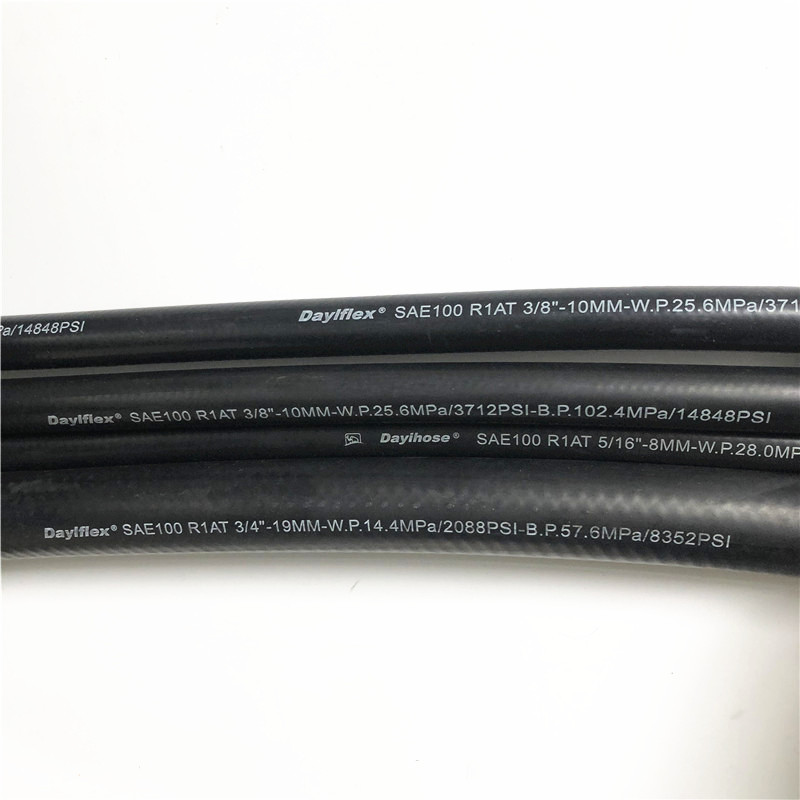
Steel braided hydraulic hose constitutes a critical component in fluid power systems, facilitating the transmission of hydraulic fluid to actuators and machinery. Unlike non-reinforced rubber hoses, these assemblies incorporate a high-strength steel wire braid – typically single, double, or spiral wound – providing significantly enhanced pressure resistance, burst strength, and operational longevity. Positioned downstream in the manufacturing chain from rubber compounding and steel wire drawing, it serves diverse applications including construction equipment, agricultural machinery, oil and gas exploration, and industrial manufacturing. Core performance characteristics encompass working pressure, burst pressure, temperature range, fluid compatibility, and bend radius; optimized performance addresses the prevailing industry pain points of leakage, system downtime, and safety hazards associated with fluid power transmission.
Material Science & Manufacturing
The construction of steel braided hydraulic hose relies on a synergistic combination of materials. The inner tube, responsible for fluid containment, is typically formulated from nitrile rubber (NBR), ethylene propylene diene monomer (EPDM), or fluorocarbon rubber (FKM), selected based on fluid compatibility and temperature requirements. NBR offers resistance to petroleum-based oils; EPDM excels in high-temperature and weathering applications; FKM provides superior resistance to aggressive chemicals and extreme temperatures. The reinforcement braid is constructed from high-tensile steel wire, commonly carbon steel with zinc plating for corrosion protection. The outer cover, providing abrasion and environmental protection, utilizes a blend of synthetic rubbers, often chloroprene (CR) or polyurethane (PU).
Manufacturing begins with extrusion of the inner tube to precise dimensional tolerances. The steel wire braid is then applied through a helical winding process, with braid angle and wire diameter dictating pressure capacity. Precise control of braid coverage is essential to prevent localized stress concentrations. Following braiding, the assembly undergoes vulcanization – a chemical curing process utilizing heat and pressure – to bond the rubber components to the steel wire and achieve a homogenous, leak-proof structure. Key parameters monitored during vulcanization include temperature, pressure, and cure time, as deviations can lead to under-curing (reduced strength) or over-curing (embrittlement). Post-vulcanization, the hose is subjected to rigorous quality control including pressure testing, dimensional inspection, and visual assessment for defects.
Performance & Engineering
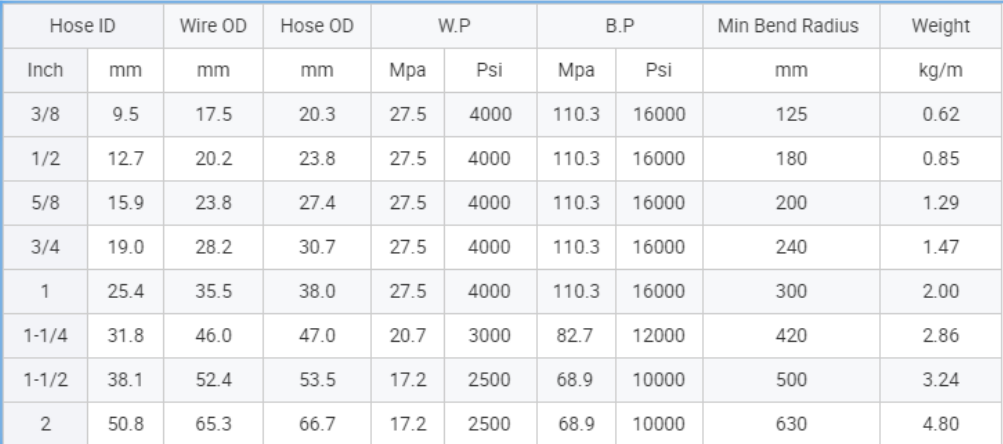
Performance of steel braided hydraulic hose is governed by fundamental principles of material mechanics and fluid dynamics. The steel braid bears the primary hoop stress resulting from internal fluid pressure. The number of braids, wire diameter, and braid angle directly influence the hose's burst pressure – the maximum pressure it can withstand before catastrophic failure. Finite element analysis (FEA) is routinely employed to optimize braid geometry and predict stress distribution under various loading conditions. Bend radius is a critical engineering consideration, as exceeding the minimum bend radius can induce localized stress concentrations leading to fatigue failure.
Environmental resistance is paramount. Exposure to ozone, UV radiation, and extreme temperatures can degrade the rubber components, reducing flexibility and increasing the risk of cracking. Hose assemblies must meet relevant industry standards for temperature range, fluid compatibility (including resistance to hydraulic fluids, fuels, and lubricants), and abrasion resistance. Compliance requirements vary by region and application, with standards such as SAE J517, EN 856, and DIN EN 857 specifying performance criteria and testing procedures. The selection of appropriate rubber compounds and protective coverings is crucial for ensuring long-term reliability in harsh operating environments. Fatigue life is also a key performance parameter, especially in applications with pulsating pressure or frequent bending.
Technical Specifications
| Parameter | Unit | SAE 100R2AT | EN 856 4SH |
|---|---|---|---|
| Working Pressure | MPa | 20.7 | 21.0 |
| Burst Pressure | MPa | 82.7 | 84.0 |
| Temperature Range | °C | -40 to +100 | -40 to +100 |
| Inner Tube | Material | NBR | NBR |
| Reinforcement | Material | Steel Wire Braid (2AT) | Steel Wire Braid (4SH) |
| Outer Cover | Material | Synthetic Rubber | Synthetic Rubber |
Failure Mode & Maintenance
Common failure modes in steel braided hydraulic hose include burst failure due to exceeding pressure limits, fatigue cracking from repeated bending or pressure pulsations, abrasion damage from external contact, and degradation of rubber components from environmental exposure. Burst failures typically occur at points of weakness in the braid or inner tube. Fatigue cracks often initiate at braid crossover points or areas of localized stress concentration. Abrasion can compromise the outer cover, exposing the braid to corrosion. Oil permeation through the rubber inner tube, leading to swelling and weakening, can also contribute to failure.
Preventative maintenance is crucial for maximizing hose life. Regular visual inspection should identify signs of abrasion, cracking, or swelling. Periodic pressure testing can verify the hose’s integrity. Avoid exceeding the rated working pressure and minimum bend radius. Protect hoses from direct contact with hot surfaces, sharp edges, and corrosive substances. Proper storage in a cool, dry environment is essential. When replacing hoses, ensure compatibility with the hydraulic fluid and operating conditions. If a hose exhibits any signs of damage, it should be immediately replaced. Proper crimping of fittings is also vital, as improper crimping can lead to leakage or failure.
Industry FAQ
Q: What is the primary advantage of a double-braided hose over a single-braided hose?
A: A double-braided hose offers significantly higher pressure ratings and improved burst strength compared to a single-braided hose. The increased steel wire density provides greater reinforcement, making it suitable for demanding applications with higher system pressures and dynamic loading conditions. This is achieved through the addition of a second layer of steel braid, effectively doubling the reinforcing capacity.
Q: How does temperature affect the performance of a hydraulic hose?
A: Extreme temperatures can significantly degrade the rubber components of a hydraulic hose. High temperatures can cause softening and swelling of the rubber, reducing its strength and flexibility. Low temperatures can lead to embrittlement and cracking. Exceeding the specified temperature range for the hose can dramatically reduce its lifespan and increase the risk of failure. Selecting a hose with appropriate temperature resistance is crucial for the intended application.
Q: What is the impact of improper hose routing on hose life?
A: Improper hose routing can drastically reduce hose life. Sharp bends exceeding the minimum bend radius induce localized stress concentrations, leading to fatigue cracking. Contact with hot surfaces, abrasive materials, or moving parts can cause premature wear and damage to the hose cover. Incorrect routing can also result in twisting, which weakens the reinforcement braid. Proper hose support and routing are essential for maximizing performance and preventing failures.
Q: What are the key considerations when selecting a hose fitting?
A: Selecting the correct hose fitting is crucial for ensuring a leak-free and reliable connection. Factors to consider include hose size, working pressure, fluid compatibility, and thread type. Fittings must be properly crimped onto the hose using calibrated tooling to achieve a secure and permanent bond. Using incompatible fittings or incorrect crimping procedures can lead to leakage, hose blow-off, and potentially hazardous situations.
Q: How does fluid compatibility impact hose selection?
A: Fluid compatibility is a critical factor in hose selection. Different hydraulic fluids have varying chemical properties, and some fluids can cause degradation of the rubber inner tube. Using a hose that is not compatible with the fluid can lead to swelling, softening, cracking, and ultimately, hose failure. It is essential to consult fluid compatibility charts and select a hose specifically designed for the intended fluid.
Conclusion
Steel braided hydraulic hose remains an indispensable element in numerous industrial applications, delivering a robust and reliable solution for fluid power transmission. The interplay between material science, manufacturing precision, and rigorous engineering design dictates its performance and longevity. Understanding the core principles governing pressure resistance, environmental durability, and potential failure modes is paramount for selecting, installing, and maintaining these critical components effectively.
Future developments will likely focus on advanced materials – such as thermoplastic composites – to further enhance weight reduction, corrosion resistance, and fluid compatibility. Improvements in braiding techniques and crimping technology will continue to optimize hose performance and reliability. Furthermore, the integration of sensor technologies for real-time pressure and temperature monitoring will enable predictive maintenance strategies, minimizing downtime and maximizing operational efficiency. Continued adherence to industry standards and a proactive approach to maintenance will ensure the safe and effective utilization of steel braided hydraulic hose in demanding industrial environments.