
Apr . 01, 2024 17:55 Back to list
stainless steel braided hose Performance Analysis
Introduction
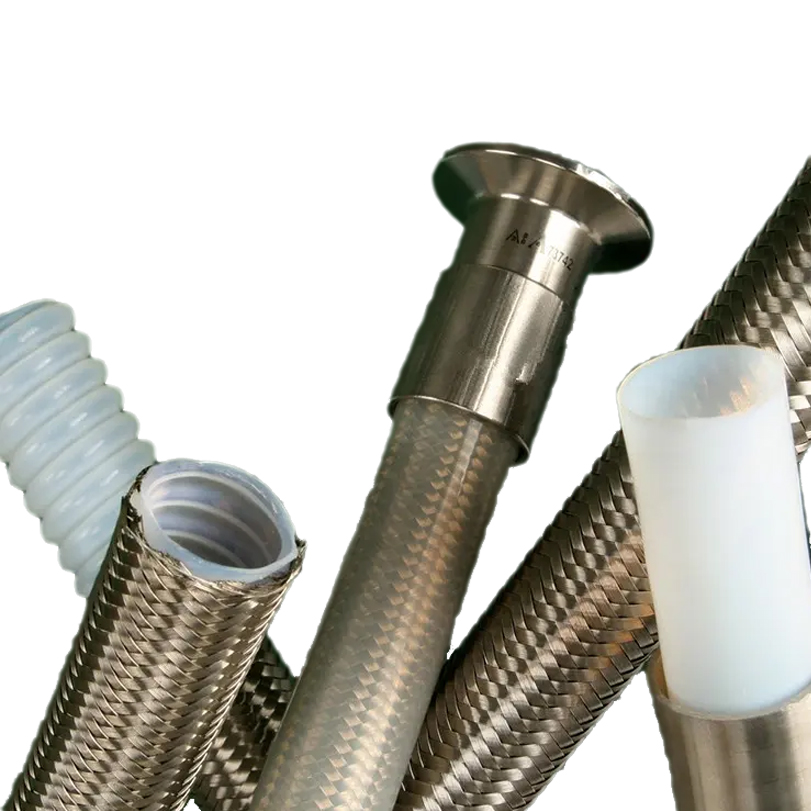
Stainless steel braided hose is a composite structure designed for the conveyance of fluids and gases under pressure. Its core functionality stems from the combination of a flexible inner tube, typically composed of synthetic rubber or thermoplastic materials, reinforced by an outer braiding of stainless steel wire. Positioned within the industrial fluid transfer chain, these hoses serve as critical components in a diverse range of applications, including automotive, hydraulic systems, chemical processing, and pneumatic controls. The primary performance characteristics – pressure rating, temperature resistance, chemical compatibility, and flexibility – dictate its suitability for specific engineering demands. Unlike unreinforced rubber hoses, the stainless steel braid significantly enhances burst strength, reduces kinking, and provides robust protection against abrasion and external damage, making it a superior solution in harsh operating environments.
Material Science & Manufacturing
The construction of stainless steel braided hose necessitates a detailed understanding of material properties and precise manufacturing control. The inner tube is commonly formulated from nitrile rubber (NBR) for oil resistance, ethylene propylene diene monomer (EPDM) for water and weathering resistance, or polytetrafluoroethylene (PTFE) for aggressive chemical environments. Each material exhibits distinct physical characteristics; NBR offers tensile strength ranging from 17-35 MPa, EPDM between 14-28 MPa, and PTFE displays exceptional chemical inertness but lower tensile strength (typically 20-35 MPa). The stainless steel braiding predominantly employs 304 or 316 grade stainless steel, selected for their corrosion resistance and mechanical strength. 304 stainless steel boasts a yield strength of approximately 205 MPa and a tensile strength of 550 MPa, while 316 enhances corrosion resistance through the addition of molybdenum.
The manufacturing process typically involves several stages. First, the inner tube is extruded to the desired dimensions. Subsequently, the stainless steel wire is meticulously braided over the tube using specialized braiding machines, controlling braid angle and coverage density to optimize pressure resistance. Braid coverage, expressed as a percentage, directly correlates with burst pressure; higher coverage generally yields greater strength. Following braiding, the hose assembly undergoes curing (for rubber hoses) to vulcanize the rubber and enhance its elasticity. Quality control measures at each stage, including dimensional checks, pressure testing, and visual inspection for braid defects, are paramount. Parameter control is crucial – particularly maintaining consistent extrusion temperatures for uniform tube thickness, and precise braid tension to avoid wire breakage or loosening.
Performance & Engineering
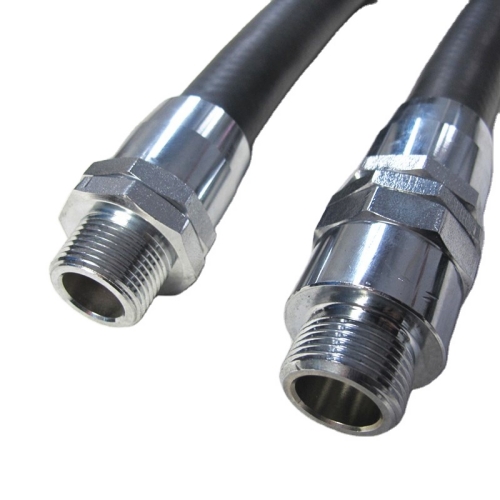
The performance of stainless steel braided hose is governed by fundamental principles of fluid mechanics and material stress analysis. Burst pressure, the maximum pressure the hose can withstand before failure, is determined by Barlow’s formula (P = 2St/D, where P is pressure, S is tensile strength of the steel, t is wall thickness, and D is diameter). The stainless steel braid provides hoop stress resistance, preventing radial expansion under pressure. Flex fatigue, the deterioration of the hose’s flexibility and strength due to repeated bending, is a critical consideration, particularly in dynamic applications. The radius of bend significantly impacts flex fatigue life; tighter radii induce higher stress concentrations.
Environmental resistance is another key performance characteristic. Prolonged exposure to UV radiation can degrade the rubber inner tube, leading to cracking and reduced flexibility. Chemical compatibility dictates the suitability of the hose for specific fluid handling applications; for example, NBR is incompatible with ketones and esters, while PTFE offers broad chemical resistance. Compliance with industry standards, such as SAE J517 (for hydraulic hose) and EN 853 (for automotive hose), is essential to ensure safety and performance. These standards define test procedures for pressure resistance, impulse testing, and temperature cycling, validating the hose’s ability to meet specified requirements. Proper installation practices, including avoiding sharp bends and ensuring correct fitting connections, are vital to maximize hose lifespan and prevent premature failure.
Technical Specifications
| Parameter | Unit | Typical Value (NBR Inner Tube, 304 SS Braid) | Typical Value (PTFE Inner Tube, 316 SS Braid) |
|---|---|---|---|
| Working Pressure | MPa | 25 | 40 |
| Burst Pressure | MPa | 100 | 160 |
| Temperature Range | °C | -40 to +100 | -200 to +260 |
| Inner Diameter | mm | 6-50 | 4-38 |
| Braid Coverage | % | 70-90 | 80-95 |
| Tensile Strength (Braid) | MPa | 550 | 550 |
Failure Mode & Maintenance
Stainless steel braided hose, despite its robust construction, is susceptible to several failure modes. Fatigue cracking, particularly at the crimp points where the hose is attached to fittings, is a common issue resulting from repeated flexing and pressure cycling. Corrosion, especially in environments with chloride exposure, can lead to pitting and weakening of the stainless steel braid. Delamination, the separation of the rubber inner tube from the steel braid, occurs due to inadequate adhesion or thermal stress. Abrasion, caused by external contact with abrasive surfaces, can compromise the outer braid and expose the inner tube. Oxidation of the rubber inner tube, induced by prolonged exposure to oxygen and ozone, results in hardening and cracking.
Preventive maintenance is crucial for extending hose lifespan. Regular visual inspection for signs of cracking, abrasion, or swelling is recommended. Pressure testing should be conducted periodically to verify the hose’s integrity. Proper storage conditions, avoiding direct sunlight and extreme temperatures, can minimize degradation. When replacing hoses, it’s essential to use compatible fittings and follow the manufacturer’s torque specifications. In case of suspected damage, the hose should be immediately removed from service. For minor abrasions, applying a protective sleeve can prevent further damage. If corrosion is present, the hose should be replaced. Following these maintenance practices minimizes downtime and ensures safe and reliable operation.
Industry FAQ
Q: What is the impact of braid angle on hose performance?
A: Braid angle significantly influences the hose’s ability to resist axial stretching and torsional deformation. A shallower braid angle provides greater resistance to axial stretch but reduces resistance to torsional movement. A steeper braid angle offers better torsional resistance but can compromise axial stability. Optimal braid angle is determined by the specific application requirements, balancing these competing factors.
Q: How does the choice of inner tube material affect chemical compatibility?
A: The inner tube material dictates the hose's compatibility with various fluids. NBR is suitable for oil-based fluids, while EPDM excels with water and steam. PTFE offers the broadest chemical resistance, handling acids, bases, and solvents effectively. Incorrect material selection can lead to swelling, degradation, and ultimately, hose failure.
Q: What are the primary causes of hose fitting failure?
A: Common causes of fitting failure include over-torquing, under-torquing, and corrosion. Over-torquing can damage the fitting or hose end, while under-torquing can lead to leakage. Corrosion, particularly galvanic corrosion between dissimilar metals, weakens the fitting. Using compatible fittings and adhering to manufacturer’s torque specifications are critical.
Q: What is the significance of impulse testing?
A: Impulse testing simulates the pressure pulsations that occur in many hydraulic systems. It assesses the hose’s ability to withstand repeated pressure surges without failure. This is critical because pressure spikes can exceed the static working pressure and cause premature hose failure.
Q: How does temperature affect the performance and lifespan of a braided hose?
A: Temperature extremes can significantly degrade hose performance. High temperatures accelerate rubber degradation, reducing flexibility and increasing the risk of cracking. Low temperatures can cause the rubber to harden and become brittle. Exceeding the specified temperature range can lead to immediate failure or significantly shorten the hose’s lifespan.
Conclusion
Stainless steel braided hose represents a crucial advancement in fluid transfer technology, offering superior strength, flexibility, and durability compared to unreinforced alternatives. Its performance is intricately linked to the careful selection of materials – from the inner tube polymer to the stainless steel braid grade – and the precision of manufacturing processes. Understanding the interplay between material properties, engineering principles, and industry standards is paramount for ensuring optimal hose selection and maximizing operational lifespan.
The ongoing development of advanced materials and manufacturing techniques continues to push the boundaries of braided hose performance, addressing challenges related to increasingly demanding operating conditions and stringent regulatory requirements. Future advancements may include the incorporation of new polymers with enhanced chemical resistance and temperature stability, as well as the implementation of advanced braiding techniques to further improve burst pressure and flex fatigue life. Proper maintenance and adherence to established best practices remain essential for realizing the full potential of this critical component.