
Apr . 01, 2024 17:55 Back to list
spiral hydraulic hose Performance Analysis
Introduction
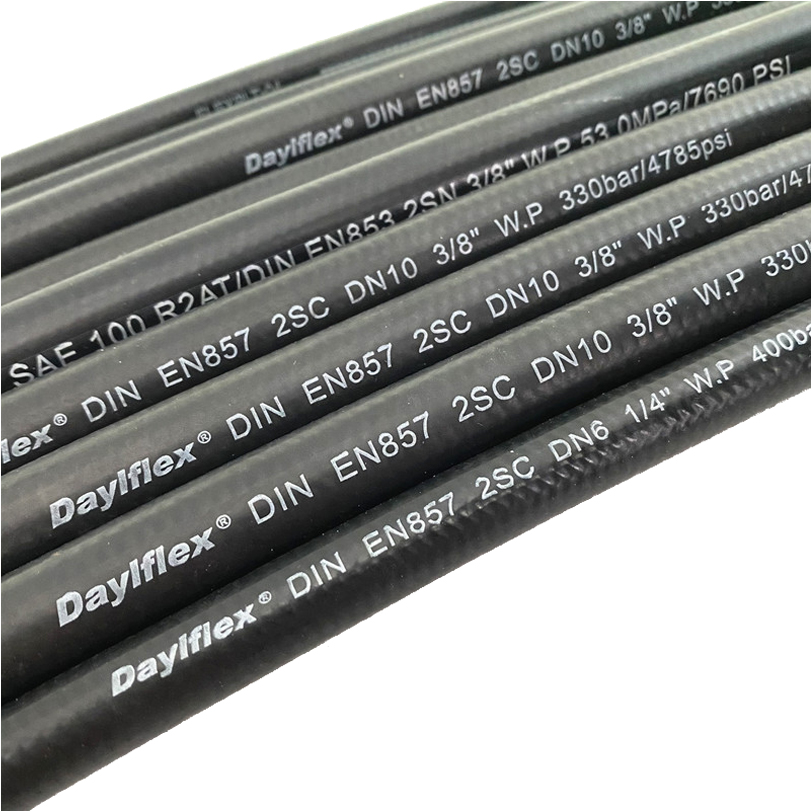
Spiral hydraulic hose is a reinforced flexible conduit designed to transmit hydraulic fluid under high pressure in a variety of applications, ranging from construction equipment and agricultural machinery to industrial manufacturing and aerospace systems. Positioned within the fluid power industry as a critical component, it replaces rigid metal tubing in scenarios requiring movement, vibration absorption, or complex routing. Its core performance characteristics revolve around pressure containment, burst strength, flexibility, and resistance to fluid degradation and environmental factors. Unlike braided hose, spiral hose utilizes a continuous helical winding of high-tensile wire, providing superior flexibility and resistance to kinking, particularly in demanding applications. The selection of appropriate spiral hose is paramount, as improper specification can lead to system failure, downtime, and potential safety hazards. This guide provides an in-depth examination of spiral hydraulic hose, covering material science, manufacturing processes, performance parameters, failure modes, and relevant industry standards.
Material Science & Manufacturing
Spiral hydraulic hose construction typically involves four primary layers: the inner tube, the reinforcement, the intermediate layer (often a stabilizer), and the outer cover. The inner tube, responsible for fluid compatibility, is commonly manufactured from nitrile rubber (NBR), chloroprene rubber (CR), or fluorocarbon elastomers (FKM/Viton) depending on the conveyed fluid. NBR offers good resistance to petroleum-based fluids, CR excels in weathering and ozone resistance, while FKM provides superior resistance to aggressive chemicals and high temperatures. The reinforcement layer, defining the hose's pressure rating and flexibility, consists of spirally wound high-tensile steel wire. Wire diameter, pitch (spacing between spirals), and material grade (carbon steel, stainless steel) directly influence burst pressure and fatigue life. The intermediate layer, usually a synthetic rubber compound, provides adhesion between the reinforcement and cover, stabilizes the reinforcement spirals, and contributes to dimensional stability. Finally, the outer cover, providing environmental protection, is typically made of synthetic rubbers like CR, EPDM (ethylene propylene diene monomer), or polyurethane.
Manufacturing processes begin with inner tube extrusion, followed by precise winding of the steel wire reinforcement. Consistent wire tension and accurate pitch control are crucial to achieving uniform pressure distribution and preventing localized stress concentrations. The intermediate layer is then applied via extrusion or calendaring, ensuring complete encapsulation of the reinforcement. The outer cover is similarly extruded, and the hose undergoes curing in an autoclave or continuous vulcanization process. Key parameters controlled during manufacturing include rubber compound viscosity, extrusion temperature, curing time and temperature, and wire tension. Post-curing, hoses are subject to rigorous quality control, including hydrostatic testing, impulse testing, and dimensional inspection, to verify conformance to specifications. Further surface treatments, such as abrasion-resistant coatings, may be applied depending on the intended application.
Performance & Engineering
The performance of spiral hydraulic hose is governed by principles of fluid mechanics, materials science, and structural engineering. Burst pressure, a critical performance metric, is determined by the tensile strength of the steel wire and the structural integrity of the hose assembly. Hose designs are engineered to withstand a safety factor of at least 4:1, meaning the burst pressure is at least four times the working pressure. Flexibility, essential for complex routing, is dictated by the wire pitch and the elasticity of the rubber compounds. A smaller pitch generally yields greater flexibility but may reduce burst pressure. Impulse testing, simulating pressure pulsations common in hydraulic systems, evaluates the hose’s fatigue resistance and ability to withstand cyclic loading. The hose must withstand repeated pressure surges without degradation or failure. Environmental resistance is paramount, considering exposure to temperature extremes, UV radiation, ozone, and corrosive fluids. Selection of appropriate rubber compounds and cover materials is critical to maintain performance in harsh environments.
Force analysis reveals that internal fluid pressure generates hoop stress in the hose wall, while bending induces tensile and compressive stresses. The reinforcement layer bears the majority of the tensile load, while the rubber compounds provide sealing and support. Finite Element Analysis (FEA) is often employed to optimize hose designs, predict stress distribution, and identify potential failure points. Compliance requirements, such as those outlined in SAE J517, dictate minimum performance standards for hydraulic hose, including pressure ratings, temperature ranges, and fluid compatibility. Adherence to these standards ensures safety and reliability in hydraulic systems. Consideration must also be given to end fitting compatibility and proper installation techniques to maintain hose integrity and prevent leaks.
Technical Specifications
| Parameter | Unit | SAE 100R12 | SAE 100R13 |
|---|---|---|---|
| Working Pressure | PSI | 2000 | 3000 |
| Burst Pressure | PSI | 8000 | 12000 |
| Temperature Range | °F | -40 to +212 | -40 to +250 |
| Reinforcement | Material | Spiral Steel Wire | Spiral Steel Wire |
| Inner Tube | Material | NBR (Nitrile Rubber) | NBR (Nitrile Rubber) |
| Outer Cover | Material | CR (Chloroprene Rubber) | CR (Chloroprene Rubber) |
Failure Mode & Maintenance
Spiral hydraulic hose is susceptible to various failure modes, stemming from both internal and external factors. Fatigue cracking, induced by repeated pressure pulsations and bending, is a common cause of failure, particularly in high-demand applications. Cracking often initiates at stress concentrators, such as near end fittings or at locations where the hose is sharply bent. Another prevalent failure mode is abrasion of the outer cover, caused by contact with abrasive surfaces or environmental debris. This exposes the reinforcement layer to corrosion, accelerating degradation. Pinholes in the inner tube, resulting from fluid degradation or internal corrosion, lead to leaks and pressure loss. Delamination, the separation of layers within the hose wall, reduces structural integrity and increases the risk of catastrophic failure. Oxidation of the rubber compounds, caused by exposure to oxygen, ozone, and UV radiation, leads to hardening, cracking, and loss of flexibility.
Preventive maintenance is crucial to extending hose life and preventing failures. Regular visual inspections should be conducted to identify signs of wear, damage, or degradation. Hose should be replaced immediately if cracks, abrasions, or leaks are detected. Proper routing and support are essential to minimize bending stress and prevent abrasion. Avoid sharp bends, twisting, and contact with hot surfaces. Fluid compatibility must be verified to prevent internal corrosion or degradation. Regularly monitor system pressure and temperature to ensure they remain within the hose's rated limits. When replacing a hose, use only compatible end fittings and ensure they are properly crimped. Consider using hose guards or protective sleeves in areas prone to abrasion. Periodic hydrostatic testing can verify hose integrity and detect potential weaknesses before they lead to catastrophic failure.
Industry FAQ
Q: What is the primary difference between spiral hose and braided hose in terms of application suitability?
A: Spiral hose offers significantly greater flexibility and kink resistance compared to braided hose. This makes it ideal for applications requiring tight bends, dynamic movement, or frequent repositioning, such as construction equipment and agricultural machinery. Braided hose, while more cost-effective, is generally better suited for static applications with minimal bending.
Q: How does the steel wire pitch affect the performance characteristics of spiral hose?
A: A smaller steel wire pitch increases hose flexibility but generally reduces burst pressure. A larger pitch provides higher pressure ratings but sacrifices flexibility. The optimal pitch is a compromise based on the specific application requirements.
Q: What are the common causes of premature failure in hydraulic hose operating at elevated temperatures?
A: Elevated temperatures accelerate the degradation of rubber compounds, leading to hardening, cracking, and loss of elasticity. This is particularly true for NBR inner tubes. Selecting a hose with a high-temperature rated inner tube (e.g., FKM/Viton) and ensuring adequate heat dissipation are crucial for mitigating this risk.
Q: What level of safety factor should be considered when selecting a hydraulic hose for a specific application?
A: A safety factor of at least 4:1 is generally recommended, meaning the burst pressure of the hose should be at least four times the maximum working pressure of the system. Higher safety factors may be warranted for critical applications or systems with significant pressure fluctuations.
Q: What are the best practices for storing hydraulic hose to prevent degradation during periods of non-use?
A: Hydraulic hose should be stored in a cool, dry, and dark environment, away from direct sunlight, ozone sources, and extreme temperatures. Hose should be coiled loosely and stored horizontally to avoid kinking or stretching. Avoid storing hose in contact with incompatible materials that could cause degradation.
Conclusion
Spiral hydraulic hose represents a sophisticated engineering solution for fluid power transmission, offering a unique combination of flexibility, durability, and high-pressure capability. Successful implementation relies on a thorough understanding of material science, manufacturing processes, and performance parameters. Careful consideration of application-specific requirements, including fluid compatibility, temperature range, and pressure demands, is paramount in selecting the appropriate hose type and ensuring long-term reliability.
Moving forward, advancements in materials science will likely lead to the development of even more durable and high-performing spiral hydraulic hose. Research into alternative reinforcement materials, such as aramid fibers, and novel rubber compounds with enhanced resistance to degradation will continue to drive innovation in this critical component of fluid power systems. Continued adherence to industry standards and best practices for installation and maintenance will remain essential for maximizing hose life and preventing costly failures.