
Apr . 01, 2024 17:55 Back to list
smooth surface hydraulic hose Performance Analysis

Introduction
Smooth surface hydraulic hose is a critical component in fluid power systems, facilitating the transmission of hydraulic fluid to actuators and other components. Distinguished by its internally smooth bore and often an external smooth cover, this hose type minimizes flow restriction and pressure drop, leading to improved system efficiency and responsiveness. Within the industrial chain, it represents a downstream product of polymer and reinforcement material processing, serving sectors including construction equipment, agricultural machinery, material handling, and industrial manufacturing. Core performance characteristics center around its pressure rating, temperature range, fluid compatibility, and resistance to abrasion and kinking. Unlike textured hoses designed for specific applications like high-flex or extreme temperatures, smooth surface hoses prioritize consistent fluid velocity and minimized energy loss in standard hydraulic systems. Addressing industry pain points, these hoses mitigate cavitation risks and facilitate accurate system control, key considerations for precision applications and safety-critical operations.
Material Science & Manufacturing
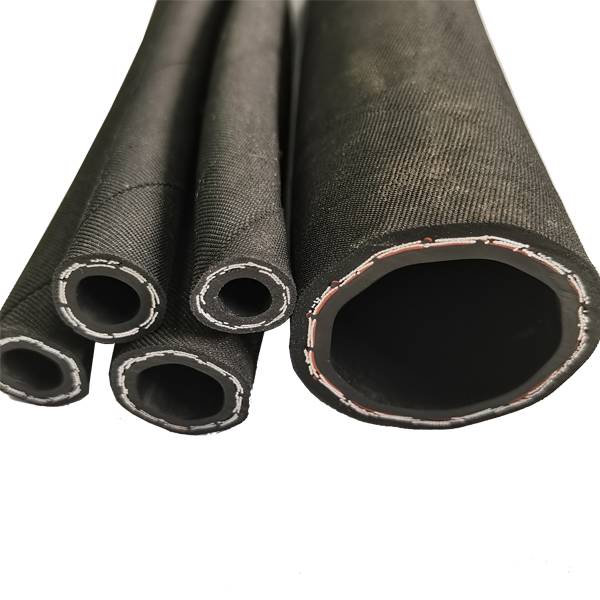
The construction of smooth surface hydraulic hose typically involves several layers, each contributing specific properties. The innermost layer, or tube, is generally composed of a synthetic rubber compound such as nitrile (NBR), chloroprene (CR, Neoprene), or ethylene propylene diene monomer (EPDM), chosen based on fluid compatibility. Nitrile offers excellent resistance to petroleum-based hydraulic fluids, while EPDM provides superior resistance to heat, ozone, and weathering. The reinforcement layer is crucial for pressure containment and is commonly built up from multiple braids or spirals of high-tensile steel wire. The number and configuration of these layers dictate the hose’s working pressure capacity. Between the tube and reinforcement, a bonding layer ensures adhesion and prevents separation during flexing. The outer cover, often made of CR or polyurethane, provides abrasion resistance, weather protection, and resistance to oil and chemicals. Manufacturing processes include extrusion of the inner tube and outer cover, followed by helical winding or braiding of the reinforcement layers. Precise control of extrusion parameters (temperature, screw speed, die pressure) is vital for consistent tube thickness and smoothness. Braiding tension and pattern are equally critical for achieving the specified pressure rating. Post-processing includes vulcanization (curing) to achieve desired rubber properties, dimensional inspection, and pressure testing to verify performance.
Performance & Engineering
The performance of smooth surface hydraulic hose is fundamentally governed by principles of fluid mechanics and material strength. Hose selection involves careful consideration of working pressure, burst pressure, temperature range, and fluid type. Working pressure is typically 4:1 safety factor of burst pressure, as defined by industry standards. The smooth inner bore minimizes frictional losses, translating to lower pressure drop across the hose length and improved system efficiency. Force analysis considers hoop stress (generated by internal pressure) and longitudinal stress (resulting from pressure and bending). Reinforcement layers are engineered to withstand these stresses without permanent deformation or failure. Environmental resistance is critical, particularly in outdoor applications. Exposure to UV radiation, ozone, and extreme temperatures can degrade the rubber compounds, leading to cracking and reduced flexibility. Compliance requirements vary by region and application. For example, SAE J517 specifies performance standards for hydraulic hose in North America, while EN 853 and EN 857 cover European standards. Functional implementation necessitates careful consideration of hose routing, bend radius, and fitting compatibility. Excessive bending or kinking can significantly reduce flow capacity and accelerate fatigue failure. The hose’s elasticity also impacts system response time and vibration damping characteristics.
Technical Specifications
| Parameter | Unit | SAE 100 R1 AT | SAE 100 R2 AT |
|---|---|---|---|
| Working Pressure | MPa | 20.7 | 34.5 |
| Burst Pressure | MPa | 82.7 | 138.0 |
| Temperature Range | °C | -40 to +100 | -40 to +100 |
| Inner Tube | Material | NBR | NBR |
| Reinforcement | Material | Single Steel Wire Braid | Two Steel Wire Braids |
| Cover | Material | CR | CR |
Failure Mode & Maintenance
Smooth surface hydraulic hose is susceptible to several failure modes. Fatigue cracking, often initiated at the fitting interface or at points of high stress concentration, results from repeated flexing and pressure cycling. Delamination, the separation of layers, can occur due to inadequate bonding or exposure to aggressive fluids. Rubber degradation, caused by exposure to heat, ozone, UV radiation, and incompatible fluids, leads to loss of flexibility and cracking. Abrasion damage can compromise the outer cover, exposing the reinforcement layers to corrosion. Internal erosion can occur if the fluid contains abrasive particles. Kinking, caused by excessive bending, restricts flow and can lead to localized stress concentrations. Preventative maintenance is crucial. Regular visual inspections should be conducted to identify signs of cracking, abrasion, or leakage. Hose assemblies should be replaced if damage is detected or if they have exceeded their service life. Proper hose routing and bend radius should be maintained. Fluid cleanliness is essential to prevent internal erosion. Fittings should be inspected for corrosion and properly tightened. Storage conditions should protect hoses from extreme temperatures, UV radiation, and ozone exposure. Routine pressure testing and fluid analysis can also help identify potential problems before they lead to catastrophic failure.
Industry FAQ
Q: What is the impact of exceeding the minimum bend radius on hose lifespan?
A: Exceeding the minimum bend radius introduces significant stress concentrations within the hose structure, particularly in the reinforcement layers. This accelerates fatigue failure and can lead to premature cracking. Repeatedly bending the hose beyond its specified radius causes microscopic damage that accumulates over time, ultimately reducing its burst pressure and overall service life. Proper hose routing and the use of appropriate fitting arrangements are essential to maintain the recommended bend radius.
Q: How does fluid compatibility affect hose selection and performance?
A: Fluid compatibility is paramount. Using a hose material incompatible with the hydraulic fluid can cause swelling, softening, or degradation of the inner tube, leading to leaks and system failure. Different hydraulic fluids (petroleum-based, synthetic, water-glycol) require specific hose materials (NBR, EPDM, PTFE). Compatibility charts should be consulted to ensure the hose material is resistant to the fluid’s chemical composition, temperature range, and pressure.
Q: What are the key differences between single and double braided hoses and their respective applications?
A: Single braided hoses offer good flexibility and are suitable for moderate pressure applications (up to approximately 20 MPa). Double braided hoses provide significantly higher pressure capacity (up to 35 MPa or more) and improved resistance to kinking. Double braided hoses are typically used in applications demanding higher performance and reliability, such as heavy machinery and high-pressure hydraulic systems.
Q: What is the significance of the “dash size” designation in hydraulic hose specifications?
A: The dash size (e.g., -4, -6, -8) refers to the internal diameter of the hose in sixteenths of an inch. A dash-8 hose has an internal diameter of 8/16 inch, or 1/2 inch. The dash size is a crucial parameter for determining flow capacity and pressure drop. Choosing the correct dash size ensures adequate fluid velocity and minimizes energy loss within the system.
Q: How does temperature affect the performance characteristics of hydraulic hoses?
A: Temperature significantly impacts hose performance. Elevated temperatures can reduce the hose’s pressure rating and accelerate rubber degradation. Low temperatures can decrease flexibility and increase the risk of cracking. Hose materials are typically rated for specific temperature ranges. Operating outside these ranges can compromise the hose's integrity and lead to failure. Selecting a hose material with appropriate temperature resistance is vital for reliable operation.
Conclusion
Smooth surface hydraulic hose remains a foundational element in numerous industrial applications, offering a balance of performance, reliability, and cost-effectiveness. The material science and manufacturing processes involved are complex, requiring precise control of parameters to achieve desired properties and ensure long-term durability. Understanding the performance characteristics, potential failure modes, and proper maintenance practices is crucial for maximizing hose lifespan and minimizing system downtime.
Looking ahead, advancements in polymer technology and reinforcement materials will likely lead to hoses with increased pressure ratings, improved temperature resistance, and enhanced fluid compatibility. Integration of smart sensors within hose assemblies could provide real-time monitoring of pressure, temperature, and strain, enabling predictive maintenance and reducing the risk of catastrophic failures. Continued adherence to stringent industry standards and quality control procedures will be essential for maintaining the integrity and safety of hydraulic systems.