
Apr . 01, 2024 17:55 Back to list
sae100r8 Hydraulic Hose Performance Analysis
Introduction
SAE 100R8 is a Society of Automotive Engineers (SAE) standard defining specifications for non-conductive, synthetic rubber hydraulic hose and hose assemblies. Primarily employed in hydraulic systems for the transmission of petroleum-based fluids such as hydraulic oil, lubricating oil, and fuel oil, it finds widespread application in mobile machinery, construction equipment, agricultural vehicles, and various industrial settings. Its position within the hydraulic system is critical, acting as the fluid conduit between pumps, valves, actuators, and reservoirs. Core performance characteristics include burst pressure, working pressure, temperature range, and fluid compatibility. A key industry pain point revolves around maintaining consistent performance under varying operational conditions, preventing premature failure due to fluid incompatibility, abrasion, and exceeding pressure limits. Furthermore, ensuring compliance with evolving environmental regulations regarding fluid containment is a persistent concern.
Material Science & Manufacturing
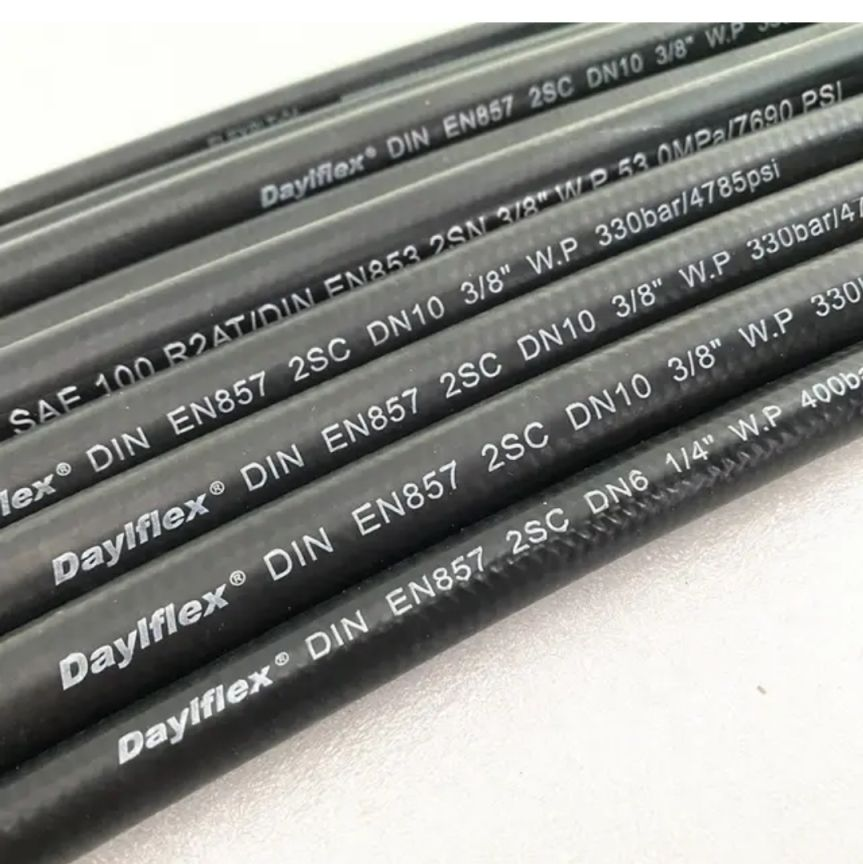
SAE 100R8 hose construction typically involves three primary layers: an inner tube, a reinforcement layer, and an outer cover. The inner tube is commonly composed of nitrile rubber (NBR), known for its excellent resistance to petroleum-based fluids, abrasion, and heat. Alternative materials like chloroprene rubber (CR) may be used for specific applications demanding broader temperature resilience. The reinforcement layer is crucial for pressure containment and usually consists of multiple spiraled high-tensile steel wire layers. The steel wire’s tensile strength and diameter are key parameters controlling the hose’s burst pressure. The outer cover, providing environmental protection and abrasion resistance, is frequently made of synthetic rubber compounds, such as chloroprene or polyurethane. Manufacturing involves extrusion of the inner tube and outer cover, followed by precise winding of the steel reinforcement layers. Critical process control parameters include extrusion temperature, cure time, wire tension during winding, and dimensional accuracy. Post-manufacturing testing includes pressure testing to verify burst strength, impulse testing to assess fatigue life, and dimensional checks to ensure adherence to specifications. Chemical compatibility between the hose materials and the intended fluids is paramount, requiring thorough testing with representative hydraulic oils. Degradation of the NBR inner tube due to prolonged exposure to incompatible fluids (e.g., certain phosphate ester fluids) leads to swelling and eventual failure.
Performance & Engineering
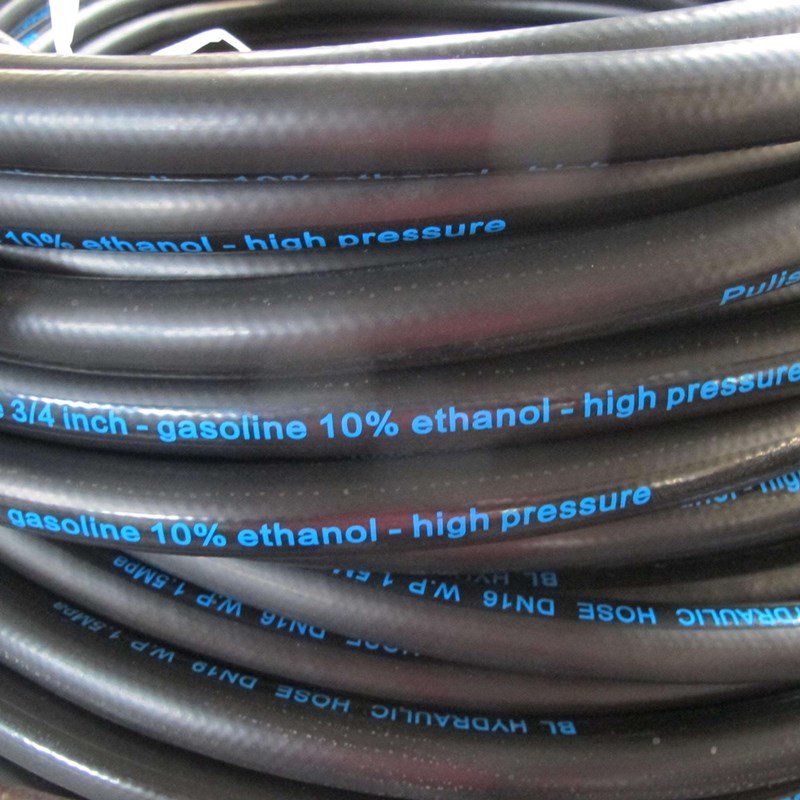
The performance of SAE 100R8 hose is governed by several engineering principles. Burst pressure, typically 4:1 safety factor over working pressure, is determined by the tensile strength of the steel reinforcement and the geometry of the hose. Fatigue life, assessed through impulse testing, is influenced by the hose’s flexibility, the amplitude and frequency of pressure pulsations, and the material’s resistance to cyclic loading. Environmental resistance necessitates careful material selection. Ozone cracking, a common failure mode in unsaturated rubbers, is mitigated through the addition of antiozonants to the outer cover compound. UV exposure causes degradation of the outer cover, reducing its flexibility and tensile strength; UV stabilizers are incorporated to enhance resistance. Temperature range dictates material selection – NBR generally performs well between -40°C and +121°C, but extended high-temperature exposure can cause hardening and reduced flexibility. Fluid compatibility is critical; swelling, softening, or cracking of the inner tube due to incompatible fluids compromises the hose’s integrity. Force analysis considers both internal pressure forces acting on the inner tube and external bending stresses induced during hose routing. Compliance requirements dictate adherence to SAE J517 standards for pressure ratings and performance characteristics. Proper hose assembly, including correct fitting selection and crimping, is essential for achieving rated performance. Improper crimping can lead to fitting slippage or hose rupture.
Technical Specifications
| Parameter | Unit | Typical Value (SAE 100R8 Type A) | Typical Value (SAE 100R8 Type B) |
|---|---|---|---|
| Working Pressure | MPa | 20.7 | 34.5 |
| Burst Pressure | MPa | 82.7 | 138 |
| Temperature Range | °C | -40 to +100 | -40 to +121 |
| Inner Tube Material | - | Nitrile Rubber (NBR) | Nitrile Rubber (NBR) |
| Reinforcement | - | Multiple Spiraled Steel Wire | Multiple Spiraled Steel Wire |
| Outer Cover Material | - | Chloroprene Rubber (CR) | Polyurethane (PU) |
Failure Mode & Maintenance
Common failure modes in SAE 100R8 hoses include burst failure due to exceeding pressure limits, fatigue cracking resulting from prolonged cyclic loading and pressure pulsations, abrasion damage to the outer cover, chemical degradation of the inner tube from incompatible fluids, and fitting failures caused by improper crimping or corrosion. Fatigue cracking often initiates at areas of high stress concentration, such as near fittings or sharp bends. Chemical degradation manifests as swelling, softening, or cracking of the inner tube, leading to leakage. Abrasion damage reduces the outer cover’s protective function, exposing the reinforcement layer to corrosion. Maintenance involves regular visual inspections for signs of damage (cracks, abrasions, swelling), leak checks, and pressure testing. Proper hose routing, avoiding sharp bends and excessive tension, minimizes stress concentration. Fluid filtration is crucial to remove contaminants that can accelerate wear and abrasion. Hose assemblies should be replaced at predetermined intervals, dictated by operating conditions and fluid compatibility. When replacing hoses, it is essential to use compatible fittings and ensure correct crimping procedures. In the event of a burst failure, a thorough investigation should be conducted to identify the root cause and prevent recurrence. Proper storage of hoses, protected from UV exposure and extreme temperatures, prolongs their service life.
Industry FAQ
Q: What is the significance of the 4:1 safety factor for burst pressure in SAE 100R8 hoses?
A: The 4:1 safety factor ensures a substantial margin of safety against catastrophic failure. It means the hose can withstand four times its rated working pressure before bursting. This factor accounts for pressure surges, dynamic loads, and material variations. A higher safety factor provides increased reliability and reduces the risk of unexpected hose rupture, safeguarding personnel and equipment.
Q: How does fluid compatibility impact the lifespan of an SAE 100R8 hose?
A: Fluid compatibility is critical. Incompatible fluids can cause the inner tube material (typically NBR) to swell, soften, or crack, compromising its integrity and leading to leakage or failure. Thorough testing with the intended fluid is essential to ensure compatibility. Using incorrect fluids significantly reduces the hose’s service life.
Q: What are the primary causes of fatigue failure in hydraulic hoses?
A: Fatigue failure stems from repeated pressure pulsations and cyclic loading. Factors contributing to fatigue include high pulse frequencies, large pressure amplitudes, sharp bends, improper hose routing, and material defects. The reinforcement layer is particularly susceptible to fatigue cracking over time.
Q: What are the recommended practices for inspecting SAE 100R8 hose assemblies?
A: Regular inspections should include visual checks for cracks, abrasions, swelling, and leaks. Pay close attention to fittings and areas near bends. Perform leak tests under operating pressure. Check for proper hose routing and secure mounting. Document inspection findings and establish a maintenance schedule.
Q: What is the role of proper crimping in hose assembly?
A: Proper crimping ensures a secure and leak-proof connection between the hose and the fitting. Incorrect crimping (under-crimping or over-crimping) can lead to fitting slippage, hose rupture, or premature failure. Crimping should be performed using calibrated tooling and following manufacturer’s specifications.
Conclusion
SAE 100R8 hydraulic hose represents a critical component in a vast array of industrial and mobile hydraulic systems. Its robust construction, employing specifically engineered materials and manufacturing processes, provides reliable fluid conveyance under demanding conditions. Understanding the material science, performance parameters, potential failure modes, and proper maintenance procedures is paramount for ensuring optimal operational efficiency, safety, and longevity of hydraulic equipment.
Looking ahead, advancements in hose technology are focusing on developing higher-strength materials, improved abrasion resistance, and enhanced fluid compatibility. Furthermore, integrating smart sensing technologies into hose assemblies will enable real-time monitoring of pressure, temperature, and hose condition, facilitating predictive maintenance and minimizing downtime. Continuous adherence to industry standards and best practices is essential for maintaining the integrity and reliability of SAE 100R8 hose systems.