
Apr . 01, 2024 17:55 Back to list
sae100r6 Performance Analysis
Introduction
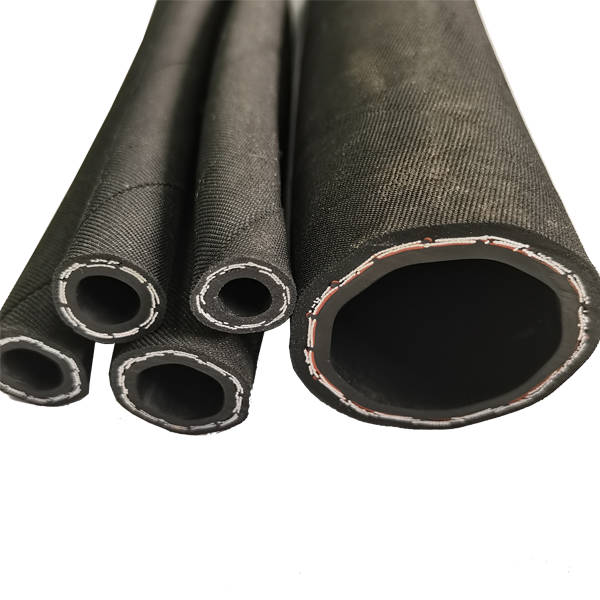
SAE 100R6 is a Society of Automotive Engineers (SAE) standard defining specifications for non-reinforced rubber hose used for the transfer of petroleum-based fluids in automotive and industrial applications. Positioned within the fluid conveyance system, SAE 100R6 hoses serve as a critical component connecting fluid reservoirs to end-use points, such as engines, transmissions, and hydraulic machinery. Its performance is characterized by flexibility, resistance to permeation, and compatibility with various fuels, lubricants, and hydraulic fluids. Core performance metrics include working pressure, burst pressure, temperature range, and fluid resistance, which directly impact system reliability and safety. The increasing demand for lighter, more durable, and chemically resistant hoses drives ongoing advancements in material science and manufacturing techniques within this sector. A key industry pain point is consistently achieving long-term fluid compatibility and minimizing permeation, particularly with newer biofuel blends.
Material Science & Manufacturing
SAE 100R6 hoses are typically constructed from a synthetic rubber compound, primarily nitrile rubber (NBR) due to its excellent oil resistance. NBR’s physical properties include a tensile strength ranging from 15-30 MPa, elongation at break of 300-500%, and a hardness typically between 60-80 Shore A. The raw material’s butadiene acrylonitrile ratio significantly influences its resistance to fuels and oils; higher acrylonitrile content improves oil resistance but can reduce low-temperature flexibility. Manufacturing processes begin with the mixing of NBR with reinforcing fillers such as carbon black, plasticizers to enhance flexibility, and curing agents (sulfur-based compounds or peroxides) to initiate vulcanization. The mixing process is critical, requiring precise control of temperature and shear forces to ensure homogenous dispersion of ingredients. The compound is then extruded through a die to form the hose tube. Critical parameters during extrusion include die temperature, screw speed, and extrusion pressure, directly impacting hose dimensions and surface finish. Following extrusion, the hose undergoes a vulcanization process, typically utilizing steam or hot air curing. Cure time and temperature must be carefully controlled (typically 150-180°C for 30-60 minutes) to achieve optimal crosslinking density and mechanical properties. Quality control involves rigorous testing of the rubber compound’s viscosity, specific gravity, and cure characteristics (using rheometers) at each stage. Post-curing, dimensional checks and leak testing are performed to ensure adherence to SAE 100R6 specifications. Any surface defects or dimensional inconsistencies lead to rejection.
Performance & Engineering
The performance of SAE 100R6 hoses is dictated by their ability to withstand internal pressure and external stresses while maintaining fluid integrity. Force analysis considers hoop stress generated by internal pressure, calculated using the Barlow formula (σ = PD/2t, where σ is hoop stress, P is pressure, D is inner diameter, and t is wall thickness). This stress must remain below the rubber compound’s tensile strength and yield strength to prevent failure. Environmental resistance is a critical factor, particularly exposure to temperature extremes, UV radiation, and ozone. NBR exhibits limited resistance to ozone cracking and degradation from prolonged UV exposure. Additives such as antioxidants and UV stabilizers are incorporated into the rubber compound to mitigate these effects. SAE 100R6 hoses must meet specific burst pressure requirements, typically 3:1 safety factor over the working pressure. Compliance requirements include fluid resistance testing (immersion testing to assess swelling and degradation in various fluids), permeation testing (to measure the rate of fluid diffusion through the hose wall), and temperature cycling tests (to evaluate performance under varying temperature conditions). Functional implementation dictates hose selection based on application-specific parameters. For example, fuel lines require high fuel resistance, while hydraulic lines require compatibility with hydraulic fluids and resistance to high pressures. Fitting selection is equally crucial; fittings must create a reliable seal and withstand the operating pressure without inducing stress concentrations in the hose.
Technical Specifications
| Parameter | Unit | SAE 100R6 Specification | Typical Value (NBR Compound) |
|---|---|---|---|
| Working Pressure | psi | Up to 1000 | 600-1000 |
| Burst Pressure | psi | 3x Working Pressure | 1800-3000 |
| Temperature Range | °F | -40 to +275 | -40 to +250 |
| Inner Diameter | inch | 0.25 to 1.0 | 0.375 - 0.75 |
| Wall Thickness | inch | 0.0625 to 0.1875 | 0.093 - 0.156 |
| Fluid Compatibility | - | Petroleum-based fuels, lubricants, hydraulic fluids | Excellent with NBR; limited with certain ester-based fluids. |
Failure Mode & Maintenance
Common failure modes for SAE 100R6 hoses include fatigue cracking (due to repeated flexing and pressure cycling), permeation (leading to fluid loss and environmental concerns), swelling (resulting from incompatible fluids), and oxidation (causing rubber degradation). Fatigue cracking typically initiates at points of high stress concentration, such as near fittings or due to internal imperfections. Permeation is exacerbated by high temperatures and prolonged exposure to fluids with low molecular weight. Swelling occurs when the hose material absorbs fluid, altering its dimensions and mechanical properties. Oxidation is accelerated by heat, UV radiation, and ozone. Failure analysis often involves visual inspection for cracks, blisters, and discoloration; tensile testing to assess residual strength; and chemical analysis to identify fluid contamination or degradation products. Maintenance solutions include regular visual inspections for signs of damage, periodic pressure testing to detect leaks, and proper storage in a cool, dry environment away from direct sunlight and ozone sources. Replacing hoses at recommended intervals (based on application severity and operating conditions) is crucial. Proper fitting installation and torque specifications are essential to prevent premature failure. The use of compatible fluids and avoiding excessive bending or kinking also contribute to extended hose life. Avoid using abrasive cleaners that can damage the rubber compound.
Industry FAQ
Q: What is the primary difference between SAE 100R6 and SAE 100R7 hoses?
A: SAE 100R7 hoses are reinforced with a single or multiple textile braids, providing significantly higher pressure capabilities and burst strength compared to non-reinforced SAE 100R6 hoses. R6 is suitable for lower-pressure applications, while R7 is used in systems requiring higher pressure ratings and greater durability.
Q: How does temperature affect the performance of an SAE 100R6 hose?
A: Elevated temperatures generally reduce the tensile strength and elongation at break of the rubber compound, increasing the risk of failure. Lower temperatures can reduce flexibility and increase the susceptibility to cracking. Operating within the specified temperature range (-40 to +275°F) is critical.
Q: What is the impact of biofuel blends on SAE 100R6 hose compatibility?
A: Many older NBR compounds exhibit limited compatibility with higher biofuel blends (e.g., E85), leading to swelling, degradation, and increased permeation. Specifying hoses formulated with biofuel-resistant NBR compounds or alternative rubber materials (e.g., FKM) is essential.
Q: What fitting types are recommended for SAE 100R6 hoses?
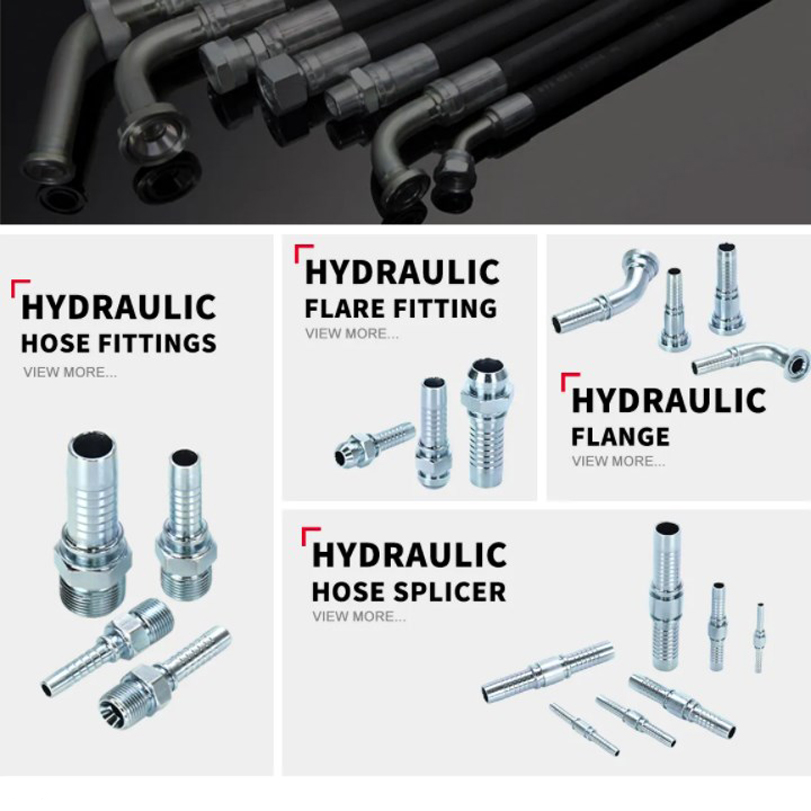
A: Barb fittings, compression fittings, and crimped fittings are commonly used with SAE 100R6 hoses. The fitting type should be selected based on the operating pressure, fluid type, and application requirements. Proper crimping is crucial for a leak-proof connection.
Q: How can I identify potential issues before a catastrophic hose failure?
A: Regular visual inspections for cracks, swelling, discoloration, or leaks are essential. Monitor pressure fluctuations and fluid levels. Conduct periodic pressure testing to assess hose integrity. Addressing minor issues promptly can prevent major failures.
Conclusion
SAE 100R6 hoses represent a foundational component in numerous fluid conveyance systems, requiring careful consideration of material science, manufacturing processes, and operational parameters. Achieving reliable performance necessitates a thorough understanding of the rubber compound's properties, the impact of environmental factors, and the potential failure modes. Selecting the appropriate hose for the specific application, coupled with regular maintenance and proactive inspection, is paramount to ensuring system safety and longevity.
Future advancements in SAE 100R6 hose technology will likely focus on developing more chemically resistant and durable materials, incorporating advanced sensor technologies for real-time monitoring of hose condition, and improving manufacturing processes to enhance quality control and reduce costs. The demand for sustainable and environmentally friendly hose solutions will also drive innovation in biodegradable rubber compounds and reduced permeation materials.