
Apr . 01, 2024 17:55 Back to list
sae100r2at Hose Performance Analysis
Introduction
SAE 100R2AT hose represents a critical component in hydraulic fluid power systems, classified under the Society of Automotive Engineers (SAE) J517 standard. Positioned within the industrial supply chain as a fluid conveyance element, it serves applications ranging from mobile hydraulics (construction equipment, agricultural machinery) to industrial machinery and fluid transfer systems. Its designation ‘AT’ signifies a specific construction capable of handling higher working pressures and exhibiting enhanced oil resistance compared to standard 100R2 hoses. Core performance characteristics revolve around burst pressure, working pressure, temperature range, and fluid compatibility, directly influencing system reliability and operational safety. A primary industry pain point lies in maintaining consistent performance under extreme conditions and ensuring long-term resistance to hydraulic fluid degradation, prompting a need for robust materials and precise manufacturing control.
Material Science & Manufacturing
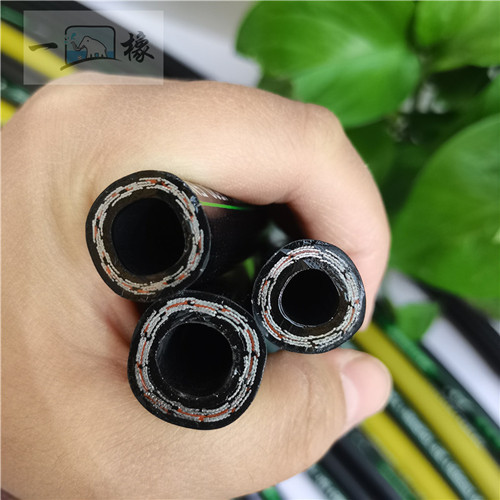
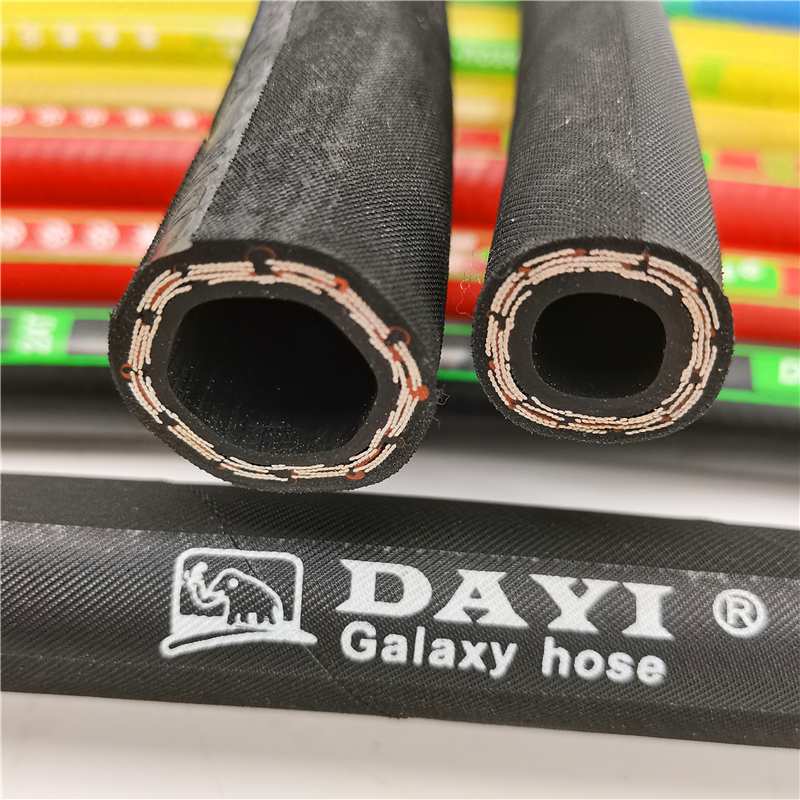
SAE 100R2AT hose construction typically comprises an inner tube, multiple reinforcement layers, and an outer cover. The inner tube is commonly composed of oil-resistant synthetic rubber, typically nitrile (NBR), chosen for its excellent compatibility with petroleum-based hydraulic fluids. NBR’s resistance to swelling and degradation in the presence of oil is paramount. Reinforcement layers traditionally employ multiple braids of high-tensile steel wire. The wire diameter and braid angle are critical parameters governing the hose’s burst pressure and flexibility. The outer cover is often a synthetic rubber blend, such as chloroprene (CR), offering abrasion resistance, weather protection, and oil resistance. Manufacturing involves a process of extrusion for the inner tube and outer cover, followed by precise winding of the steel wire reinforcement. Parameters such as extrusion temperature, cooling rates, and winding tension are tightly controlled to ensure dimensional accuracy and structural integrity. Curing (vulcanization) of the rubber compounds is a crucial step, impacting the final mechanical properties and chemical resistance. Proper control of sulfur content and curing time are essential to achieving optimal cross-linking within the rubber matrix. Quality control includes hydrostatic pressure testing to verify burst strength, impulse testing to assess fatigue resistance, and dimensional inspection to ensure compliance with SAE J517 specifications.
Performance & Engineering
The performance of SAE 100R2AT hose is fundamentally dictated by its ability to withstand internal pressure without failure. Force analysis considers the hoop stress induced by internal fluid pressure, directly proportional to the hose diameter and internal pressure. The steel wire reinforcement bears the majority of this stress. Fatigue life is a critical engineering consideration, particularly in applications involving pulsating flow. Impulse testing simulates cyclical pressure variations to assess the hose’s resistance to fatigue cracking. Environmental resistance is paramount; prolonged exposure to extreme temperatures, UV radiation, and ozone can degrade the rubber compounds, reducing flexibility and increasing the risk of failure. Hose bend radius is another vital parameter, influencing stress concentration at the bend point. Exceeding the minimum bend radius can lead to kinking and localized failure. Compliance requirements stem from SAE J517, which specifies performance criteria such as burst pressure, working pressure, temperature range, and fluid compatibility. Additionally, industries may impose specific requirements based on application (e.g., food-grade materials for food processing equipment). Functional implementation involves proper hose assembly with compatible fittings, ensuring a leak-proof seal and minimizing stress concentrations. Correct installation practices, including avoiding sharp bends and excessive twisting, are critical for maximizing service life.
Technical Specifications
| Parameter | Unit | SAE 100R2AT (Typical) | Testing Standard |
|---|---|---|---|
| Working Pressure | PSI | 2000 – 3000 | SAE J517 |
| Burst Pressure | PSI | 6000 – 9000 | SAE J517 |
| Temperature Range | °F | -40 to +212 | SAE J517 |
| Inner Tube Material | - | Nitrile Rubber (NBR) | ASTM D2000 |
| Reinforcement | - | Multiple Steel Wire Braids | ASTM E8 |
| Outer Cover Material | - | Chloroprene Rubber (CR) | ASTM D2000 |
Failure Mode & Maintenance
Common failure modes in SAE 100R2AT hoses include burst failure due to exceeding the working pressure, fatigue cracking resulting from cyclical pressure loading, pinhole leaks caused by abrasion or degradation of the inner tube, and fitting failures due to corrosion or improper assembly. Failure analysis often reveals that burst failures originate from defects in the reinforcement layers or localized weakening of the rubber compounds. Fatigue cracking typically initiates at stress concentration points, such as near fittings or bends. Degradation of the rubber compounds can lead to loss of flexibility and increased susceptibility to cracking. Maintenance practices are crucial for extending hose service life. Regular visual inspections should be conducted to identify signs of damage, such as cracks, abrasions, or swelling. Hoses should be replaced if any signs of deterioration are observed. Proper routing and support are essential to prevent excessive bending and abrasion. Periodic fluid analysis can help detect contamination that may accelerate hose degradation. Avoid exposure to extreme temperatures and incompatible fluids. When replacing hoses, ensure that fittings are compatible and properly torqued to prevent leaks and stress concentrations. Implementing a preventative maintenance schedule based on operating hours and environmental conditions is highly recommended.
Industry FAQ
Q: What is the significance of the "AT" designation in SAE 100R2AT, and how does it differ from a standard 100R2 hose?
A: The “AT” designation indicates that the hose meets more stringent requirements for oil resistance and higher working pressures compared to a standard 100R2 hose. Specifically, the AT hose utilizes a synthetic rubber compound in the inner tube that exhibits superior resistance to degradation when exposed to modern, high-performance hydraulic fluids. It also has a higher burst pressure rating, enabling it to operate safely in more demanding applications.
Q: How does temperature affect the performance and lifespan of an SAE 100R2AT hose?
A: Extreme temperatures – both high and low – can significantly impact hose performance and lifespan. High temperatures can accelerate rubber degradation, reducing flexibility and increasing the risk of cracking. Low temperatures can cause the rubber to become brittle and less resistant to impact. The specified temperature range for SAE 100R2AT hoses (-40°F to +212°F) must be adhered to in order to maintain optimal performance and prevent premature failure.
Q: What type of hydraulic fluids are compatible with an SAE 100R2AT hose?
A: SAE 100R2AT hoses are generally compatible with a wide range of petroleum-based hydraulic fluids, including mineral oils and synthetic hydraulic fluids. However, compatibility should be verified with the fluid manufacturer, as some specialized fluids (e.g., phosphate ester fluids) may require specific hose constructions. Incompatibility can lead to swelling, degradation, and ultimately, hose failure.
Q: What are the critical factors to consider when selecting fittings for an SAE 100R2AT hose?
A: Fittings must be specifically designed for use with SAE 100R2AT hose and must meet the appropriate pressure and temperature ratings. Compatibility of the fitting material with the hose and hydraulic fluid is crucial. Proper crimping or swaging of the fittings is essential to ensure a leak-proof seal and prevent stress concentrations. Utilizing non-compatible fittings can lead to premature failure.
Q: How can a preventative maintenance program help extend the service life of SAE 100R2AT hoses?
A: A preventative maintenance program should include regular visual inspections for signs of damage, such as cracks, abrasions, or leaks. Periodic fluid analysis can detect contamination. Correct hose routing and support are crucial. Replacing hoses at predetermined intervals based on operating hours or environmental conditions can prevent unexpected failures. Maintaining detailed records of inspections and replacements aids in optimizing maintenance schedules.
Conclusion
SAE 100R2AT hose represents a robust and reliable solution for hydraulic fluid conveyance, provided its material properties, manufacturing processes, and operational parameters are thoroughly understood and meticulously managed. The selection process must prioritize compatibility with the specific hydraulic fluid, operating pressure, and temperature range of the application. Proper installation, consistent maintenance, and adherence to industry standards are vital for maximizing service life and ensuring system safety.
Looking forward, advancements in rubber compound technology and reinforcement materials are poised to further enhance the performance and durability of SAE 100R2AT hoses. The development of smart hoses equipped with sensors to monitor pressure, temperature, and fluid condition will provide real-time data for predictive maintenance and improved system reliability. Continued adherence to, and refinement of, standards such as SAE J517 will be critical for ensuring the ongoing safety and efficiency of hydraulic systems across a wide range of industries.