
Apr . 01, 2024 17:55 Back to list
sae100r17 Hydraulic Hose Performance Analysis
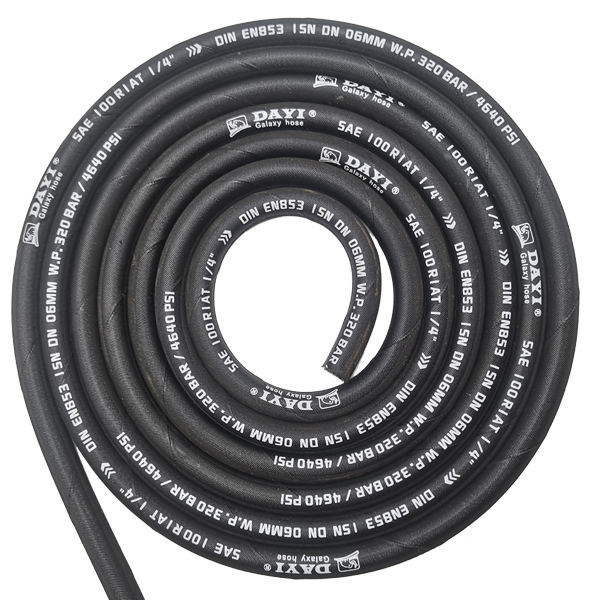
Introduction
SAE 100R17, also known as DIN EN 857 1SC, represents a critical standard for non-steel reinforced hydraulic hoses. These hoses are integral components in fluid power systems across a vast range of industries including construction equipment, agricultural machinery, industrial manufacturing, and material handling. Positioned within the hydraulic system as a conduit for pressurized fluid, the SAE 100R17 hose transmits power from the pump to actuators, enabling operation of cylinders, motors, and other hydraulic devices. Its technical significance lies in its ability to safely and reliably handle moderate to high pressures, typically up to 2,500 psi, while offering a degree of flexibility vital for complex machine geometries. Core performance metrics include burst pressure, working pressure, impulse pressure resistance, and temperature range, all rigidly defined by the SAE standard to ensure interchangeability and system integrity. A key industry pain point revolves around ensuring consistent quality and adherence to the standard, as variations in manufacturing processes can lead to premature failure, resulting in costly downtime and potential safety hazards.
Material Science & Manufacturing
SAE 100R17 hoses are predominantly constructed from a synthetic rubber blend – typically a combination of Nitrile (NBR) for the tube, a high-tensile braided reinforcement of synthetic fibers (usually polyester or aramid), and a Chlorinated Polyethylene (CPE) or Neoprene cover. NBR offers excellent resistance to petroleum-based hydraulic fluids, while CPE provides robust weather and abrasion resistance. The manufacturing process begins with the extrusion of the inner tube, carefully controlling the rubber compound viscosity and die temperature to ensure consistent wall thickness and internal diameter. Following extrusion, the reinforcement braid is applied, meticulously tensioned to achieve the specified strength and flexibility characteristics. Proper braid coverage is crucial; gaps can create localized stress concentrations and premature failure points. The cover is then extruded over the braid, bonding to the reinforcement to create a sealed, durable outer layer. Key parameters requiring tight control include rubber compound formulation (polymer ratio, plasticizer content, and cure rate), braid tension, and vulcanization temperature and time. Insufficient vulcanization leads to reduced tensile strength and oil resistance, while over-vulcanization can compromise flexibility. Post-manufacturing, hoses undergo rigorous pressure testing and dimensional inspection to verify compliance with SAE specifications. Chemical compatibility testing with common hydraulic fluids is also performed to guarantee long-term performance and prevent swelling or degradation.
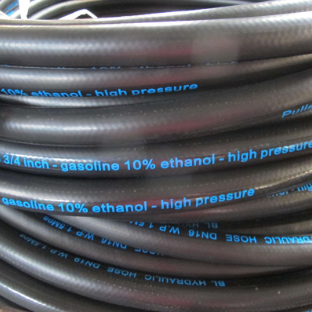
Performance & Engineering
The engineering performance of an SAE 100R17 hose is dictated by its ability to withstand internal pressure, external stresses, and environmental factors. Force analysis is paramount; the hoop stress within the tube, induced by internal pressure, must be less than the material’s tensile strength. The reinforcement braid plays a critical role in containing this pressure, with the fiber angle and braid density directly influencing the hose's burst pressure capability. External stresses, such as bending, kinking, and abrasion, are also significant considerations. Minimum bend radius specifications are crucial to prevent fatigue cracking at the bend point. Impulse pressure resistance – the hose's ability to withstand pressure surges – is tested using a cyclic pressure test, simulating the pulsating nature of hydraulic systems. Environmental resistance encompasses temperature extremes, ozone exposure, and chemical compatibility. NBR exhibits limitations at high temperatures, potentially leading to softening and reduced pressure capacity. CPE cover provides adequate protection against ozone degradation. Compliance with SAE 100R17 mandates specific performance criteria: a minimum burst pressure of four times the working pressure, a minimum working pressure specified by size, and defined impulse cycle life. Finite Element Analysis (FEA) is frequently employed during the design phase to optimize hose geometry and reinforcement configuration for maximum performance and longevity.
Technical Specifications
| Parameter | Unit | SAE 100R17 Specification | Typical Value (Example) |
|---|---|---|---|
| Working Pressure | psi | Up to 2,500 | 2,000 |
| Burst Pressure | psi | ≥ 4 x Working Pressure | 8,000 |
| Temperature Range | °F | -40 to +212 | -40 to +200 |
| Reinforcement Type | - | Synthetic Fiber Braid | Polyester |
| Tube Material | - | Nitrile Rubber (NBR) | NBR |
| Cover Material | - | Chlorinated Polyethylene (CPE) | CPE |
Failure Mode & Maintenance
SAE 100R17 hoses are susceptible to several failure modes, primarily related to pressure, temperature, and physical damage. Fatigue cracking, induced by repeated bending and flexing, is a common issue, particularly near fittings. This is exacerbated by exceeding the minimum bend radius. Pinholes in the tube, resulting from internal corrosion or material defects, lead to fluid leakage. Delamination of the reinforcement braid from the tube or cover reduces the hose's pressure capacity and can cause catastrophic failure. External abrasion and cuts compromise the cover, exposing the reinforcement to corrosion and further degradation. Oxidation of the rubber compounds, accelerated by high temperatures and ozone exposure, causes hardening and cracking. Maintenance best practices include regular visual inspection for signs of damage (cracks, abrasions, bulges), leak checks at fittings, and proper routing to avoid excessive bending and contact with abrasive surfaces. Hose fittings should be regularly inspected for corrosion and tightness. When replacing a hose, always use fittings specifically designed for SAE 100R17 and ensure proper crimping techniques are employed. Implement a hose management program, tracking hose age and service history to proactively replace hoses before they reach their expected service life.
Industry FAQ
Q: What is the difference between SAE 100R17 and SAE 100R1AT?
A: SAE 100R1AT offers a higher temperature range and improved oil resistance compared to SAE 100R17, primarily through the use of a more advanced synthetic rubber compound in the tube and cover. R1AT hoses are suitable for more demanding applications involving higher fluid temperatures and aggressive hydraulic fluids.
Q: How does the reinforcement braid contribute to the hose’s performance?
A: The reinforcement braid provides the structural integrity to withstand internal pressure. The fiber type (polyester, aramid) and braid angle determine the hose’s burst pressure, flexibility, and kink resistance. A higher braid density generally equates to higher pressure capacity.
Q: What are the common causes of hose leakage?
A: Common causes include damaged fittings, pinholes in the tube (due to corrosion or defects), and cracks in the hose body resulting from fatigue, abrasion, or ozone degradation. Improper crimping of fittings is also a frequent cause of leaks.
Q: What is the acceptable bend radius for an SAE 100R17 hose?
A: The minimum bend radius is typically specified by the hose manufacturer and is dependent on the hose size and construction. Exceeding the minimum bend radius can cause kinking and fatigue cracking, significantly reducing hose life.
Q: How do I determine the correct hose size for my application?
A: Hose size selection depends on the flow rate, pressure, and fitting size required by the hydraulic system. Consult the system's hydraulic schematic and the hose manufacturer's sizing charts to ensure proper selection.
Conclusion
The SAE 100R17 hydraulic hose standard represents a cornerstone of fluid power system reliability. Its well-defined performance parameters and material specifications ensure interchangeability and safe operation across diverse industrial applications. Understanding the intricate interplay between material science, manufacturing processes, and engineering principles is crucial for selecting, installing, and maintaining these critical components effectively.
Proactive hose management programs, coupled with regular inspections and adherence to best practices, are essential for minimizing downtime and preventing catastrophic failures. As hydraulic systems become increasingly sophisticated, and operate under more demanding conditions, continued innovation in hose materials and manufacturing techniques will be vital to meet evolving industry needs and ensure long-term system performance.