
Apr . 01, 2024 17:55 Back to list
SAE100R16 Hose Performance Analysis
Introduction
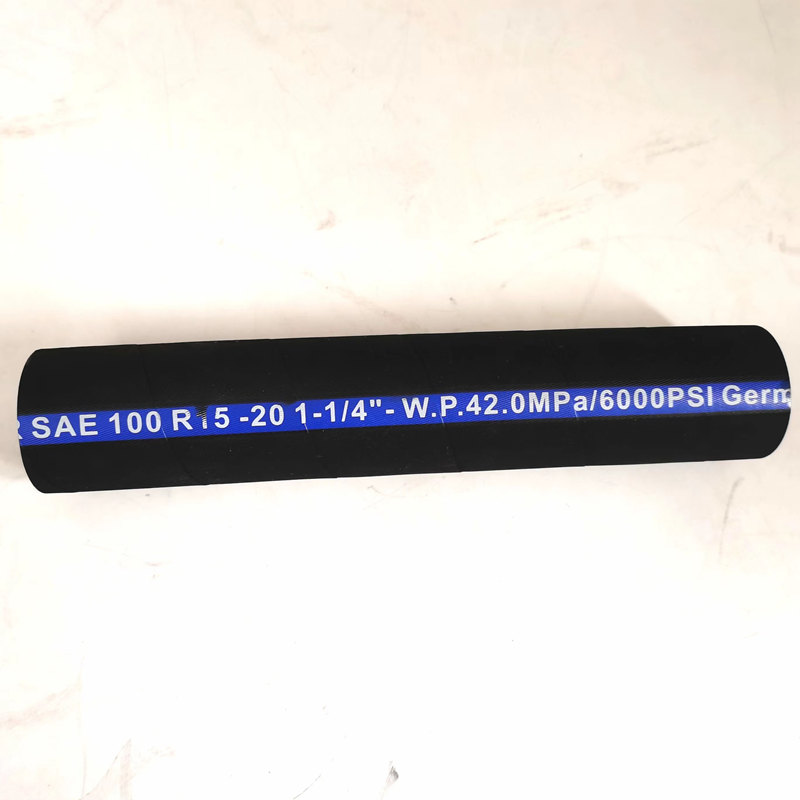
SAE 100R16 is a Society of Automotive Engineers (SAE) standard specification defining performance requirements for non-reinforced hydraulic hose. It occupies a critical position within the fluid power industry, serving as a baseline for hydraulic systems in mobile and industrial applications. Characterized by its synthetic rubber tube, reinforced with multiple textile braids, and a synthetic rubber cover, the SAE 100R16 hose delivers moderate pressure capabilities, making it suitable for a wide array of general-purpose hydraulic applications. Core performance attributes include burst pressure, working pressure, impulse performance, and fluid compatibility. A key industry pain point revolves around maintaining consistent fluid compatibility across diverse hydraulic fluids, and managing the operational temperature range to prevent premature failure due to cover degradation or reinforcement breakdown. Meeting these needs requires careful material selection and manufacturing process control.
Material Science & Manufacturing
The primary material constituting the tube of SAE 100R16 hose is typically a synthetic rubber, most commonly Nitrile (NBR), offering excellent resistance to petroleum-based hydraulic fluids. NBR’s chemical structure (acrylonitrile-butadiene copolymer) imparts its oil resistance, however, its low-temperature flexibility can be a limitation. Alternative tube materials, like Chloroprene (CR), provide improved flexibility at lower temperatures but potentially reduced oil resistance. The reinforcement braids are commonly constructed from polyester or nylon textile fibers, selected for their high tensile strength and flexibility. These fibers are braided in a helical pattern to provide the hose with the ability to withstand internal pressure. The cover material, typically a synthetic rubber such as EPDM (ethylene propylene diene monomer) or Chloroprene, provides abrasion, weather, and ozone resistance.
Manufacturing involves several key processes. Tube extrusion is performed using a screw-type extruder, precisely controlling temperature and pressure to ensure consistent tube wall thickness and material homogeneity. Braiding is achieved via high-speed braiding machines, meticulously controlling braid angle and tension. The proper braid angle (typically 55 degrees) is critical for pressure containment. Following braiding, the hose is vulcanized – a curing process using heat and pressure – to crosslink the rubber compounds, enhancing their strength, elasticity, and resistance to degradation. Vulcanization parameters (temperature, time, pressure) are tightly controlled to achieve optimal material properties. Post-vulcanization, hoses undergo rigorous testing, including hydrostatic pressure tests, impulse tests, and dimensional checks. Quality control throughout the manufacturing process is paramount, as defects in any stage can compromise hose integrity.
Performance & Engineering
The performance of SAE 100R16 hoses is heavily dictated by its ability to withstand internal hydraulic pressure without failure. Force analysis considers the hoop stress within the hose wall, which increases with internal pressure and hose diameter. The reinforcement braids are engineered to counteract this hoop stress, providing the necessary tensile strength. Burst pressure, defined as the pressure at which the hose fails catastrophically, is a critical performance metric. Working pressure is significantly lower, typically 1/4 of the burst pressure, providing a safety factor. Impulse testing simulates the pulsating pressure waves common in hydraulic systems, assessing the hose’s resistance to fatigue failure. Environmental resistance encompasses the hose’s ability to maintain its properties under varying temperatures, exposure to ozone, and contact with hydraulic fluids.
Compliance requirements, dictated by SAE J517 standard, mandate specific performance criteria. These include minimum burst pressure, minimum working pressure, and specific impulse test parameters. Fluid compatibility is crucial; the hose material must be compatible with the hydraulic fluid to prevent swelling, degradation, or cracking. Proper hose assembly, including the correct selection and crimping of end fittings, is critical for achieving the specified performance. Incorrect crimping can lead to premature failure at the fitting interface. Engineering considerations also include bend radius; exceeding the minimum bend radius can induce stress concentrations, leading to fatigue cracking. Furthermore, proper hose routing and support are vital to prevent abrasion and kinking.
Technical Specifications
| Parameter | Unit | Typical Value (SAE 100R16 - 1/2" ID) | Test Standard |
|---|---|---|---|
| Working Pressure | psi | 1000 | SAE J517 |
| Burst Pressure | psi | 4000 | SAE J517 |
| Temperature Range | °F | -40 to +212 | SAE J517 |
| Tube Material | - | Nitrile Rubber (NBR) | ASTM D2000 |
| Reinforcement | - | Multiple Textile Braid (Polyester/Nylon) | ASTM D792 |
| Cover Material | - | EPDM Rubber | ASTM D2000 |
Failure Mode & Maintenance
SAE 100R16 hoses are susceptible to several failure modes. Fatigue cracking, resulting from repeated pressure cycles, often initiates at points of high stress concentration, such as near fittings or bends. Delamination, the separation of the tube from the reinforcement, can occur due to inadequate bonding during vulcanization or exposure to incompatible fluids. Hydrolytic degradation, particularly in polyester reinforced hoses, can occur in the presence of water, reducing the reinforcement’s strength. Oxidation of the rubber compounds, caused by exposure to ozone and UV radiation, leads to cracking and loss of flexibility. Abrasion, caused by rubbing against other components, can wear through the cover, exposing the reinforcement. Pinholes, small punctures in the tube, can lead to fluid leakage.
Preventative maintenance is crucial for extending hose life. Regular visual inspections should be conducted to identify signs of wear, cracking, or swelling. Hose routing should be optimized to minimize abrasion and bending stress. Fluid contamination should be controlled through filtration. Correct hose assembly practices, including proper crimping of fittings, are essential. When replacing hoses, ensure the new hose is compatible with the hydraulic fluid and operating conditions. If a hose shows signs of damage, it should be immediately replaced. Avoid exceeding the hose’s working pressure or operating it outside its specified temperature range. Proper storage conditions, protecting hoses from direct sunlight and extreme temperatures, will also help to prolong their service life.
Industry FAQ
Q: What is the impact of using an incompatible hydraulic fluid with an SAE 100R16 hose?
A: Using an incompatible hydraulic fluid can lead to severe degradation of the hose materials. Specifically, certain fluids can cause the rubber compounds to swell, soften, or crack, leading to reduced strength and potential failure. NBR, while resistant to petroleum-based fluids, can be attacked by phosphate ester fluids. It's critical to consult a fluid compatibility chart and select a hose with a tube material specifically rated for the intended fluid.
Q: How does temperature affect the performance of SAE 100R16 hose?
A: Temperature extremes can significantly impact performance. High temperatures accelerate oxidation and degradation of the rubber compounds, reducing their elasticity and strength. Low temperatures can reduce flexibility and increase the risk of cracking. Operating outside the specified temperature range (-40°F to +212°F) can lead to premature failure. Consider using hoses with specialized compounds for extreme temperature applications.
Q: What are the common causes of hose leakage at the fitting connection?
A: Leakage at the fitting connection typically stems from improper crimping, damaged fittings, or incompatible hose/fitting combinations. Insufficient crimping creates a loose connection, allowing fluid to escape. Damaged fitting threads or sealing surfaces compromise the seal. Using fittings that are not specifically designed for SAE 100R16 hose can result in a poor fit and leakage.
Q: How important is the bend radius for SAE 100R16 hoses?
A: Maintaining the recommended minimum bend radius is vital. Exceeding this radius induces stress concentrations within the hose wall, leading to fatigue cracking and premature failure. Sharp bends can also damage the reinforcement braids. Consult the manufacturer's specifications for the appropriate minimum bend radius based on hose size and application.
Q: What type of reinforcement provides better impulse performance – polyester or nylon?
A: Generally, nylon reinforcement offers superior impulse performance compared to polyester, especially at higher pressures and frequencies. Nylon exhibits greater elongation and resilience, allowing it to better absorb pressure surges and pulsations. However, polyester reinforcement offers better resistance to heat and hydrolysis. The optimal choice depends on the specific application requirements.
Conclusion
SAE 100R16 hydraulic hose represents a cornerstone component in numerous fluid power systems, offering a balance between performance and cost-effectiveness. Its reliance on synthetic rubber, textile reinforcement, and a well-defined manufacturing process necessitates a thorough understanding of material properties, operational parameters, and potential failure modes. Ensuring compatibility with hydraulic fluids, adherence to temperature limits, and proper installation techniques are paramount for maximizing hose service life and preventing costly downtime.
Looking forward, advancements in material science are driving the development of hoses with enhanced temperature resistance, improved chemical compatibility, and extended service life. Future innovations may include the incorporation of smart sensors to monitor hose condition and predict potential failures, enabling proactive maintenance. Continued adherence to SAE J517 standards, coupled with robust quality control measures, will remain crucial for ensuring the reliability and safety of SAE 100R16 hydraulic hose systems.