
Apr . 01, 2024 17:55 Back to list
sae100r15 Hydraulic Hose Performance Analysis
Introduction
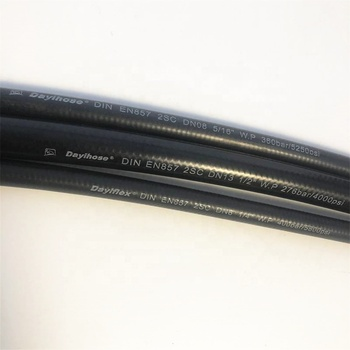
SAE 100R15 hose is a non-reinforced hydraulic hose constructed of synthetic rubber. Its primary application lies in the conveyance of hydraulic fluid under moderate to high pressures in industrial, agricultural, and mobile hydraulic systems. Positioned within the hydraulic power transmission chain, it represents a critical component facilitating the transfer of power from pumps to actuators. Core performance characteristics center around its flexibility, burst pressure capability, and resistance to oil degradation. Unlike reinforced hose constructions (e.g., spiral or braided), SAE 100R15 relies solely on its rubber composition for pressure containment, making material selection and manufacturing consistency paramount. A major industry pain point is the limited pressure rating compared to reinforced alternatives, necessitating careful system design and application understanding. Understanding its limitations is crucial to prevent catastrophic failure and ensure operational safety. This guide provides a comprehensive technical overview of SAE 100R15 hose, detailing its material science, manufacturing processes, performance characteristics, failure modes, and relevant industry standards.
Material Science & Manufacturing
SAE 100R15 hose is typically constructed from a synthetic rubber blend, most commonly a combination of nitrile rubber (NBR) and styrene-butadiene rubber (SBR). NBR provides excellent resistance to petroleum-based hydraulic fluids, while SBR enhances flexibility and abrasion resistance. The specific ratio of NBR to SBR varies depending on the desired properties. The inner tube, the primary barrier against fluid permeation, requires a high NBR content (typically 60-70%) to maintain chemical compatibility and prevent swelling. The outer cover generally utilizes a higher SBR content (50-60%) for improved weather resistance and abrasion protection. Manufacturing involves extrusion of the rubber compound through a die to form a continuous tube. Precise control of temperature, pressure, and screw speed during extrusion is vital to ensure uniform wall thickness and eliminate voids. Following extrusion, the hose undergoes vulcanization – a chemical process involving heating with sulfur or other curing agents – to crosslink the rubber molecules. This process imparts strength, elasticity, and resistance to degradation. Curing time and temperature are critical parameters, directly impacting the hose's mechanical properties. Quality control includes dimensional checks, pressure testing, and material analysis (e.g., tensile strength, elongation, hardness) to verify compliance with SAE J517 specifications. Post-vulcanization processes include surface inspection and coiling for storage and shipment. The consistency of the rubber compound batch-to-batch is a constant challenge, requiring rigorous quality assurance procedures to minimize property variations.
Performance & Engineering
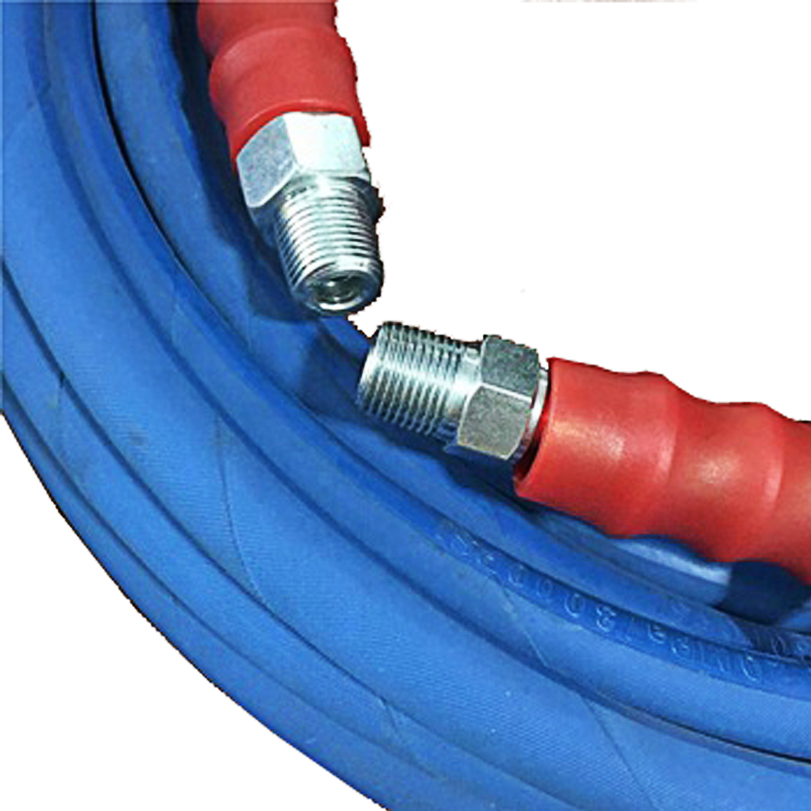
The performance of SAE 100R15 hose is fundamentally governed by its pressure rating and flexibility. The burst pressure, determined by hydraulic testing according to SAE J517, represents the maximum pressure the hose can withstand before catastrophic failure. A typical working pressure for SAE 100R15 is 1000 PSI, with a burst pressure of 3000 PSI, maintaining a 3:1 safety factor. Flexural fatigue is a significant concern, especially in applications involving repeated bending or flexing. The hose’s ability to withstand these cycles without cracking or developing leaks is directly related to the rubber compound’s resilience and the absence of internal defects. Force analysis during installation and operation must account for bending radius limitations. Excessive bending can induce stress concentrations, leading to premature failure. Environmental resistance is another critical factor. Exposure to extreme temperatures (both high and low) can affect the rubber’s elasticity and chemical resistance. Ozone cracking, caused by atmospheric ozone, is a common degradation mechanism, particularly in outdoor applications. Compliance requirements dictate that the hose must meet or exceed the performance standards specified in SAE J517, including pressure testing, impulse testing, and temperature resistance testing. Functional implementation necessitates careful consideration of hose length, fitting selection, and routing to avoid abrasion, kinking, and excessive stress. Proper fitting crimping is essential to ensure a leak-proof seal and prevent hose pull-out.
Technical Specifications
| Parameter | Units | Typical Value (SAE 100R15) | Testing Standard |
|---|---|---|---|
| Working Pressure | PSI | 1000 | SAE J517 |
| Burst Pressure | PSI | 3000 | SAE J517 |
| Temperature Range | °F | -40 to +212 | SAE J517 |
| Inner Tube Material | - | Nitrile Rubber (NBR)/SBR Blend | ASTM D2000 |
| Outer Cover Material | - | SBR | ASTM D2000 |
| Bend Radius (Min.) | inches | 6 | Manufacturer Specification |
Failure Mode & Maintenance
SAE 100R15 hose is susceptible to several failure modes. Pinholes and cracks in the inner tube are often caused by fluid incompatibility or exceeding the pressure limit, leading to leakage. Ozone cracking, manifested as surface cracks in the outer cover, is prevalent in outdoor environments. Abrasion damage can occur due to contact with abrasive surfaces, resulting in cover wear and potential reinforcement exposure (though minimal in 100R15). Flexural fatigue, characterized by cracking at the bend radius, develops from repeated flexing and stress concentration. Impulse failure, induced by pressure pulsations, can weaken the hose wall over time. Degradation of the rubber compound due to prolonged exposure to high temperatures or incompatible fluids also contributes to failure. Maintenance involves regular visual inspection for cracks, abrasions, and leaks. Hose should be replaced if any damage is detected. Avoid sharp bends and kinking during installation and operation. Ensure proper fitting crimping and compatibility with the hydraulic fluid. Do not exceed the working pressure limit. Protect the hose from exposure to extreme temperatures and ozone. Implement a preventative maintenance schedule that includes periodic hose replacement based on operating conditions and service life. Proper storage of unused hose in a cool, dry, and dark environment is critical to prevent degradation. Records of hose installation and replacement should be maintained for traceability.
Industry FAQ
Q: What is the primary difference between SAE 100R15 and SAE 100R2AT hose?
A: The key difference is reinforcement. SAE 100R15 is a non-reinforced hose relying solely on rubber for pressure containment, limiting its pressure rating to approximately 1000 PSI. SAE 100R2AT features a dual wire braid reinforcement, significantly increasing its pressure capability (typically up to 2250 PSI or higher) and providing superior burst strength. Consequently, SAE 100R2AT is suitable for higher-pressure applications and provides a greater margin of safety.
Q: Can SAE 100R15 hose be used with synthetic lubricants?
A: While SAE 100R15 hoses with NBR inner tubes are generally compatible with most petroleum-based hydraulic fluids, compatibility with specific synthetic lubricants must be verified. Some synthetic fluids can cause swelling or degradation of the NBR, leading to failure. Always consult the fluid manufacturer's compatibility chart and the hose manufacturer's specifications before use.
Q: What impact does temperature have on the performance of SAE 100R15?
A: Both high and low temperatures affect performance. High temperatures can reduce the hose's tensile strength and accelerate degradation, while low temperatures can decrease its flexibility and increase the risk of cracking. Exceeding the specified temperature range (-40°F to +212°F) will compromise the hose’s integrity and shorten its service life.
Q: How do I determine the correct bend radius for SAE 100R15 hose?
A: The minimum bend radius is typically specified by the hose manufacturer and is generally around 6 inches for SAE 100R15. Exceeding this limit creates stress concentrations and can lead to premature failure. Refer to the hose datasheet for precise recommendations.
Q: What are the common causes of ozone cracking in SAE 100R15 hose?
A: Ozone cracking occurs when ozone in the atmosphere reacts with the unsaturated bonds in the rubber compound. This is more prevalent in outdoor applications and can be exacerbated by surface imperfections or stress cracks. Using an ozone-resistant outer cover compound or implementing protective measures (e.g., shielding the hose) can mitigate this issue.
Conclusion
SAE 100R15 hose serves as a foundational component in many hydraulic systems, offering a cost-effective solution for moderate-pressure applications. Its performance is inherently linked to the quality of the rubber compound, precision of the manufacturing process, and adherence to industry standards. Understanding the material properties, potential failure modes, and operational limitations is crucial for ensuring reliable and safe operation.
The selection of SAE 100R15 should be made carefully, considering system pressure requirements, temperature exposure, and environmental conditions. While it provides a viable option for numerous applications, reinforcement alternatives should be explored for higher-pressure systems or those demanding increased durability. Consistent inspection and proactive maintenance are paramount to maximizing service life and preventing catastrophic failure.