
Apr . 01, 2024 17:55 Back to list
sae100r14 Material Science and Manufacturing
Introduction
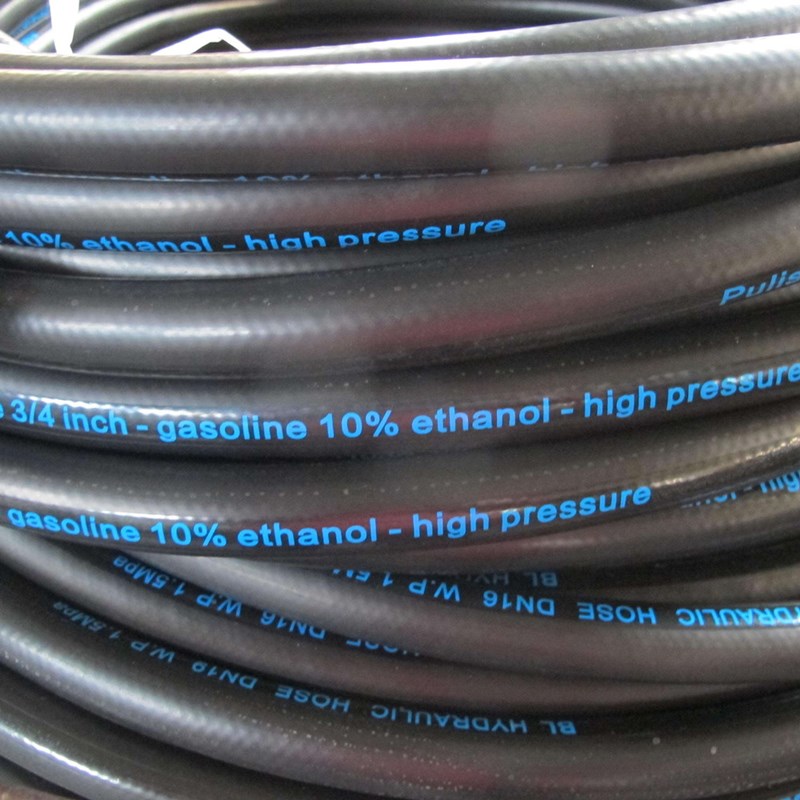
SAE 100R14 hose is a non-reinforced rubber hose primarily designed for low-pressure applications, typically involving the transfer of hydraulic fluids, air, and water. Positioned within the fluid power industry chain, it serves as a critical component connecting hydraulic power units, pumps, valves, and actuators. Unlike higher-pressure reinforced hoses (like SAE 100R2AT), SAE 100R14 is characterized by its flexibility and cost-effectiveness, making it suitable for general-purpose applications where burst strength requirements are moderate. Its core performance characteristics revolve around pressure capacity (typically up to 300 PSI), temperature range (-40°C to +100°C depending on the rubber compound), and fluid compatibility. A key pain point in its application lies in maintaining consistent fluid compatibility across diverse industrial fluids and preventing premature degradation due to environmental factors like ozone and UV exposure. Understanding its material composition and manufacturing parameters is essential to ensure its longevity and prevent costly system failures. This guide provides an in-depth exploration of SAE 100R14, encompassing its material science, manufacturing processes, performance characteristics, failure modes, and relevant industry standards.
Material Science & Manufacturing
SAE 100R14 hose is predominantly constructed from synthetic rubber compounds, with nitrile rubber (NBR) being the most common choice due to its excellent resistance to petroleum-based hydraulic fluids. Other rubber compounds, such as styrene-butadiene rubber (SBR) and ethylene propylene diene monomer (EPDM) rubber, may be utilized depending on the intended application and fluid compatibility requirements. NBR exhibits a tensile strength ranging from 15 to 25 MPa, an elongation at break between 300% and 500%, and a hardness (Shore A) typically between 60 and 80. SBR provides good abrasion resistance but lower oil resistance, while EPDM excels in weather resistance and compatibility with phosphate ester fluids.
The manufacturing process typically involves extrusion. Raw rubber compounds are mixed with reinforcing fillers (such as carbon black) and processing aids, then fed into an extruder. The extruder forces the rubber compound through a die, shaping it into a continuous hose profile. Critical parameters during extrusion include die temperature (typically 120-160°C), extrusion speed (controlled to prevent overheating and dimensional inconsistencies), and compound viscosity. Following extrusion, the hose is cooled, inspected for defects, and cut to the desired length. A key manufacturing challenge is maintaining consistent wall thickness and ensuring a smooth inner bore surface to minimize flow restriction. The inner tube surface roughness is often controlled to below 1.6 μm Ra. Curing, or vulcanization, is then performed to crosslink the rubber molecules, enhancing its strength, elasticity, and resistance to degradation. This is commonly achieved through sulfur-based vulcanization at temperatures between 140-180°C for a specified duration (typically 10-30 minutes) depending on the compound formulation.
Performance & Engineering
The performance of SAE 100R14 hose is governed by its pressure-bearing capacity, temperature resistance, and fluid compatibility. Force analysis focuses on hoop stress generated by internal pressure. Hoop stress (σ) is calculated as σ = (Pr)/t, where P is the internal pressure, r is the inner radius of the hose, and t is the wall thickness. Maintaining adequate wall thickness is crucial to prevent burst failure. Temperature affects the rubber’s elasticity and resistance to degradation. Elevated temperatures accelerate aging and reduce tensile strength, while low temperatures can lead to stiffening and cracking. The hose must maintain its flexibility and integrity throughout its specified temperature range.
Fluid compatibility is a critical engineering consideration. NBR offers excellent resistance to petroleum-based fluids but may be susceptible to swelling or degradation when exposed to polar fluids like brake fluid or certain solvents. EPDM provides superior resistance to water, steam, and phosphate ester hydraulic fluids. Compatibility is typically assessed through immersion testing, where the rubber compound is exposed to the fluid for a specified period and evaluated for changes in volume, hardness, and tensile strength. SAE J200 provides classification systems for rubber materials based on fluid resistance. Compliance requirements include adherence to SAE 100R14 standards regarding dimensional tolerances, pressure testing, and fluid compatibility. The hose must withstand a hydrostatic pressure test of at least 300 PSI without leakage or rupture. Functional implementation considerations include proper hose routing to avoid kinking, abrasion, and excessive bending radii. The minimum bend radius is typically specified by the manufacturer and should be strictly adhered to.
Technical Specifications
| Parameter | Unit | Typical Value (NBR Compound) | Testing Standard |
|---|---|---|---|
| Working Pressure | PSI | 300 | SAE J302 |
| Burst Pressure | PSI | 900 | SAE J302 |
| Temperature Range | °C | -40 to +100 | SAE J302 |
| Inner Diameter | inch | 0.25 – 1.0 | SAE J1926 |
| Wall Thickness | mm | 2.3 – 4.6 | SAE J1926 |
| Tensile Strength | MPa | 18 | ASTM D412 |
Failure Mode & Maintenance
SAE 100R14 hose is susceptible to several failure modes. Fatigue cracking, induced by repeated flexing and pressure cycling, is a common cause of failure. This often initiates at the inner tube surface and propagates through the wall thickness. Another failure mode is abrasion, particularly in applications where the hose is exposed to rubbing or contact with abrasive surfaces. Chemical degradation occurs when the rubber compound is exposed to incompatible fluids, leading to swelling, softening, and loss of mechanical properties. Ozone cracking can occur in environments with high ozone concentrations, causing surface cracks and eventual failure. Permeation of fluids through the hose wall can also occur, leading to fluid loss and environmental contamination.
Preventative maintenance is crucial to prolong hose life. Regular visual inspections should be conducted to check for cracks, abrasions, swelling, or discoloration. Hose should be replaced if any signs of damage are detected. Proper hose routing and support are essential to minimize stress and abrasion. Avoid sharp bends and ensure adequate clearance from moving parts. Fluid compatibility should be verified before using the hose with any new fluid. Storage of hoses should be in a cool, dry place away from direct sunlight and ozone sources. Cleaning the hose with a mild detergent and water can remove dirt and contaminants. Avoid using harsh solvents or abrasive cleaners. Periodic pressure testing can help identify potential weaknesses before catastrophic failure occurs.
Industry FAQ
Q: What are the key differences between SAE 100R14 and SAE 100R2AT hose?
A: SAE 100R2AT is a spiral-reinforced hose designed for higher pressures (up to 2000 PSI or more) and more demanding applications. It features multiple layers of high-tensile steel wire reinforcement, offering significantly higher burst strength and abrasion resistance than SAE 100R14. SAE 100R14 is unreinforced, suited for lower-pressure systems and prioritizes flexibility and cost-effectiveness. R2AT is more robust, while R14 is more adaptable for less strenuous tasks.
Q: How does temperature affect the performance of SAE 100R14 hose?
A: Elevated temperatures generally reduce the tensile strength and elongation at break of the rubber compound, making it more susceptible to failure. Low temperatures can cause the rubber to stiffen and become less flexible, increasing the risk of cracking. Operating outside the specified temperature range (-40°C to +100°C typically) can significantly reduce hose life.
Q: What type of fluids is NBR rubber compatible with?
A: Nitrile rubber (NBR) exhibits excellent resistance to petroleum-based hydraulic fluids, lubricating oils, fuels, and aliphatic hydrocarbons. However, it has limited resistance to polar fluids like brake fluid (glycol-based), ketones, and strong acids. Exposure to these fluids can cause swelling and degradation.
Q: What is the recommended minimum bend radius for SAE 100R14 hose?
A: The recommended minimum bend radius varies depending on the hose size and manufacturer specifications, but generally, it’s approximately 6-8 times the inner diameter of the hose. Exceeding this bend radius can induce stress and reduce hose life.
Q: How often should SAE 100R14 hose be inspected?
A: Regular inspections, at least monthly, are recommended for critical applications. More frequent inspections (weekly or even daily) may be necessary in harsh environments or high-stress applications. Inspections should focus on visual checks for cracks, abrasions, swelling, and leaks.
Conclusion
SAE 100R14 hose serves as a fundamental component in numerous low-pressure hydraulic and fluid transfer systems. Its cost-effectiveness and flexibility make it a practical choice for general-purpose applications. However, its performance is intimately linked to material selection, manufacturing quality control, and operational conditions. Understanding the impact of factors like fluid compatibility, temperature, and mechanical stress is paramount to ensure its longevity and prevent premature failure.
Proper installation practices, including adherence to minimum bend radii and avoidance of abrasive environments, are crucial for maximizing hose life. Regular inspection and preventative maintenance protocols, coupled with awareness of common failure modes like fatigue cracking and chemical degradation, will mitigate risks and minimize downtime. Future advancements may focus on developing more chemically resistant rubber compounds and incorporating enhanced manufacturing techniques to improve durability and extend the service life of SAE 100R14 hose.