
Apr . 01, 2024 17:55 Back to list
sae100r13 Hydraulic Hose Performance Analysis
Introduction
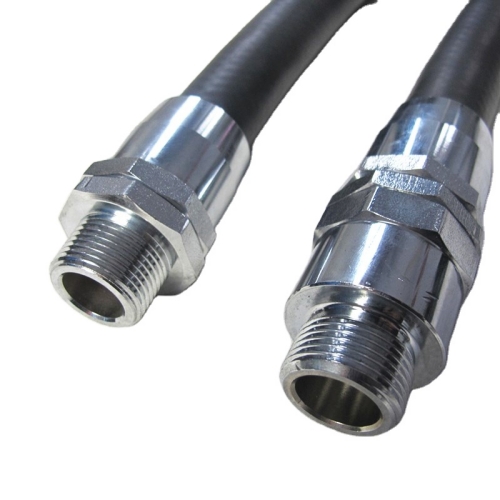
SAE 100R13 hose represents a critical component in hydraulic fluid power systems, specifically designed for medium-pressure applications. Positioned within the industry chain as a vital link between the hydraulic pump, valves, and actuators, its primary function is the safe and efficient transmission of hydraulic fluid. This standard, defined by the Society of Automotive Engineers (SAE), dictates stringent requirements for hose construction, performance characteristics, and safety parameters. Core performance revolves around burst pressure, working pressure, impulse resistance, and temperature range, impacting the reliability and longevity of hydraulic machinery across various industries including construction, agriculture, and manufacturing. The hose construction typically consists of a synthetic rubber inner tube, multiple layers of high-strength reinforcement (often braided steel wire), and a durable, weather-resistant outer cover. Understanding the nuances of SAE 100R13 specifications is crucial for preventing catastrophic system failures and ensuring optimal operational efficiency.
Material Science & Manufacturing
The construction of SAE 100R13 hose relies heavily on specific material properties and precise manufacturing processes. The inner tube is commonly composed of nitrile rubber (NBR), prized for its excellent resistance to petroleum-based hydraulic fluids, abrasion, and heat. NBR's chemical structure – a copolymer of acrylonitrile and butadiene – dictates its compatibility with various fluids, though susceptibility to phosphate ester fluids necessitates consideration in specific applications. Reinforcement layers traditionally utilize high tensile strength steel wire, often specified as carbon steel conforming to ASTM A228 or equivalent standards. The steel wire is typically braided in a specific pattern (e.g., single, double, or spiral braid) to achieve the desired pressure rating. The outer cover commonly employs Chloroprene rubber (CR), also known as Neoprene, offering superior resistance to ozone, weathering, and abrasion.
Manufacturing begins with extrusion of the inner tube, followed by the precise application of reinforcement layers through automated braiding machines. Maintaining consistent braid coverage and wire tension is paramount to ensure uniform pressure resistance. Subsequent extrusion of the outer cover encases the reinforcement. Critical process parameters include temperature control during extrusion to maintain polymer integrity, precise control of wire tension to avoid localized stress concentrations, and post-curing processes to optimize rubber vulcanization. Vulcanization, employing sulfur-based or peroxide-based curing agents, cross-links the polymer chains, enhancing elasticity, tensile strength, and resistance to degradation. Finally, rigorous quality control inspections, including burst pressure testing, impulse testing, and dimensional checks, are performed to verify conformance to SAE 100R13 standards. Improper curing can lead to premature failure due to reduced elasticity and increased susceptibility to cracking.
Performance & Engineering
Performance of SAE 100R13 hose is dictated by its ability to withstand internal pressure, external forces, and environmental stressors. Force analysis involves evaluating hoop stress within the hose wall due to internal fluid pressure. This stress is directly proportional to the internal pressure and the hose radius, and inversely proportional to the wall thickness. Reinforcement layers significantly contribute to mitigating hoop stress, allowing the hose to operate safely at elevated pressures. Impulse resistance is a critical performance characteristic, particularly in hydraulic systems experiencing pulsating flow. Impulse testing, as defined in SAE J343, simulates cyclic pressure fluctuations to assess the hose's ability to withstand repeated stress reversals without failure.
Environmental resistance encompasses temperature range, fluid compatibility, and UV exposure. NBR inner tubes typically exhibit a temperature range of -40°C to +100°C, while CR outer covers offer resistance to ozone and weathering. However, prolonged exposure to extreme temperatures or incompatible fluids can lead to degradation and reduced performance. Compliance requirements are strictly enforced by SAE J517, which details dimensional specifications, performance testing procedures, and marking requirements. Furthermore, hose assemblies incorporating SAE 100R13 hose must adhere to relevant safety regulations, such as those governing hydraulic system design and operation in specific industries (e.g., mining, construction).
Technical Specifications
| Parameter | Unit | SAE 100R13 Range | Typical Value |
|---|---|---|---|
| Working Pressure | MPa | Up to 21 | 17.2 |
| Burst Pressure | MPa | Minimum 3x Working Pressure | 51.7 |
| Inner Tube Material | - | Nitrile Rubber (NBR) | NBR |
| Reinforcement | Layers | Single or Multiple Steel Wire Braid | Two Wire Braid |
| Outer Cover Material | - | Chloroprene Rubber (CR) | CR |
| Temperature Range | °C | -40 to +100 | -40 to +100 |
Failure Mode & Maintenance
SAE 100R13 hose, despite robust construction, is susceptible to various failure modes in practical applications. Fatigue cracking, arising from repeated flexing and pressure cycling, is a common issue, often initiating at areas of localized stress concentration (e.g., near fittings). Delamination, the separation of reinforcement layers from the rubber matrix, can occur due to inadequate bonding during manufacturing or prolonged exposure to harsh chemicals. Degradation of the rubber compound, caused by ozone, UV exposure, or incompatible fluids, leads to reduced elasticity and increased susceptibility to cracking. Oxidation, particularly at elevated temperatures, can embrittle the rubber, resulting in loss of strength. Pinholes in the inner tube can develop due to internal pressure combined with localized flaws or corrosion.
Preventative maintenance is crucial for extending hose lifespan and preventing catastrophic failures. Regular visual inspections should focus on identifying cracks, abrasions, bulges, or signs of degradation. Proper hose routing, avoiding sharp bends and contact with abrasive surfaces, minimizes mechanical stress. Maintaining fluid cleanliness prevents internal erosion and contamination. Replacing hoses at recommended intervals (based on operating conditions and fluid type) is essential. When replacing hoses, ensure proper fitting installation, torquing to specified values to avoid over-tightening or under-tightening. Store hoses in a cool, dry, and dark environment to minimize degradation. Following a documented maintenance schedule and utilizing appropriate fluid power safety practices are fundamental to ensuring system reliability and personnel safety.
Industry FAQ
Q: What is the significance of the 'dash size' designation in SAE 100R13 hoses, such as -6, -8, or -10?
A: The dash size indicates the inner diameter of the hose in sixteenths of an inch. For example, a -6 hose has a 6/16 inch (3/8 inch) inner diameter. This dimension is critical for matching the hose to the flow requirements of the hydraulic system and the port sizes of the connected components. Selecting the incorrect dash size can lead to flow restrictions, pressure drops, and reduced system performance.
Q: Can SAE 100R13 hoses be used with phosphate ester hydraulic fluids?
A: Generally, no. Standard NBR inner tubes used in SAE 100R13 hoses are not compatible with phosphate ester fluids. Phosphate esters cause swelling and degradation of NBR, leading to premature failure. Specialized hoses with fluoropolymer (e.g., PTFE, FKM) inner tubes are required for phosphate ester applications. Always verify fluid compatibility before selecting a hose.
Q: How does the number of reinforcement layers affect the working pressure of an SAE 100R13 hose?
A: Increasing the number of reinforcement layers directly increases the hose's working pressure capability. Each layer of steel wire braid provides additional tensile strength to withstand internal pressure. Hoses with multiple braids (e.g., two or four) are rated for higher working pressures than those with a single braid. However, increasing reinforcement also increases hose stiffness and cost.
Q: What is the recommended bend radius for SAE 100R13 hoses?
A: Maintaining the correct bend radius is critical to prevent hose damage. Exceeding the recommended bend radius can cause kinking, internal stress, and premature failure. The minimum bend radius is typically specified by the hose manufacturer and is often dependent on the hose diameter and construction. As a general guideline, the bend radius should be at least 4 times the hose inner diameter.
Q: How can I identify a counterfeit SAE 100R13 hose?
A: Counterfeit hoses often lack proper markings, exhibit poor build quality, or fail to meet specified performance characteristics. Look for clear and accurate SAE markings, including the manufacturer's identification and performance ratings. Inspect the hose for inconsistencies in braid coverage, uneven wall thickness, or defects in the outer cover. Conduct burst pressure testing to verify compliance with SAE standards. Purchasing from reputable suppliers is the best preventative measure.
Conclusion
SAE 100R13 hose serves as a foundational element in countless hydraulic systems, demanding a thorough understanding of its material composition, manufacturing processes, and performance characteristics. The combination of NBR inner tubes, steel wire reinforcement, and CR outer covers provides a robust solution for medium-pressure hydraulic fluid conveyance. However, factors such as fluid compatibility, temperature extremes, and mechanical stress can significantly impact hose lifespan and reliability.
Proper selection, installation, and preventative maintenance, guided by SAE standards and industry best practices, are paramount for ensuring optimal system performance and preventing costly failures. Continued advancements in materials science and manufacturing techniques are driving the development of more durable and versatile hydraulic hoses, addressing evolving industry needs and enhancing operational safety.