
Apr . 01, 2024 17:55 Back to list
Rubber Hose Supplier Performance Analysis

Introduction
Rubber hose, a flexible conduit for fluids and gases, represents a critical component across numerous industrial sectors, including automotive, agriculture, construction, and manufacturing. Its technical position within the supply chain is fundamental, acting as the crucial interface between fluid transfer systems – pumps, valves, reservoirs – and end-use applications. Modern rubber hoses are rarely simple extrusions; they are often complex multi-layered constructions engineered to withstand specific pressures, temperatures, chemical exposures, and mechanical stresses. Core performance characteristics defining a high-quality rubber hose include burst pressure, tensile strength, elongation at break, abrasion resistance, and chemical compatibility. Addressing the persistent industry pain points of hose failure due to degradation, permeation, and unexpected pressure spikes demands a robust understanding of material science, manufacturing precision, and rigorous testing protocols. This guide provides an in-depth exploration of these elements.
Material Science & Manufacturing
The foundation of any rubber hose lies in the elastomer selection. Common base polymers include Natural Rubber (NR), Styrene-Butadiene Rubber (SBR), Ethylene Propylene Diene Monomer (EPDM), Nitrile Rubber (NBR), Chloroprene Rubber (CR, Neoprene), and Silicone Rubber (VMQ). NR provides excellent tensile strength and resilience but lacks oil resistance. SBR is a cost-effective alternative to NR with good abrasion resistance. EPDM exhibits outstanding resistance to ozone, weathering, and heat, making it suitable for outdoor applications and automotive coolant systems. NBR excels in oil and fuel resistance, vital for automotive fuel lines and hydraulic systems. CR offers moderate resistance to oil, ozone, and weathering, frequently used in general-purpose hoses. VMQ provides high-temperature resistance and flexibility, favored in food-grade and pharmaceutical applications. Reinforcement layers are crucial, typically comprising textile braids (polyester, nylon) or steel wire helices, to provide pressure resistance. Manufacturing processes vary with hose complexity. Simple hoses are produced via extrusion, where the rubber compound is forced through a die to form a continuous tube. More complex hoses involve multiple extrusion stages for inner tubes, reinforcement layers, and outer covers, followed by vulcanization – a chemical process (typically utilizing sulfur) that crosslinks the polymer chains, imparting strength, elasticity, and resistance to degradation. Precise control of temperature, pressure, and cure time during vulcanization is paramount. Injection molding is used for specialized fittings and couplings. Parameter control during extrusion includes maintaining consistent die temperature, screw speed, and rubber compound viscosity. Fiber weaving for textile reinforcement requires meticulous tension control to ensure uniform braid structure and prevent deformation.
Performance & Engineering
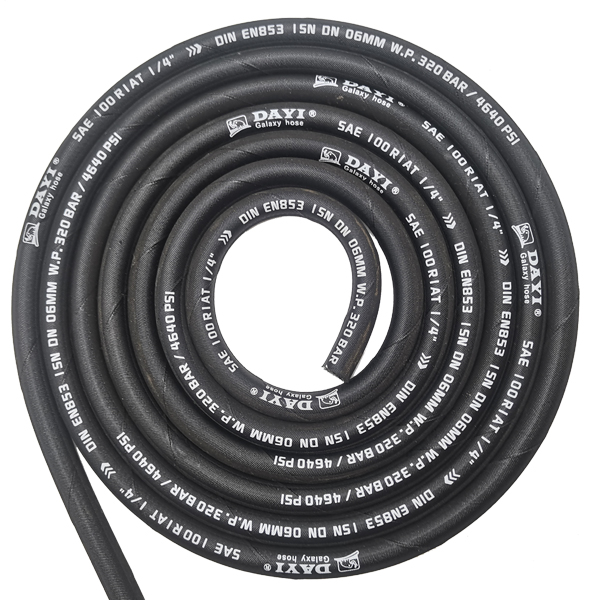
Performance analysis of rubber hoses necessitates a comprehensive understanding of force analysis and environmental resistance. Burst pressure, determined through hydrostatic testing, is a critical safety parameter. Tensile strength and elongation at break, measured via standardized tensile testing (ASTM D412), quantify the hose's resistance to mechanical failure. Environmental resistance demands consideration of temperature extremes, chemical exposure, and UV radiation. Long-term exposure to elevated temperatures can lead to polymer chain scission, reducing elasticity and strength. Chemical compatibility is assessed through immersion testing, monitoring for swelling, degradation, and loss of mechanical properties. Ozone cracking, a significant failure mode in EPDM hoses, is mitigated through the addition of antiozonants. Permeation, the diffusion of fluids through the hose wall, is a concern in applications involving hazardous materials or where fluid loss is unacceptable; permeation rates are typically measured using gas chromatography. Compliance requirements are stringent, varying by industry and region. Automotive hoses must meet SAE J20R standards for fuel and coolant lines. Food-grade hoses require FDA compliance (21 CFR 177.2600) and must be free of harmful leachables. Hydraulic hose standards (SAE J517, EN 853) dictate performance criteria for pressure, temperature, and fluid compatibility. The engineering design must account for dynamic stresses induced by pulsation, vibration, and bending. Finite element analysis (FEA) is often employed to optimize hose geometry and reinforcement layer configuration to minimize stress concentrations and prevent fatigue failure.
Technical Specifications
| Parameter | Unit | NBR Hose (Typical) | EPDM Hose (Typical) |
|---|---|---|---|
| Working Pressure | MPa | 1.0 - 2.0 | 0.8 - 1.6 |
| Burst Pressure | MPa | 3.0 - 6.0 | 2.4 - 4.8 |
| Temperature Range | °C | -40 to +120 | -50 to +150 |
| Tensile Strength | MPa | 17 - 24 | 14 - 21 |
| Elongation at Break | % | 300 - 500 | 400 - 600 |
| Oil Resistance | Rating (1-5) | 5 | 2 |
Failure Mode & Maintenance
Rubber hose failure manifests in various forms. Fatigue cracking, resulting from repeated flexing and pressure cycles, is a common issue, particularly in dynamic applications. Delamination, the separation of reinforcement layers from the rubber matrix, reduces pressure resistance and can lead to catastrophic failure. Degradation, caused by exposure to ozone, UV radiation, chemicals, and heat, weakens the rubber compound and reduces its elasticity. Oxidation, a chemical process involving reaction with oxygen, leads to hardening, cracking, and loss of flexibility. Permeation can cause swelling and weakening of the hose wall. Abrasion, particularly in industrial environments, wears away the outer cover, exposing the reinforcement layers. Maintenance is critical for extending hose life. Regular visual inspections should identify cracks, abrasions, bulges, and leaks. Pressure testing should be performed periodically to verify hose integrity. Avoid sharp bends and kinks, which can induce stress concentrations. Store hoses in a cool, dry, and dark environment, away from ozone sources and direct sunlight. When handling chemicals, ensure the hose material is compatible. Proper installation, avoiding over-tightening of fittings and ensuring correct alignment, is vital. Replacement is necessary when significant degradation or damage is detected, or when the hose reaches its service life limit. Detailed failure analysis, including microscopic examination of fractured surfaces, can pinpoint the root cause of failure and inform material selection or design modifications.
Industry FAQ
Q: What is the difference between a braided and a spiral reinforced hose, and when would you choose one over the other?
A: Braided reinforcement, typically using textile braids, offers excellent flexibility and is suitable for moderate pressure applications where bending is frequent. Spiral reinforcement, utilizing steel wire, provides significantly higher pressure resistance but is less flexible. Choose braided hoses for applications like automotive coolant lines or low-pressure air lines, and spiral hoses for high-pressure hydraulic systems or applications requiring robust structural integrity.
Q: How does temperature affect the performance of a rubber hose?
A: Elevated temperatures accelerate polymer degradation, leading to reduced elasticity, tensile strength, and increased permeation. Low temperatures can cause the rubber to become brittle and less flexible, increasing the risk of cracking. The specified temperature range for a hose should always be observed. Selecting a rubber compound with appropriate thermal stability is critical for demanding applications.
Q: What are the key considerations when selecting a hose for a specific chemical application?
A: Chemical compatibility is paramount. The hose material must be resistant to swelling, degradation, and leaching when exposed to the chemical. Consult chemical resistance charts provided by rubber manufacturers, and conduct immersion testing if necessary. Consider not only the primary chemical but also any potential contaminants or mixtures.
Q: What are the common causes of hose failure in hydraulic systems?
A: Common causes include exceeding the working pressure, using incompatible fluids, improper installation (e.g., over-tightening fittings), abrasion, and fatigue due to pulsation and vibration. Regular inspection and maintenance, including fluid analysis and fitting inspection, are crucial for preventing failures.
Q: How do industry standards like SAE and EN impact the selection and use of rubber hoses?
A: Standards like SAE J517 and EN 853 define performance requirements for hydraulic hoses, including pressure ratings, temperature ranges, and fluid compatibility. Compliance with these standards ensures safety and reliability. Using hoses that meet relevant standards is often a regulatory requirement and is essential for maintaining warranty coverage.
Conclusion
The selection and application of rubber hoses demand a nuanced understanding of material science, manufacturing processes, and performance characteristics. A meticulous approach, factoring in environmental conditions, fluid compatibility, and operational stresses, is critical for ensuring long-term reliability and preventing costly failures. The industry trend towards specialized hose constructions, utilizing advanced polymers and reinforcement materials, reflects the growing demand for higher performance and increased durability.
Future advancements will likely focus on developing more sustainable rubber compounds, incorporating nanotechnology for enhanced properties, and implementing smart hose technologies with embedded sensors for real-time monitoring of pressure, temperature, and wear. Proactive maintenance programs, coupled with rigorous adherence to industry standards, will remain essential for maximizing hose lifespan and minimizing downtime.

