
Apr . 01, 2024 17:55 Back to list
rubber air hose Performance Analysis

Introduction
Rubber air hose is a flexible conduit designed to transport compressed air in a wide range of industrial, automotive, and construction applications. Positioned as a critical component within pneumatic systems, its performance dictates the efficiency and safety of connected tools and machinery. Unlike rigid piping, rubber air hose offers maneuverability and absorbs shock, reducing stress on connections. Core performance characteristics include burst pressure, working pressure, temperature resistance, and resistance to oil and abrasion. The selection of appropriate rubber air hose material and construction is paramount to ensure compatibility with the application and prevent premature failure, a significant pain point for maintenance engineers and procurement professionals. This guide details the material science, manufacturing processes, performance metrics, failure modes, and relevant standards for rubber air hose.
Material Science & Manufacturing
The primary material in rubber air hose is a synthetic rubber compound, most commonly based on nitrile butadiene rubber (NBR), styrene-butadiene rubber (SBR), or ethylene propylene diene monomer (EPDM). NBR offers excellent resistance to oils and fuels, making it suitable for automotive and industrial environments where lubricant exposure is common. SBR provides good abrasion resistance and general-purpose performance at a lower cost. EPDM excels in outdoor applications due to its superior resistance to ozone, UV radiation, and weathering. Reinforcement layers, typically composed of high-tensile textile braids (polyester or nylon) or steel wire spirals, are embedded within the rubber matrix to enhance burst strength and prevent kinking.
Manufacturing typically involves extrusion. The rubber compound is fed into an extruder, which forces it through a die to form a continuous tube. Reinforcement layers are applied either before or during extrusion. Post-extrusion, the hose undergoes vulcanization – a process of heating the rubber with sulfur or other curing agents – to crosslink the polymer chains, improving elasticity, strength, and temperature resistance. Precise temperature and time control during vulcanization are critical, as under-curing leads to tackiness and low tensile strength, while over-curing results in brittleness and reduced flexibility. Fittings (couplings) are attached using mechanical crimping or adhesive bonding, processes requiring rigorous quality control to ensure a secure and leak-proof connection. The internal surface is often treated with a lining to minimize friction and prevent the build-up of contaminants.
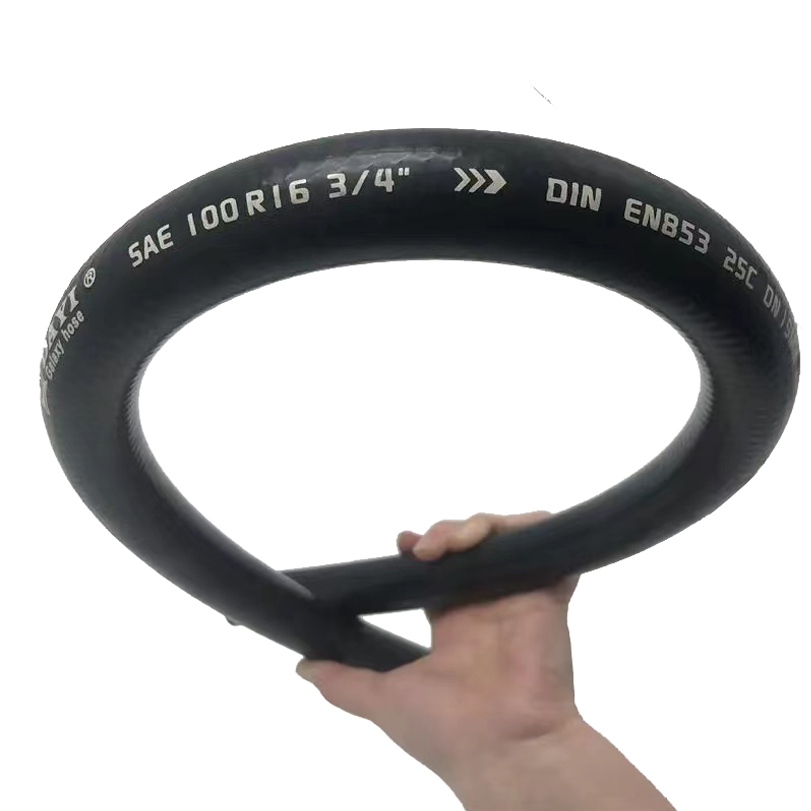
Performance & Engineering
The performance of rubber air hose is dictated by several key engineering considerations. Burst pressure, defined as the pressure at which the hose fails catastrophically, is a critical safety parameter and must exceed the maximum pressure of the pneumatic system. Working pressure, typically specified as a fraction of the burst pressure (e.g., 4:1 safety factor), represents the maximum pressure for continuous operation. Hose diameter influences flow rate; smaller diameters create higher air velocity but increase pressure drop. The bending radius is equally important; exceeding the minimum bending radius can cause kinking, reducing flow and potentially damaging the hose.
Environmental resistance is crucial. Temperature fluctuations can affect rubber’s elasticity and strength. Exposure to oils, fuels, and chemicals can cause swelling, degradation, and loss of performance. Abrasion resistance is particularly important in construction and industrial settings where the hose is subject to friction against rough surfaces. Fatigue resistance, the ability to withstand repeated flexing and pressure cycling, is a major determinant of hose lifespan. Finite Element Analysis (FEA) is often employed during the design phase to optimize hose construction and predict stress distribution under various operating conditions. Compliance with industry standards (see section 7) is vital to ensure product safety and performance.
Technical Specifications
| Parameter | NBR Hose (General Purpose) | SBR Hose (Economy) | EPDM Hose (Weather Resistant) | Reinforcement Type |
|---|---|---|---|---|
| Working Pressure (PSI) | 300 | 200 | 250 | Polyester Braid |
| Burst Pressure (PSI) | 900 | 600 | 750 | Nylon Braid |
| Temperature Range (°F) | -40 to 212 | -20 to 180 | -60 to 250 | Steel Wire Spiral |
| Oil Resistance | Excellent | Good | Fair | None |
| Abrasion Resistance | Good | Very Good | Good | NBR Cover |
| Ozone Resistance | Fair | Fair | Excellent | EPDM Cover |
Failure Mode & Maintenance
Rubber air hose is susceptible to several failure modes. Fatigue cracking, often initiated at the fitting connection or at points of severe bending, occurs due to repeated flexing and pressure cycling. Abrasion can wear through the rubber cover, exposing the reinforcement layers and leading to burst failure. Oil permeation can cause swelling and softening of the rubber, reducing its strength and flexibility. Ozone cracking, particularly prevalent in EPDM hoses exposed to UV radiation, manifests as surface cracks. Kinking, resulting from exceeding the minimum bending radius, can cause localized stress concentration and eventual failure. Delamination, the separation of the rubber layers, can occur due to improper bonding during manufacturing or exposure to harsh chemicals.
Preventative maintenance is essential to maximize hose lifespan. Regular visual inspections should be conducted to identify signs of cracking, abrasion, or swelling. Hoses should be replaced if any damage is detected. Avoid exceeding the working pressure and minimum bending radius. Store hoses in a cool, dry place away from direct sunlight and ozone sources. When disconnecting hoses, avoid sharp bending or twisting. Periodically check the tightness of fittings. Cleaning the hose with a mild detergent and water can remove contaminants that contribute to degradation. Proper handling and storage significantly extend the service life of rubber air hose and reduce the risk of catastrophic failure.
Industry FAQ
Q: What is the impact of oil contamination on NBR hose lifespan?
A: Prolonged exposure to oil, even with NBR's excellent oil resistance, will eventually cause swelling and plasticization of the rubber compound. This leads to a reduction in tensile strength, flexibility, and ultimately, premature failure. The rate of degradation depends on the type of oil, concentration, and duration of exposure. Regular inspection and replacement of hoses in oily environments is crucial.
Q: How does temperature affect the working pressure rating of a rubber air hose?
A: Elevated temperatures generally decrease the working pressure rating of a rubber air hose. As temperature increases, the rubber compound softens, reducing its ability to withstand pressure. Manufacturers typically provide derating factors for use at higher temperatures. Operating a hose beyond its rated temperature and pressure limits significantly increases the risk of burst failure.
Q: What are the advantages of steel wire reinforcement over textile braid reinforcement?
A: Steel wire reinforcement provides significantly higher burst pressure capabilities compared to textile braids. It also offers better resistance to kinking and collapsing under vacuum conditions. However, steel wire hoses are generally heavier and less flexible than textile braid hoses. The choice depends on the specific application requirements and trade-offs between strength, flexibility, and weight.
Q: What steps can be taken to prevent ozone cracking in EPDM hoses?
A: Ozone cracking is caused by the reaction of ozone with the unsaturated bonds in the rubber compound. To prevent it, store EPDM hoses in a cool, dry place away from direct sunlight and sources of ozone (e.g., electric motors). Applying a protective coating or using an ozone-resistant inner liner can also help mitigate cracking.
Q: What is the recommended procedure for attaching fittings to rubber air hose?
A: Proper fitting attachment is critical for safety and performance. Use a crimping tool specifically designed for the hose and fitting size. Follow the manufacturer's instructions carefully, ensuring the crimp is secure and uniform. Avoid over-crimping, which can damage the hose, and under-crimping, which can lead to leaks. Regular inspection of fittings is essential to identify any signs of loosening or damage.
Conclusion
Rubber air hose, while seemingly a simple component, is a sophisticated product governed by complex material science and engineering principles. Selecting the appropriate hose for a specific application necessitates a thorough understanding of its performance characteristics, potential failure modes, and relevant industry standards. The choice of rubber compound, reinforcement type, and manufacturing process significantly impacts the hose's durability, reliability, and safety.
Ongoing preventative maintenance, including regular inspections and proper handling, is paramount to maximizing hose lifespan and minimizing the risk of costly downtime and potential injuries. By adhering to best practices and utilizing advanced technologies like FEA, engineers and procurement professionals can optimize rubber air hose performance and ensure the integrity of pneumatic systems. Continuous advancements in rubber technology and manufacturing processes promise to further enhance the performance and longevity of these critical industrial components.

