
Apr . 01, 2024 17:55 Back to list
Resin Hose Performance Analysis
Introduction
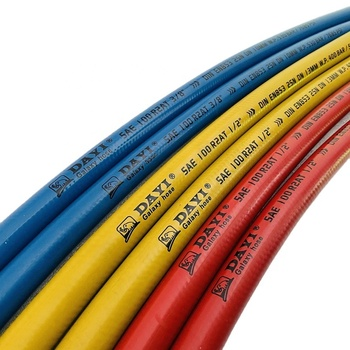
Resin hoses represent a critical component in fluid transfer systems across diverse industrial applications, including chemical processing, agriculture, and automotive manufacturing. Unlike traditional rubber or metallic hoses, resin hoses are constructed from thermoplastic resins, offering a unique combination of flexibility, chemical resistance, and weight reduction. Their technical position within the industrial chain lies between the fluid source (pumps, tanks) and the delivery point (nozzles, reactors, machinery). Core performance characteristics center around pressure containment, fluid compatibility, and long-term durability under cyclical stress and varying environmental conditions. The selection of the appropriate resin material, coupled with robust manufacturing processes, determines the hose’s ability to withstand corrosive fluids, extreme temperatures, and demanding operational parameters. A significant advantage is their resistance to many chemicals that degrade conventional elastomers, reducing downtime and maintenance costs. This guide details the material science, manufacturing processes, performance characteristics, failure modes, and industry standards governing resin hose technology.
Material Science & Manufacturing
Resin hoses are typically fabricated from a range of thermoplastic resins, each exhibiting distinct physical and chemical properties. Common materials include Polyethylene (PE), Polypropylene (PP), Polyvinyl Chloride (PVC), Polyamide (Nylon), Polyurethane (PU), and Fluoropolymers like Polytetrafluoroethylene (PTFE). PE and PP offer excellent chemical resistance and low cost, suitable for less demanding applications. PVC provides good abrasion resistance and is commonly used for water and air transfer. Nylon possesses high tensile strength and temperature resistance, ideal for hydraulic and pneumatic systems. PU demonstrates exceptional flexibility and resistance to oils and solvents. Fluoropolymers, while more expensive, provide superior resistance to a broad spectrum of aggressive chemicals and high temperatures. Manufacturing processes vary depending on the resin type and hose application. Extrusion is a primary method, where molten resin is forced through a die to create a continuous tube. Braiding with high-strength fibers (polyester, nylon, or aramid) is often incorporated to enhance pressure resistance and prevent kinking. The braiding angle and fiber density are critical parameters influencing burst pressure and flexibility. Subsequent processes may include welding or fusing layers for multi-layer constructions, incorporating different resins to optimize specific properties like permeability or chemical compatibility. Parameter control during extrusion – temperature, pressure, screw speed – is vital to ensure consistent wall thickness and material homogeneity. Post-processing steps include dimensional inspection, pressure testing, and surface treatment (e.g., anti-static coating).
Performance & Engineering
The performance of a resin hose is dictated by its ability to withstand internal pressure, external loads, and environmental stressors. Force analysis centers on Hoop stress (σh = PD/2t, where P is pressure, D is diameter, and t is wall thickness) and longitudinal stress, which determine the hose's resistance to bursting and elongation. Environmental resistance involves assessing the hose’s degradation rate when exposed to UV radiation, ozone, temperature extremes, and chemical attack. Accelerated aging tests, conforming to ASTM standards (see footer), are employed to predict long-term performance. Compliance requirements vary by industry and application. In food and beverage processing, hoses must adhere to FDA regulations for material compatibility and leachability. For hydraulic systems, hoses must meet SAE standards for pressure rating, impulse resistance, and dimensional accuracy. Functional implementation necessitates careful consideration of bend radius, flow rate, and fitting compatibility. Excessive bending can induce stress concentrations, leading to premature failure. The internal surface roughness impacts flow resistance and can contribute to particle buildup. Fitting selection is crucial; incompatible fittings can cause leakage or hose deformation. Corrosion resistance is particularly important when conveying corrosive fluids; fluoropolymer linings are often employed in such applications. Furthermore, electrostatic discharge (ESD) properties must be considered in flammable environments, requiring the use of conductive resins or coatings.
Technical Specifications
| Parameter | Unit | Typical Value (PVC Hose) | Typical Value (PTFE Lined Hose) |
|---|---|---|---|
| Working Pressure | PSI | 300 | 1500 |
| Burst Pressure | PSI | 900 | 4500 |
| Temperature Range | °F | -20 to 150 | -100 to 450 |
| Tensile Strength | PSI | 2000 | 4000 |
| Elongation at Break | % | 300 | 200 |
| Chemical Resistance | Rating (1-5, 5=Excellent) | 3 | 5 |
Failure Mode & Maintenance
Resin hose failures typically stem from a combination of mechanical stress, chemical attack, and environmental degradation. Common failure modes include fatigue cracking (caused by cyclical pressure fluctuations), pinhole leaks (resulting from localized corrosion or defects), kinking (leading to localized stress concentration and rupture), and permeation (where fluids migrate through the hose wall). Fatigue cracking often initiates at fitting interfaces or areas of high stress concentration. Chemical attack can cause swelling, embrittlement, or dissolution of the resin material. UV radiation can degrade the polymer chains, reducing tensile strength and flexibility. Maintenance involves regular visual inspection for cracks, blisters, or discoloration. Pressure testing should be conducted periodically to verify the hose’s integrity. Proper storage is crucial; hoses should be stored in a cool, dry place away from direct sunlight and corrosive substances. Avoid sharp bends and excessive tension during installation and operation. Contamination from incompatible fluids should be prevented. If a hose exhibits signs of degradation, it should be replaced immediately. For PTFE lined hoses, regular inspection of the liner for cracks or delamination is critical. Cleaning procedures should be followed based on the conveyed fluid, avoiding abrasive cleaners that could damage the resin surface.
Industry FAQ
Q: What is the impact of fluid velocity on resin hose lifespan?
A: Higher fluid velocities increase erosion and can accelerate fatigue failure. Turbulence created by high flow rates can also contribute to localized stress concentrations. Selection of a hose with a higher wall thickness or a more abrasion-resistant liner is recommended for high-velocity applications.
Q: How do I determine the chemical compatibility of a resin hose with a specific fluid?
A: Consult the resin manufacturer’s chemical resistance charts. These charts provide guidance on the compatibility of different resins with various chemicals at specific temperatures and concentrations. Conducting a small-scale compatibility test (immersing a hose sample in the fluid for a defined period) is also advisable.
Q: What are the key considerations when selecting fittings for resin hoses?
A: Fittings must be compatible with the hose material and pressure rating. Ensure the fitting’s barb diameter matches the hose’s inner diameter for a secure connection. The fitting material should also be chemically resistant to the conveyed fluid. Crimping or clamping methods should be appropriate for the hose material and application.
Q: What is the significance of the braiding material in a reinforced resin hose?
A: The braiding material provides reinforcement to prevent kinking and withstand internal pressure. Polyester braiding offers good general-purpose performance, while nylon provides higher strength and abrasion resistance. Aramid braiding delivers the highest strength-to-weight ratio and is suitable for demanding applications.
Q: How can I mitigate the risk of electrostatic discharge (ESD) in resin hose applications?
A: Use conductive resin hoses or incorporate a grounding wire within the hose construction. Ensure proper grounding of all connected equipment. Control humidity levels to reduce static charge buildup. Avoid conveying flammable fluids through non-conductive hoses.
Conclusion
Resin hoses offer a versatile and reliable solution for fluid transfer across a wide spectrum of industrial applications. Their inherent chemical resistance, flexibility, and weight reduction benefits position them as a preferred alternative to traditional materials in many scenarios. Understanding the material science, manufacturing processes, and performance characteristics is paramount for selecting the appropriate hose for a given application, maximizing operational efficiency, and minimizing the risk of failure.
Future advancements in resin hose technology will likely focus on developing novel materials with enhanced chemical resistance, temperature stability, and mechanical properties. Innovations in braiding techniques and hose construction will further improve pressure rating and durability. The integration of smart sensors for real-time monitoring of hose condition will also contribute to predictive maintenance and enhanced safety.