
Apr . 01, 2024 17:55 Back to list
profession manufacturer hydraulic hose supplier Performance and Engineering
Introduction
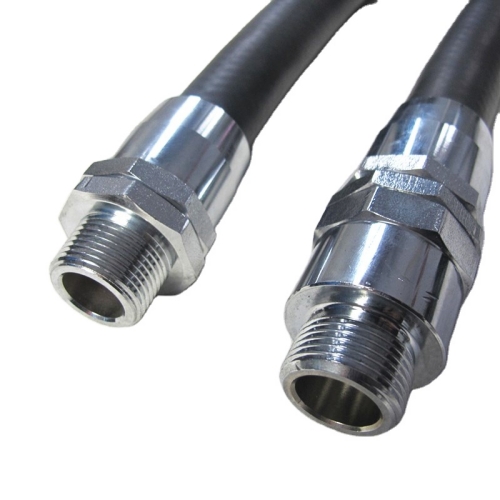
Hydraulic hose assemblies are critical components in fluid power systems, responsible for transmitting hydraulic fluid to actuators and other components. A profession manufacturer hydraulic hose supplier delivers not merely a product, but a critical link in the operational integrity of heavy machinery across industries like construction, agriculture, manufacturing, and aerospace. These hoses are engineered to withstand extreme pressures, temperatures, and a variety of fluid types. The performance of a hydraulic hose is dictated by its material composition, construction method, and adherence to stringent industry standards. Core performance characteristics include burst pressure, working pressure, temperature range, and fluid compatibility. The increasing demand for higher operating pressures and more specialized fluids necessitates ongoing advancements in hydraulic hose technology, focusing on improved materials and manufacturing processes to enhance durability and reliability, and minimize potential failure points.
Material Science & Manufacturing
The core material for most hydraulic hoses is synthetic rubber, with variations including nitrile rubber (NBR), ethylene propylene diene monomer (EPDM), and chloroprene rubber (CR). NBR is commonly used for oil-based hydraulic fluids due to its excellent resistance to petroleum products. EPDM excels in applications requiring water and heat resistance, while CR provides good resistance to weathering and ozone. Reinforcement layers are crucial for withstanding high pressures and include braided textile (typically polyester or nylon) or spiral steel wire. The manufacturing process typically begins with the extrusion of the inner tube, followed by the application of reinforcement layers. A bonding agent is utilized to ensure adhesion between the rubber and reinforcement. Multiple layers of rubber are then extruded over the reinforcement, forming the outer cover. Key parameters during extrusion include temperature control to prevent degradation of the rubber compound, precise control of layer thickness to maintain consistent pressure ratings, and adequate curing time to achieve optimal material properties. Skiving, a process where the inner tube is slightly tapered, facilitates hose assembly and prevents fluid leakage. Quality control checks include dimensional measurements, pressure testing (burst and working pressure), and visual inspection for defects. Steel wire spiral hoses require precise winding of the wire and consistent pitch to ensure uniform pressure distribution.

Performance & Engineering
Hydraulic hose performance is governed by several critical engineering considerations. Burst pressure, typically four times the working pressure, represents the hose’s ultimate failure point. Working pressure is the maximum pressure the hose can safely sustain during continuous operation. Temperature extremes significantly affect hose performance, reducing both pressure ratings and lifespan. Fluid compatibility is paramount; incompatible fluids can cause swelling, softening, or cracking of the rubber compound, leading to premature failure. Hose assemblies are subjected to significant bending and flexing, introducing fatigue stresses. Finite Element Analysis (FEA) is commonly used to model stress distribution and optimize hose construction for extended service life. End fitting selection is critical; fittings must be compatible with the hose material and designed to withstand the operating pressure. Incorrectly crimped fittings are a major cause of hose failures. Proper hose routing is essential to avoid abrasion, kinking, and excessive bending. Consideration must also be given to environmental factors such as UV exposure and ozone concentration, which can degrade the rubber compound over time. Compliance with industry standards, such as SAE J517 and EN 856, is non-negotiable, ensuring product safety and reliability.
Technical Specifications
| Hose Type | Working Pressure (PSI) | Burst Pressure (PSI) | Temperature Range (°F) |
|---|---|---|---|
| NBR Hydraulic Hose | 2000 | 8000 | -40 to 212 |
| EPDM Hydraulic Hose | 1500 | 6000 | -58 to 250 |
| CR Hydraulic Hose | 1800 | 7200 | -40 to 230 |
| Steel Wire Spiral Hose | 4000 | 16000 | -40 to 250 |
| Textile Braided Hose | 1000 | 4000 | -40 to 212 |
| Thermoplastic Hydraulic Hose | 3000 | 12000 | -65 to 250 |
Failure Mode & Maintenance
Hydraulic hose failure modes are diverse and often interconnected. Fatigue cracking, resulting from repeated bending and flexing, is a common failure mechanism, particularly in high-cycle applications. Abrasion, caused by contact with abrasive surfaces, can wear through the outer cover and expose the reinforcement layers. Pinholes, often initiated by corrosion or localized damage, can lead to fluid leakage. Blowouts occur when the hose exceeds its pressure rating, causing a catastrophic rupture. Delamination, the separation of rubber layers from the reinforcement, weakens the hose and can lead to failure. Oxidation and degradation, accelerated by heat, UV exposure, and fluid incompatibility, can cause the rubber to become brittle and crack. Proper maintenance is crucial for extending hose life. Regular visual inspections should be conducted to identify signs of damage, such as cracks, abrasions, and leaks. Hose assemblies should be replaced if any damage is detected. Proper hose routing and support are essential to minimize stress and abrasion. Fluid contamination can significantly reduce hose life; regular fluid filtration is recommended. Avoid over-bending and kinking the hose. When disconnecting hose assemblies, ensure the system is depressurized. A proactive hose management program, including scheduled inspections and replacements, can significantly reduce downtime and improve safety.
Industry FAQ
Q: What is the impact of fluid velocity on hydraulic hose life?
A: Higher fluid velocity increases the rate of erosion and abrasion within the hose, accelerating wear and tear on the inner tube. It also increases pressure drop, potentially reducing system efficiency. Selecting a hose with a larger inner diameter can mitigate this issue, reducing fluid velocity for a given flow rate.
Q: How do I determine the correct hose size for my application?
A: Determining the correct hose size requires considering the flow rate, operating pressure, and fluid type. The inner diameter must be sufficient to accommodate the flow rate without excessive pressure drop. The hose must also be rated for the maximum operating pressure and compatible with the fluid being used.
Q: What are the key differences between braided and spiral hydraulic hoses?
A: Braided hoses offer good flexibility and are suitable for applications with moderate pressure requirements. Spiral hoses provide higher pressure ratings and greater kink resistance, making them ideal for demanding applications. Spiral hoses are generally less flexible than braided hoses.
Q: What role does hose fitting crimping play in overall assembly integrity?
A: Proper hose fitting crimping is paramount. An insufficient crimp can result in fluid leakage, while an excessive crimp can damage the hose reinforcement. Crimping machines should be calibrated regularly, and operators should be trained in proper crimping procedures. The correct die set must be used for the specific hose and fitting combination.
Q: What are the implications of using a hose that isn't rated for the system's peak pressure?
A: Using a hose with an insufficient pressure rating is extremely dangerous. Pressure surges and spikes can exceed the hose's working pressure, leading to catastrophic failure and potential injury. Always select a hose with a burst pressure at least four times the maximum operating pressure, and ensure the working pressure exceeds the system's peak pressure.
Conclusion
The selection and implementation of hydraulic hoses represent a critical engineering consideration impacting system reliability, operational safety, and overall cost of ownership. A profession manufacturer hydraulic hose supplier provides solutions built upon a foundation of material science, precision manufacturing, and adherence to rigorous industry standards. Understanding the nuances of material properties, manufacturing processes, and failure modes is essential for engineers and procurement professionals alike.
Continued advancements in hydraulic hose technology, driven by the demand for higher pressures, more specialized fluids, and extended service life, will focus on the development of new materials, improved manufacturing techniques, and enhanced quality control procedures. Proactive hose management programs, coupled with informed selection and proper installation, are essential for maximizing performance and minimizing the risk of costly failures.