
Apr . 01, 2024 17:55 Back to list
Profession manufacturer hydraulic hose Performance Analysis
Introduction
Hydraulic hose, a critical component in fluid power systems, facilitates the transmission of pressurized fluid to actuators and other components. Profession manufacturer hydraulic hose represents a specialized category, engineered to meet the demanding requirements of industrial, mobile, and process applications. This guide provides an in-depth technical examination of hydraulic hose, encompassing material science, manufacturing processes, performance characteristics, failure modes, and relevant industry standards. Core performance is defined by pressure rating, temperature range, fluid compatibility, and resistance to abrasion and kinking. The industry faces consistent pain points relating to hose life in harsh environments, maintaining consistent internal diameters to prevent flow restriction, and ensuring compatibility with increasingly complex hydraulic fluids. Improper hose selection or maintenance leads to costly downtime, potential safety hazards, and reduced system efficiency.
Material Science & Manufacturing
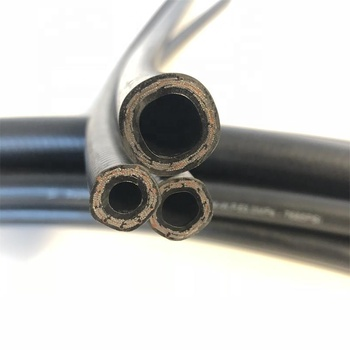
The core of a hydraulic hose lies in its layered construction. The inner tube, typically composed of synthetic rubber compounds like nitrile (NBR), ethylene propylene diene monomer (EPDM), or fluorocarbon (FKM – Viton), provides fluid resistance. NBR offers excellent resistance to petroleum-based fluids, while EPDM excels with phosphate ester-based fluids. FKM provides the broadest chemical compatibility but at a higher cost. The reinforcement layer, crucial for pressure containment, utilizes one or more braids or spirals of high-tensile steel wire. The number of braids directly correlates with pressure capacity; more braids yield higher pressure ratings. A skive angle on the steel wire improves the bond with the rubber compound. The outer cover, commonly formulated from chloroprene (CR) or polyurethane (PU), provides abrasion, ozone, and weather resistance.
Manufacturing involves several key processes. Inner tube extrusion precisely controls wall thickness and internal diameter. Reinforcement braiding or spiraling is automated, ensuring consistent coverage and wire tension. Bonding is critical; adhesives promote adhesion between layers, and vulcanization (curing) permanently sets the rubber compounds, achieving a strong and durable bond. Post-curing processes optimize rubber properties, enhancing elasticity and tensile strength. Quality control throughout, including hydrostatic pressure testing and dimensional inspection, verifies compliance with specifications. Parameter control focuses on rubber compound viscosity, cure temperature and time, braid tension, and dimensional tolerances. The selection of raw materials is directly influenced by the intended application and fluid compatibility requirements.

Performance & Engineering
Hydraulic hose performance is governed by several engineering principles. Burst pressure, working pressure, and safety factor are paramount. Working pressure is typically 50-75% of burst pressure, providing a safety margin. Hose selection necessitates a thorough understanding of system pressures, temperature extremes, and fluid dynamics. Force analysis considers hoop stress in the hose wall due to internal pressure. Higher pressure requires thicker walls or increased reinforcement. Bending radius is critical to avoid kinking and premature failure; exceeding the minimum bending radius induces stress concentrations. Environmental resistance is evaluated through exposure to ozone, UV radiation, and extreme temperatures.
Compliance with industry standards is essential. SAE J517, for example, defines performance requirements for non-reinforced and reinforced hydraulic hose. EN 853 and EN 857 are European standards specifying similar criteria. Hydraulic hose assemblies must also meet the requirements of the Machinery Directive (2006/42/EC) regarding safety and performance. Fitting compatibility is equally crucial. Incorrect fittings can cause leakage, pressure loss, and catastrophic failure. Fitting crimp quality directly impacts the integrity of the hose-fitting connection; inadequate crimping leads to slippage or blow-off. Selecting fittings designed specifically for the hose type and reinforcement material is imperative.
Technical Specifications
| Parameter | SAE J517 R1AT | EN 853 1SN | DIN EN 857 1SC |
|---|---|---|---|
| Working Pressure (PSI) | 1500 | 1500 | 1800 |
| Burst Pressure (PSI) | 4500 | 4500 | 5400 |
| Temperature Range (°F) | -40 to 212 | -40 to 212 | -40 to 212 |
| Inner Tube Material | NBR | NBR | NBR |
| Reinforcement | Single Steel Wire Braid | Single Steel Wire Braid | Spiral Steel Wire |
| Outer Cover Material | CR | CR | CR |
Failure Mode & Maintenance
Hydraulic hose failure manifests in several forms. Fatigue cracking, particularly in the reinforcement layer, occurs due to repeated flexing and pressure cycling. Abrasion damage results from external contact with abrasive surfaces. Kinking restricts flow and induces stress concentrations, leading to premature failure. Blow-off occurs when the hose separates from the fitting due to inadequate crimping or corrosion. Internal degradation of the rubber compounds occurs due to fluid incompatibility, oxidation, or exposure to high temperatures. Delamination, the separation of layers, compromises the hose’s structural integrity.
Preventative maintenance is crucial. Regular visual inspections should identify signs of abrasion, cracking, or leakage. Hose routing should avoid sharp bends and potential abrasion points. Proper fitting selection and crimping are essential. Fluid contamination accelerates degradation; implementing filtration systems is vital. Replace hoses at recommended intervals, even if no visible damage is present, particularly in critical applications. When replacing hoses, always use the same or higher pressure rating and ensure fluid compatibility. Proper storage of hoses, protected from UV radiation and extreme temperatures, extends their service life. Documenting hose replacement dates and inspection results facilitates proactive maintenance scheduling.
Industry FAQ
Q: What is the impact of impulse pressure on hydraulic hose life?
A: Impulse pressure, or pressure spikes, generates dynamic stresses that significantly reduce hose life. These spikes exceed the static working pressure and contribute to fatigue failure in the reinforcement layer. Hose selection should account for the maximum expected impulse pressure, and surge suppressors may be necessary to mitigate these effects.
Q: How does fluid compatibility affect hose selection?
A: Incorrect fluid compatibility leads to swelling, softening, or degradation of the inner tube material, resulting in leakage and premature failure. Consult fluid compatibility charts and select hose materials specifically rated for the intended fluid.
Q: What are the advantages of spiral-cut hose versus braided hose?
A: Spiral-cut hose offers greater flexibility and a higher pressure capacity than braided hose due to its unique construction. The spiral winding allows for greater elongation without kinking, making it suitable for applications with complex routing.
Q: What is the correct procedure for crimping hydraulic fittings?
A: Correct crimping requires a calibrated crimping machine, the appropriate die set for the hose and fitting, and adherence to manufacturer’s specifications. Improper crimping can lead to leakage, blow-off, or premature failure.
Q: How important is the bend radius in hydraulic hose installations?
A: Maintaining the specified minimum bend radius is critical to prevent kinking and stress concentrations. Exceeding this limit significantly reduces hose life and increases the risk of failure.
Conclusion
Profession manufacturer hydraulic hose represents a sophisticated engineering product requiring careful consideration of material science, manufacturing processes, and operational parameters. Proper hose selection, installation, and maintenance are paramount to ensuring system reliability, safety, and longevity. Understanding the nuanced interplay between pressure, temperature, fluid compatibility, and environmental factors is critical for optimizing hose performance and minimizing downtime.
The ongoing development of advanced rubber compounds, reinforcement materials, and manufacturing techniques continues to push the boundaries of hydraulic hose performance. Future trends include the development of lightweight, high-strength hoses, self-diagnosing hoses with integrated sensors, and environmentally friendly materials. A proactive approach to hose management, incorporating regular inspections and preventative maintenance, remains the cornerstone of a successful hydraulic system.