
Apr . 01, 2024 17:55 Back to list
profession manufacturer hydraulic hose manufacturer Performance Analysis
Introduction
Hydraulic hoses are a critical component in fluid power systems, responsible for transmitting hydraulic fluid to actuators and other components. They are utilized extensively across diverse industrial sectors including construction, agriculture, manufacturing, mining, and transportation. A profession manufacturer hydraulic hose manufacturer specializes in the design, production, and testing of these hoses, adhering to stringent quality control and performance standards. The core performance characteristics of a hydraulic hose – pressure rating, temperature resistance, chemical compatibility, and flexibility – directly impact the efficiency, safety, and longevity of the entire hydraulic system. Industry challenges revolve around increasing demands for higher operating pressures, compatibility with environmentally friendly fluids, and achieving extended service life in harsh operating conditions. This guide provides a comprehensive technical overview of hydraulic hose technology, covering material science, manufacturing processes, performance parameters, failure modes, and relevant industry standards.
Material Science & Manufacturing
Hydraulic hoses are typically constructed from multiple layers of materials selected for specific properties. The inner tube, in direct contact with the hydraulic fluid, is commonly made from synthetic rubbers like Nitrile (NBR), Ethylene Propylene Diene Monomer (EPDM), or Fluorocarbon (FKM/Viton). NBR offers excellent resistance to petroleum-based fluids, while EPDM provides superior resistance to water and heat. FKM excels in high-temperature and aggressive chemical environments. The reinforcement layer provides the hose's pressure-bearing capacity and is usually composed of multiple braids or spirals of high-strength steel wire. The number and configuration of these layers directly influence the hose's working pressure. A protective outer cover, typically made from synthetic rubber such as Chloroprene (CR) or Polyurethane (PU), safeguards against abrasion, weathering, and ozone degradation.
Manufacturing involves several key processes. Inner tube extrusion creates a seamless layer of the chosen rubber compound. Reinforcement braiding or spiraling is a precision process ensuring consistent coverage and wire tension. The outer cover is then extruded over the reinforcement layer. Cure temperature and time are critical parameters in the vulcanization process, affecting the rubber's physical properties (tensile strength, elongation, hardness). Post-production, hoses undergo rigorous testing, including hydrostatic pressure testing (burst pressure verification), impulse testing (cyclic pressure resistance), and dimensional checks. Quality control involves monitoring material batch consistency, wire gauge, braid density, and dimensional tolerances. Specialized manufacturing techniques like skewing (adjusting braid angle) optimize hose flexibility and reduce stress concentrations.
Performance & Engineering
The performance of a hydraulic hose is dictated by several engineering principles. Tensile strength, measured in MPa or PSI, determines the hose’s resistance to bursting under pressure. Elongation at break indicates the hose's ability to stretch before failure. Hose flexibility is critical for ease of routing and installation, minimizing bending stresses. This is quantified by bend radius – the minimum radius to which the hose can be bent without kinking or damaging the reinforcement. Environmental resistance is paramount; hydraulic hoses operate in a wide range of temperatures and are exposed to various fluids and contaminants. Chemical compatibility between the hose material and the hydraulic fluid is vital to prevent swelling, degradation, and fluid contamination. Impulse pressure resistance is another important consideration, especially in applications involving pulsating flow. The hose must withstand repeated pressure fluctuations without fatigue failure.
Force analysis includes evaluating hoop stress (stress in the hose wall due to internal pressure) and longitudinal stress (stress due to pressure and bending). Finite Element Analysis (FEA) is frequently used to model stress distributions and optimize hose design for specific applications. Compliance requirements such as SAE J517 (hydraulic hose performance standards) and EN 856 (European hydraulic hose standards) dictate minimum performance criteria for pressure rating, temperature range, and fluid compatibility. Proper hose assembly, including correct fitting selection and crimping, is crucial for ensuring performance and safety. Incorrect crimping can lead to premature failure.
Technical Specifications
| Parameter | Unit | Typical Value (NBR Inner Tube, Steel Wire Reinforcement, CR Cover) | Typical Value (FKM Inner Tube, Stainless Steel Wire Reinforcement, PU Cover) |
|---|---|---|---|
| Working Pressure | MPa | 20 | 40 |
| Burst Pressure | MPa | 80 | 160 |
| Temperature Range | °C | -40 to +100 | -20 to +150 |
| Minimum Bend Radius | mm | 4D (D = Hose Inner Diameter) | 6D |
| Tensile Strength | MPa | 25 | 35 |
| Elongation at Break | % | 400 | 300 |
Failure Mode & Maintenance
Hydraulic hose failures are often attributed to several common modes. Fatigue cracking, caused by repeated flexing and pressure cycling, occurs predominantly in the reinforcement layer. Pinholes in the inner tube can result from abrasion from fluid contaminants or chemical degradation. Cover abrasion leads to exposure of the reinforcement, increasing susceptibility to corrosion. Kinking, caused by exceeding the minimum bend radius, damages the hose structure. Improper fitting installation (over or under crimping) weakens the connection and leads to leaks or blowouts. External damage, such as cuts or punctures, compromises the hose integrity. Oxidation of the rubber compounds can occur due to exposure to ozone and UV radiation, leading to cracking and loss of flexibility.
Preventative maintenance is crucial. Regular visual inspections for cracks, abrasion, bulges, and leaks are essential. Hose routing should minimize bending and contact with abrasive surfaces. Ensure proper fluid cleanliness by utilizing filtration systems. Periodically check fitting connections for tightness and corrosion. Replace hoses at recommended intervals or when signs of damage are detected. When replacing a hose, use fittings specifically designed for the hose type and pressure rating. Avoid twisting the hose during installation. Proper storage, away from direct sunlight and extreme temperatures, will extend hose life. Detailed record-keeping of hose installations and maintenance activities facilitates proactive replacement and minimizes downtime.
Industry FAQ
Q: What is the impact of hydraulic fluid type on hose selection?
A: The hydraulic fluid’s chemical compatibility with the hose’s inner tube is critical. Petroleum-based fluids generally require NBR, while phosphate ester fluids demand FKM or other specialized polymers. Using an incompatible fluid can cause swelling, degradation, and premature failure. Viscosity also plays a role; higher viscosity fluids may require larger hose diameters to minimize pressure drop.
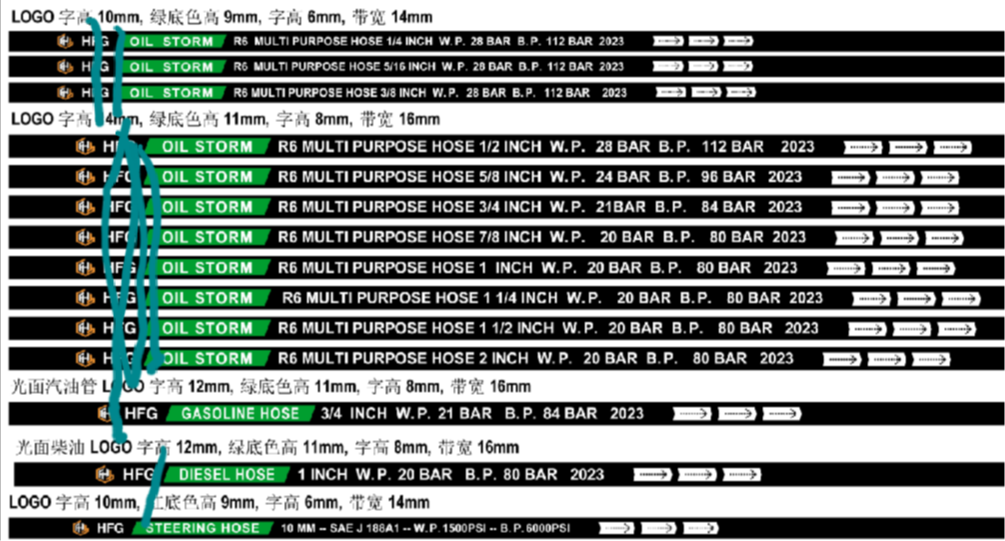
Q: How does hose layline marking contribute to safety and maintenance?
A: Layline markings provide essential information about the hose manufacturer, production date, and working pressure. This allows for traceability and facilitates proper hose identification during inspections and replacement. The date code helps determine if the hose is still within its recommended service life.
Q: What are the key considerations when selecting a hose fitting?
A: The fitting must be compatible with the hose type and material, and it must have the correct pressure rating. Fitting material (steel, stainless steel, brass) should be selected based on the operating environment and fluid compatibility. Proper crimping is essential to ensure a secure and leak-free connection. Utilizing the manufacturer's recommended crimping specifications is crucial.
Q: How can impulse pressure affect hydraulic hose life?
A: Repeated pressure fluctuations (impulse pressure) create cyclic stresses in the hose reinforcement. Over time, these stresses can lead to fatigue cracking and premature failure. High-impulse hoses, with enhanced reinforcement construction, are necessary for applications with significant pressure pulsations.
Q: What are the benefits of using stainless steel reinforcement over steel reinforcement?
A: Stainless steel reinforcement offers superior corrosion resistance, making it ideal for applications in harsh environments. While typically more expensive, it significantly extends hose life in corrosive media or saltwater exposure. It also provides higher tensile strength in some applications.
Conclusion
Hydraulic hoses are indispensable components in numerous industrial applications, requiring careful consideration of material science, manufacturing processes, and operational parameters. Selecting the appropriate hose for a specific application demands a thorough understanding of working pressure, temperature range, fluid compatibility, and environmental conditions. Implementing a proactive maintenance program, including regular inspections and timely replacement, is critical for maximizing hose life and ensuring system reliability.
Future trends in hydraulic hose technology focus on developing lighter-weight materials, increasing pressure ratings, and enhancing resistance to environmentally friendly hydraulic fluids. Advancements in hose construction, such as utilizing composite materials and optimized reinforcement designs, will contribute to improved performance and durability. Furthermore, the integration of sensor technology within hoses will enable real-time monitoring of hose condition, facilitating predictive maintenance and minimizing downtime.