
Apr . 01, 2024 17:55 Back to list
one wire braided hydraulic hose Performance Analysis
Introduction
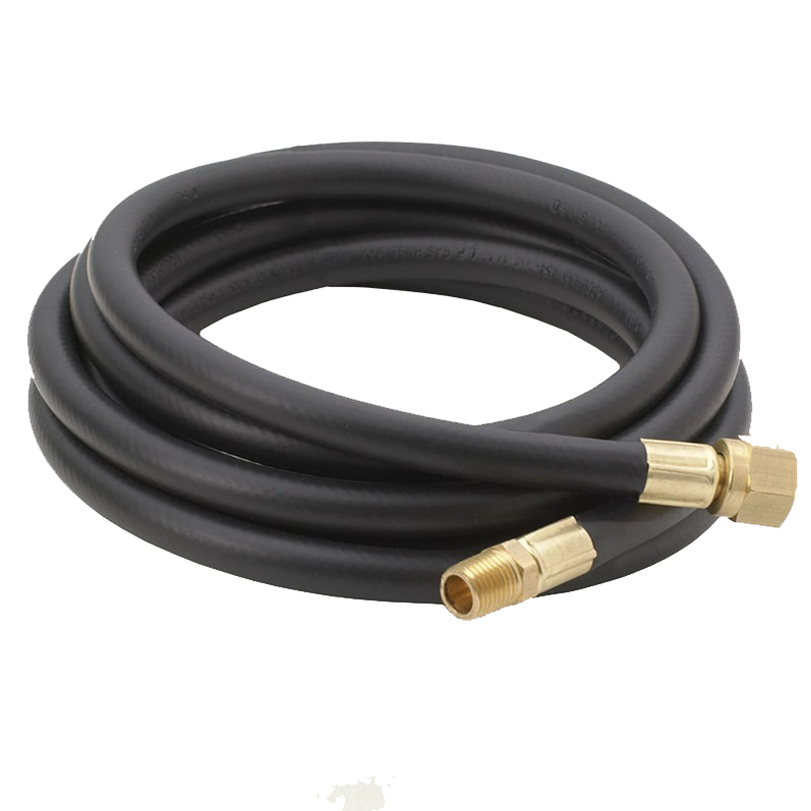
One wire braided hydraulic hose is a flexible composite assembly designed to convey hydraulic fluid under significant pressure. Positioned within the fluid power transmission segment of the broader industrial machinery chain, it serves as a critical component in systems ranging from construction equipment and agricultural machinery to industrial presses and aerospace applications. Unlike thermoplastic hose, this type employs a synthetic rubber inner tube, reinforcing braid – typically single layer high-tensile steel wire – and a robust outer cover providing protection against abrasion, weathering, and chemical exposure. Core performance characteristics center around burst pressure, working pressure, impulse pressure resistance, and fluid compatibility, all dictated by application-specific requirements and stringent industry standards. A primary industry pain point resides in maintaining consistent hose integrity under dynamic loading, preventing premature failure and costly downtime, alongside ensuring compatibility with increasingly complex and specialized hydraulic fluids.
Material Science & Manufacturing
The construction of a one wire braided hydraulic hose begins with the inner tube, typically composed of nitrile rubber (NBR), ethylene propylene diene monomer (EPDM), or chloroprene rubber (CR), selected based on fluid compatibility and temperature range. NBR offers excellent resistance to petroleum-based fluids, EPDM excels in phosphate ester fluids and high-temperature applications, and CR provides superior resistance to ozone and weathering. The reinforcing braid is invariably high-tensile steel wire, conforming to standards like SAE J517. Wire diameter and braid angle are precisely controlled to dictate hose pressure ratings and flexibility. The outer cover is often a blend of synthetic rubbers, such as polyurethane, CPE (chlorinated polyethylene), or a modified NBR compound, prioritizing abrasion resistance, ozone resistance, and UV protection. Manufacturing involves several key processes: inner tube extrusion, braid application (typically using a helical braiding machine), outer cover extrusion, and final curing. Parameter control is paramount: precise temperature and pressure during extrusion are vital for dimensional accuracy and rubber vulcanization. Braid tension must be uniform to prevent localized stress concentrations. Curing cycles are critical for achieving optimal rubber properties, including tensile strength, elongation at break, and hardness. Improper curing can lead to reversion (loss of properties) or incomplete vulcanization (weakened performance).
Performance & Engineering
Performance of a one wire braided hose is governed by several critical engineering principles. Burst pressure, defined as the pressure at which the hose fails catastrophically, is a primary specification. Working pressure is significantly lower, typically 50-75% of burst pressure, allowing for a safety factor. Impulse pressure resistance is equally crucial, as hydraulic systems experience pressure pulsations due to pump action and valve operation. These impulses can induce fatigue failure, necessitating a hose capable of withstanding repeated pressure surges. Force analysis centers on hoop stress within the hose wall, which increases with pressure and decreases with hose diameter. Finite element analysis (FEA) is frequently employed to model stress distributions and optimize hose design. Environmental resistance considerations include temperature extremes, exposure to corrosive fluids, and UV degradation. Hose materials must maintain their flexibility and strength across the specified temperature range. Compliance requirements often dictate fluid compatibility, requiring materials resistant to swelling, degradation, or leaching. Functional implementation demands consideration of hose bend radius – exceeding the minimum bend radius prevents kinking and damage. Fitting selection is also critical; improper fitting attachment can compromise hose integrity and lead to leakage or failure.
Technical Specifications
| Parameter | Unit | Typical Value (SAE 100R1AT Equivalent) | Testing Standard |
|---|---|---|---|
| Working Pressure | MPa | 20.7 | SAE J517 |
| Burst Pressure | MPa | 82.7 | SAE J517 |
| Impulse Pressure (100,000 cycles) | MPa | 31.0 | SAE J343 |
| Temperature Range | °C | -40 to +100 | SAE J517 |
| Inner Tube Material | - | NBR (Nitrile Rubber) | ASTM D2000 |
| Reinforcement Braid | - | Single High-Tensile Steel Wire | SAE J517 |
Failure Mode & Maintenance
One wire braided hydraulic hose is susceptible to several failure modes. Fatigue cracking, initiated by repeated pressure impulses, often occurs at the braid crossover points or at fitting connections. Abrasion damage to the outer cover can expose the braid to corrosion, leading to weakening and eventual failure. Internal corrosion or degradation of the inner tube due to fluid incompatibility can cause swelling, softening, and leakage. Pinholes can develop in the tube due to foreign object damage or manufacturing defects. Kinking, caused by exceeding the minimum bend radius, can lead to localized stress concentrations and eventual rupture. Delamination between the tube, braid, and cover can compromise structural integrity. Regular maintenance is crucial for preventing failures. Visual inspections should be performed to identify abrasion, cuts, blisters, or leaks. Fittings should be inspected for tightness and corrosion. The hose should be protected from extreme temperatures, chemical exposure, and physical damage. Regular fluid analysis can detect contamination or degradation that could accelerate hose failure. A preventative replacement schedule, based on operating conditions and fluid type, is recommended to minimize downtime and ensure safety. Upon hose removal, proper disposal procedures should be followed to comply with environmental regulations.
Industry FAQ
Q: What is the impact of fluid velocity on hose life?
A: Higher fluid velocity increases pressure drop and can exacerbate erosion damage to the inner tube, particularly with fluids containing abrasive particles. It also amplifies the effects of pressure pulsations, increasing the likelihood of fatigue failure. Maintaining appropriate fluid velocity – typically below 5 m/s – is critical for maximizing hose life.
Q: How does ozone exposure affect the outer cover?
A: Ozone attacks the unsaturated bonds in many rubber compounds, causing cracking and degradation of the outer cover. This reduces the hose's abrasion resistance and can expose the reinforcement braid to corrosion. Using an ozone-resistant outer cover material, such as CPE or a specialized NBR blend, is essential in environments with high ozone concentrations.
Q: What are the key differences between SAE 100R1AT and SAE 100R2AT hose specifications?
A: SAE 100R2AT hoses offer a higher working pressure and improved impulse pressure resistance compared to SAE 100R1AT. They typically employ a more robust braid construction and a higher-quality rubber compound, making them suitable for more demanding applications. However, they are generally less flexible than 100R1AT hoses.
Q: What fitting types are compatible with one wire braided hose?
A: Commonly used fittings include field-attachable fittings (crimp fittings) and permanently attached fittings (swaged fittings). Crimp fittings are convenient for on-site assembly but require proper crimping equipment and tooling. Swaged fittings offer a more secure connection but require specialized machinery for installation. Proper fitting selection and installation are crucial for preventing leaks and failures.
Q: Can a one wire braided hose be used with biodegradable hydraulic fluid?
A: Compatibility with biodegradable hydraulic fluids must be carefully verified. Many biodegradable fluids contain esters or vegetable oils that can cause swelling or degradation of standard NBR or CR inner tubes. Selecting a hose with an inner tube specifically formulated for biodegradable fluids (e.g., FKM) is essential to prevent premature failure.
Conclusion
One wire braided hydraulic hose remains a cornerstone of fluid power systems due to its cost-effectiveness and reliable performance. Understanding the interplay between material science, manufacturing processes, and engineering principles is paramount for selecting the correct hose for a given application. Key factors include burst pressure, impulse resistance, fluid compatibility, and environmental conditions. Proactive maintenance and regular inspections are vital for identifying potential failure modes and mitigating risks.
Future trends in hydraulic hose technology are focused on developing lighter-weight materials, enhancing impulse resistance, and improving resistance to new and emerging hydraulic fluids. The increasing adoption of Industry 4.0 principles, including sensor integration for real-time condition monitoring, will further optimize hose life and predictive maintenance strategies, leading to improved system reliability and reduced operational costs.