
Apr . 01, 2024 17:55 Back to list
one wire braided hydraulic hose manufacturer Performance Analysis
Introduction
One wire braided hydraulic hose constitutes a critical component in fluid power systems across diverse industries, including construction, agriculture, manufacturing, and automotive. These hoses are designed to transmit hydraulic fluid under high pressure, facilitating the operation of machinery and equipment. The defining characteristic is the single layer of high-tensile steel wire helically wound around the inner tube, providing reinforcement and burst resistance. This differs significantly from two-wire spiral hoses, offering a balance between flexibility and pressure capacity. The industry faces consistent challenges in ensuring long-term reliability, minimizing fluid leakage, and adhering to increasingly stringent safety standards. This guide provides a comprehensive technical overview, addressing material science, manufacturing processes, performance characteristics, failure modes, and relevant industry standards for one wire braided hydraulic hoses.
Material Science & Manufacturing
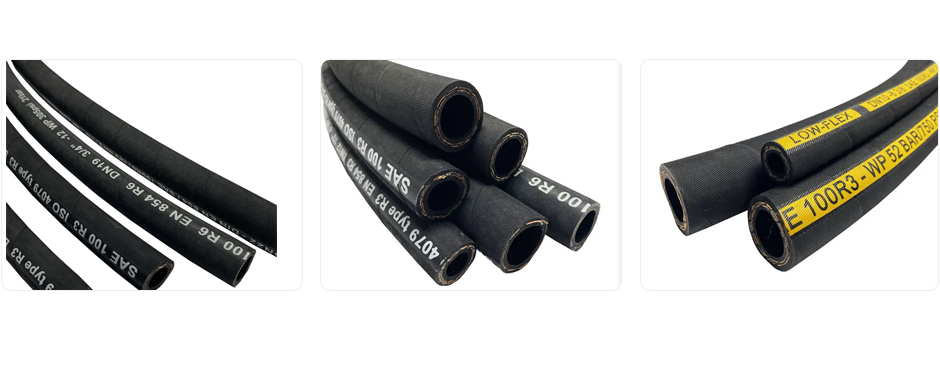
The construction of a one wire braided hydraulic hose involves multiple layers, each with specific material requirements. The inner tube is typically composed of a synthetic rubber compound, most commonly nitrile rubber (NBR) due to its excellent oil resistance, or ethylene propylene diene monomer (EPDM) for compatibility with phosphate ester fluids. NBR exhibits a Shore A hardness typically ranging from 60-90, dictating its flexibility and resistance to abrasion. The reinforcement layer consists of a single helical winding of high-tensile steel wire, commonly drawn from carbon steel with a tensile strength exceeding 2000 MPa. The wire undergoes a surface treatment, frequently zinc coating, to inhibit corrosion. The outer cover is usually a synthetic rubber such as chloroprene rubber (CR) offering resistance to abrasion, weathering, and ozone degradation. Manufacturing begins with extrusion of the inner tube, followed by the precise winding of the steel wire reinforcement. Precise tension control during winding is crucial; insufficient tension compromises burst pressure, while excessive tension reduces flexibility. The outer cover is then extruded over the reinforcement layer, followed by vulcanization – a curing process using heat and pressure to crosslink the rubber compounds, imparting elasticity and durability. Critical parameters monitored during vulcanization include temperature, pressure, and time, typically around 150°C, 2 MPa for 30-60 minutes. Post-vulcanization, hoses undergo rigorous testing for dimensional accuracy, pressure resistance, and leakage.
Performance & Engineering
The performance of a one wire braided hydraulic hose is fundamentally governed by its ability to withstand internal pressure without failure. Burst pressure, expressed in PSI or MPa, is a critical specification determined through hydrostatic testing according to standards like SAE J517. The hose’s design must account for a significant safety factor, typically 4:1, meaning the burst pressure is four times the working pressure. Another key parameter is impulse pressure – the ability to withstand repeated pressure fluctuations without fatigue failure. Flexibility, measured by bend radius, is essential for ease of installation and operation in confined spaces. The steel wire braiding contributes to tensile strength, resisting stretching and elongation under load. Environmental resistance is also crucial; hoses must maintain their integrity in the presence of oils, chemicals, and temperature extremes. Finite Element Analysis (FEA) is extensively used in the design process to optimize the hose structure, predict stress distribution, and ensure long-term reliability. Compliance with industry standards, such as ISO 6897, dictates acceptable levels of permeation, ensuring minimal fluid leakage and environmental contamination. The selection of appropriate end fittings – commonly crimped or swaged onto the hose – is paramount, as a mismatched fitting can significantly reduce the hose’s overall performance and create a potential failure point.
Technical Specifications
| Parameter | Unit | Typical Value (NBR/Steel Wire/CR) | Test Standard |
|---|---|---|---|
| Working Pressure | PSI | 2000 – 5000 | SAE J517 |
| Burst Pressure | PSI | 8000 – 20000 | SAE J517 |
| Inner Tube Material | - | Nitrile Rubber (NBR) / EPDM | ASTM D2000 |
| Reinforcement Material | - | High-Tensile Steel Wire | ASTM A938 |
| Outer Cover Material | - | Chloroprene Rubber (CR) | ASTM D2000 |
| Minimum Bend Radius | inches | 4 – 12 (depending on hose ID) | Manufacturer Specification |
| Temperature Range | °F | -40 to +212 | SAE J517 |
Failure Mode & Maintenance
Failure modes in one wire braided hydraulic hoses are diverse, stemming from mechanical stress, fluid incompatibility, and environmental degradation. Fatigue cracking, particularly at the crimp connections, is a common issue resulting from repeated pressure cycling. Wire breakage within the reinforcement layer can occur due to excessive bending or corrosion. Permeation of hydraulic fluid through the inner tube can lead to leakage and reduced system efficiency. Outer cover degradation, caused by exposure to UV radiation, ozone, or abrasive materials, can compromise the hose’s protective function. Internal abrasion, especially with contaminated fluids, damages the inner tube. Failure analysis typically involves visual inspection for cracks and wear, microscopic examination of the steel wire for corrosion, and fluid analysis to identify contaminants. Preventive maintenance is crucial. Regular inspection for leaks, abrasion, and kinking is essential. Proper fluid filtration minimizes internal abrasion. Avoid exceeding the hose’s working pressure and operating temperature limits. When replacing hoses, ensure compatibility with the hydraulic fluid and use correctly crimped fittings. Storage in a cool, dry environment, away from direct sunlight, helps prevent premature degradation. Periodic pressure testing can identify potential weaknesses before catastrophic failure occurs.
Industry FAQ
Q: What are the key differences between one wire braided and two wire spiral hoses, and when would you choose one over the other?
A: One wire braided hoses offer greater flexibility and are suitable for applications requiring tight bend radii. They generally have lower pressure ratings compared to two-wire spiral hoses. Two-wire spiral hoses provide significantly higher pressure capacity and are more resistant to kinking, but they are less flexible. The choice depends on the specific pressure requirements, bend radius constraints, and operating environment.
Q: How does the zinc coating on the steel wire contribute to the hose’s longevity?
A: The zinc coating provides sacrificial corrosion protection to the underlying steel wire. Zinc corrodes preferentially, preventing rust from forming on the steel, which would weaken the reinforcement layer and ultimately lead to hose failure. The effectiveness of the zinc coating depends on its thickness and uniformity.
Q: What is the impact of using an incompatible hydraulic fluid on the hose’s lifespan?
A: Incompatible fluids can cause the rubber compounds (inner tube and outer cover) to swell, soften, or degrade, leading to leakage, loss of flexibility, and premature failure. For example, using petroleum-based fluids in a hose designed for phosphate ester fluids will cause rapid deterioration.
Q: What are the best practices for crimping fittings onto the hose to ensure a secure and leak-proof connection?
A: Proper crimping requires using the correct die set for the hose and fitting combination, following the fitting manufacturer’s crimp specifications, and utilizing a calibrated crimping machine. An improperly crimped fitting can slip, leak, or fail under pressure.
Q: How important is surge pressure in the selection of a hydraulic hose?
A: Surge pressure, or pressure spikes, can significantly exceed the hose’s normal working pressure. It’s crucial to select a hose with a sufficient pressure rating to accommodate these surges, typically with a safety factor of at least 2:1 above the maximum expected surge pressure, in addition to the standard 4:1 safety factor for working pressure. Ignoring surge pressure can lead to premature failure.
Conclusion
One wire braided hydraulic hoses represent a vital technology in numerous industrial applications, demanding careful consideration of material science, manufacturing precision, and operational parameters. The hose’s performance is a direct function of the interplay between the inner tube's fluid compatibility, the steel wire reinforcement's tensile strength and corrosion resistance, and the outer cover's environmental protection. Understanding the potential failure modes – ranging from fatigue cracking to permeation – and implementing proactive maintenance strategies are paramount to ensuring long-term reliability and minimizing downtime.
The continued advancement of hydraulic hose technology focuses on developing new rubber compounds with enhanced chemical resistance, utilizing higher-strength steel alloys for reinforcement, and employing sophisticated manufacturing techniques to improve dimensional accuracy and consistency. Adherence to international standards and rigorous quality control measures are essential for ensuring the safety and performance of these critical components. Future innovations will likely incorporate smart hose technologies with integrated sensors to monitor pressure, temperature, and structural integrity, enabling predictive maintenance and preventing catastrophic failures.