
Apr . 01, 2024 17:55 Back to list
one fiber braid hydraulic hose Performance Analysis
Introduction
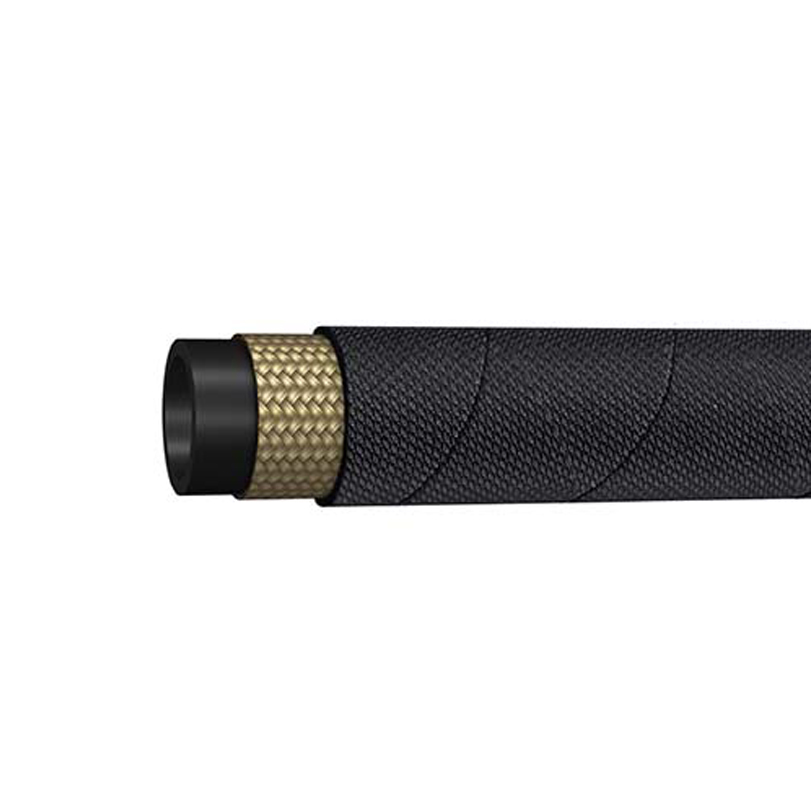
One fiber braid hydraulic hose is a reinforced flexible assembly designed to transmit hydraulic fluid under pressure. Positioned within the fluid power industry, it functions as a critical component in systems requiring efficient and reliable fluid conveyance. These hoses connect pumps, valves, cylinders, and other components, enabling power transmission in diverse applications ranging from construction machinery and agricultural equipment to industrial manufacturing and mobile hydraulics. Core performance characteristics center around pressure capacity, burst strength, temperature resistance, and fluid compatibility. The single braid reinforcement provides moderate pressure capability and flexibility, making it suitable for a wide range of general-purpose hydraulic applications. A primary industry pain point is maintaining consistent hose performance under dynamic loading and preventing premature failure due to fatigue, abrasion, or fluid degradation. Selecting the correct hose construction for the operating environment and fluid type is paramount to system reliability and safety.
Material Science & Manufacturing
The construction of a one fiber braid hydraulic hose relies on a combination of materials optimized for flexibility, strength, and fluid resistance. The inner tube, typically composed of synthetic rubber compounds like nitrile (NBR), chloroprene (CR), or ethylene propylene diene monomer (EPDM), determines fluid compatibility and temperature range. NBR offers excellent resistance to petroleum-based fluids, CR provides superior ozone and weathering resistance, and EPDM is suited for phosphate ester fluids and high-temperature applications. The reinforcement braid, usually high-tensile steel wire, is crucial for resisting internal pressure and preventing hose bursting. The steel wire undergoes a drawing process to achieve optimal tensile strength and flexibility. A cover, often made of chloroprene or polyurethane, protects the reinforcement from abrasion, environmental degradation (UV, ozone), and chemical exposure. The manufacturing process begins with the extrusion of the inner tube, followed by the application of the steel wire braid using a helical winding machine. Precise tension control during braiding is critical for ensuring uniform reinforcement distribution and hose integrity. After braiding, the cover is extruded over the reinforcement. Key manufacturing parameters include rubber compound formulation, extrusion temperature and pressure, braid angle and tension, and vulcanization time and temperature. Vulcanization, a chemical process involving sulfur or peroxide curing agents, crosslinks the rubber polymers, enhancing its strength, elasticity, and resistance to deformation. Post-curing inspection includes pressure testing to verify burst strength and dimensional checks to ensure adherence to specifications.
Performance & Engineering
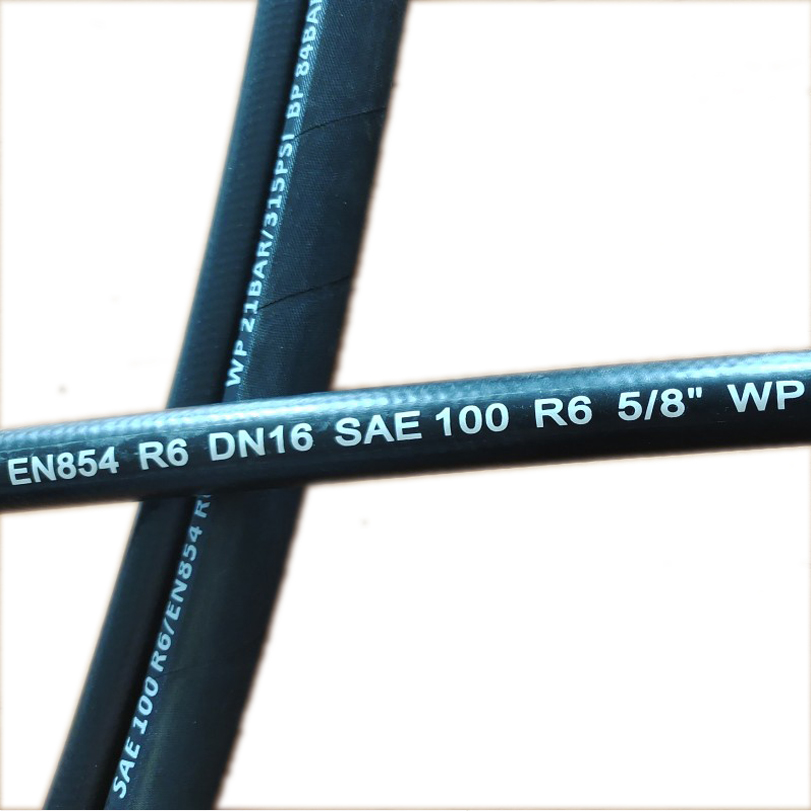
The performance of a one fiber braid hydraulic hose is dictated by its ability to withstand internal pressure, external loads, and environmental stresses. Force analysis reveals that the reinforcement braid bears the primary tensile stress resulting from internal pressure. The hose wall experiences hoop stress, which is directly proportional to the pressure and radius of the hose. The safety factor, defined as the ratio of burst pressure to working pressure, is a critical design parameter. Typically, a safety factor of 4:1 is employed for hydraulic hose applications. Environmental resistance is another key consideration. Exposure to extreme temperatures can alter the rubber’s physical properties, affecting its flexibility and resistance to degradation. Ozone cracking, a common failure mode in unsaturated rubbers, can be mitigated by using ozone-resistant compounds or protective coatings. Fluid compatibility is crucial; incompatibility can lead to swelling, softening, or degradation of the inner tube, resulting in leakage or hose failure. Compliance requirements, such as those specified by SAE J517 (Hydraulic Hose – Performance Characteristics) and EN 853 (Hydraulic hoses - Steel wire reinforcement - Specifications), dictate the minimum performance standards for hydraulic hoses. These standards define test procedures for pressure testing, impulse testing, temperature resistance, and fluid compatibility. Proper hose routing and support are vital to prevent excessive bending, abrasion, and fatigue failure. The bend radius should adhere to manufacturer specifications to avoid kinking or stress concentration.
Technical Specifications
| Parameter | Unit | Specification (Typical) | Test Standard |
|---|---|---|---|
| Working Pressure | MPa | 10 - 35 | SAE J517 |
| Burst Pressure | MPa | 40 - 140 | SAE J517 |
| Temperature Range | °C | -40 to +100 | SAE J517 |
| Inner Tube Material | - | NBR, CR, EPDM | ASTM D2000 |
| Reinforcement Braid | - | High-Tensile Steel Wire (1 Braid) | ASTM A228 |
| Cover Material | - | CR, Polyurethane | ASTM D2000 |
Failure Mode & Maintenance
Failure modes in one fiber braid hydraulic hoses are diverse, stemming from mechanical stress, environmental factors, and fluid incompatibility. Fatigue cracking, initiated by repeated flexing and pressure cycles, is a common failure mechanism, particularly near fittings. Delamination, the separation of layers within the hose wall, can occur due to inadequate bonding between the inner tube, reinforcement, and cover. Oxidation, caused by exposure to oxygen and heat, can degrade the rubber compounds, leading to embrittlement and cracking. Abrasion, resulting from contact with abrasive surfaces, can damage the cover, exposing the reinforcement to corrosion. Internal corrosion, caused by incompatible fluids or contaminants, can weaken the inner tube and lead to leakage. External corrosion of the steel wire reinforcement can occur in harsh environments. Proper maintenance is crucial for maximizing hose life and preventing failures. Regular visual inspections should be conducted to identify signs of cracking, abrasion, swelling, or leakage. Hose routing should be optimized to minimize bending and abrasion. Fluid contamination should be prevented through the use of filters and proper fluid handling practices. Hose assemblies should be replaced at recommended intervals, even if no visible defects are present. Proper fitting installation, using correctly sized and torqued fittings, is essential for preventing leakage and ensuring a secure connection. Hoses should be stored in a cool, dry place away from direct sunlight and ozone sources.
Industry FAQ
Q: What is the impact of impulse pressure on the lifespan of a one fiber braid hydraulic hose?
A: Impulse pressure, characterized by rapid pressure fluctuations, significantly reduces hose lifespan. These pressure spikes create dynamic stresses within the hose wall, accelerating fatigue crack initiation and propagation. The severity of the impact depends on the magnitude and frequency of the pressure impulses. Mitigation strategies include using hoses specifically designed for impulse duty, employing pulsation dampeners, and ensuring proper system damping.
Q: How does the choice of inner tube material affect fluid compatibility and hose performance?
A: The inner tube material dictates the hose’s compatibility with various hydraulic fluids. NBR is generally suitable for petroleum-based fluids, while EPDM is preferred for phosphate ester fluids. Using an incompatible fluid can cause swelling, softening, or degradation of the inner tube, leading to leakage and premature failure. Selecting the appropriate inner tube material based on the fluid type is critical for maintaining optimal hose performance.
Q: What is the significance of the hose’s bend radius, and what are the consequences of exceeding it?
A: The bend radius is the minimum recommended radius for bending the hose without causing damage. Exceeding this radius induces excessive stress on the hose wall, leading to kinking, cracking, and reduced flow. Maintaining the specified bend radius ensures uniform stress distribution and prevents premature failure. The correct bend radius is determined by the hose’s diameter and construction.
Q: How does temperature affect the performance characteristics of a one fiber braid hose?
A: Temperature variations impact the physical properties of the hose materials. Elevated temperatures can reduce the rubber’s tensile strength, elasticity, and resistance to degradation, while low temperatures can increase stiffness and reduce flexibility. Exceeding the specified temperature range can lead to hose failure. Maintaining operating temperatures within the recommended limits is crucial for ensuring reliable performance.
Q: What are the key considerations when selecting fittings for a one fiber braid hydraulic hose?
A: Proper fitting selection is paramount for ensuring a leak-free and secure connection. Fittings must be compatible with the hose’s size, pressure rating, and fluid type. The fitting material must be corrosion-resistant and compatible with the hose and fluid. Correct installation, including proper torqueing, is essential for preventing leakage and ensuring long-term reliability. Using incorrect fittings or improper installation techniques can lead to premature failure.
Conclusion
One fiber braid hydraulic hose remains a versatile and cost-effective solution for a wide range of hydraulic applications. Its performance is intrinsically linked to material selection, manufacturing precision, and adherence to industry standards. Understanding the core principles of force analysis, environmental resistance, and fluid compatibility is essential for ensuring reliable operation and maximizing hose lifespan.
Future developments are focusing on enhancing hose durability through advanced rubber compounds, improved braid construction, and smart monitoring systems. Integrating sensors into the hose assembly can provide real-time data on pressure, temperature, and strain, enabling predictive maintenance and preventing catastrophic failures. Continued innovation in materials and manufacturing processes will further refine the performance and longevity of one fiber braid hydraulic hoses, ensuring their continued relevance in the evolving landscape of fluid power technology.