
Apr . 01, 2024 17:55 Back to list
Oil Hose Supplier Performance Analysis

Introduction
Oil hoses are critical components in the transfer of petroleum-based products, ranging from crude oil to refined fuels and lubricating oils. They represent a specialized segment within the broader industrial hose market, distinguished by stringent performance requirements dictated by the inherent hazards of the conveyed media and the demanding operational environments in which they are deployed. This guide provides a comprehensive technical overview of oil hoses, covering material science, manufacturing processes, performance characteristics, failure modes, and relevant industry standards. A key pain point in this industry is ensuring compatibility between hose materials and the diverse range of oil products, many of which exhibit varying aromatic content and aggressive chemical properties. Selecting an inappropriate hose material can lead to rapid degradation, permeation, and ultimately, catastrophic failure resulting in environmental contamination and significant economic losses. Furthermore, maintaining consistent quality control throughout the manufacturing process – particularly regarding reinforcement layer adhesion and hose wall thickness – is paramount to preventing premature failures and ensuring operational safety.
Material Science & Manufacturing
Oil hose construction typically involves several layers, each serving a specific function. The inner tube, which directly contacts the oil, is commonly composed of nitrile rubber (NBR), also known as Buna-N, due to its excellent resistance to aliphatic hydrocarbons. However, for fuels containing significant aromatic content (benzene, toluene, xylene – BTX), fluorocarbon rubber (FKM, Viton) offers superior chemical compatibility, albeit at a higher cost. The reinforcement layer provides structural integrity and pressure handling capability. Traditionally, this layer consisted of multiple plies of high-strength textile fabrics (polyester, nylon) impregnated with rubber. Modern hoses increasingly utilize spirally wound steel wire reinforcement, offering enhanced burst pressure resistance and reduced hose weight. The outer cover provides protection against abrasion, weathering, and chemical attack. Common outer cover materials include chloroprene rubber (CR, Neoprene) and ethylene propylene diene monomer (EPDM) rubber. Manufacturing processes vary depending on hose type and construction. For rubber hoses, the process typically involves mixing raw rubber compounds with reinforcing fillers, plasticizers, and curing agents, followed by extrusion of the inner tube and outer cover. The reinforcement layer is then applied, and the hose is vulcanized (cured) under heat and pressure to create a strong, cohesive structure. Critical parameters during manufacturing include rubber compound formulation (to ensure chemical resistance and flexibility), reinforcement layer tension (to prevent distortion and maintain dimensional stability), and curing time and temperature (to achieve optimal crosslinking density and mechanical properties). Control of these parameters is vital to prevent issues such as reversion (overcuring), blistering, and poor adhesion between layers.
Performance & Engineering
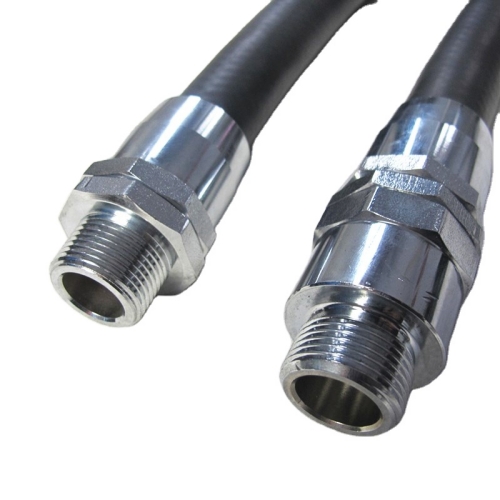
Oil hose performance is dictated by several key engineering considerations. Burst pressure, defined as the maximum pressure the hose can withstand before rupture, is a primary design parameter. This is directly related to the reinforcement layer material and construction. Working pressure, typically specified as a fraction of the burst pressure (e.g., 4:1 safety factor), represents the maximum allowable operating pressure. Another critical performance metric is permeation resistance, which refers to the rate at which oil molecules migrate through the hose wall. High permeation rates can lead to environmental contamination and product loss. Permeation is influenced by the rubber compound formulation and hose wall thickness. Flexibility and bend radius are also important considerations, particularly in applications involving tight turns or dynamic movement. Hose assemblies are often subjected to fatigue testing, simulating repeated flexing and pressure cycles to assess their long-term durability. Environmental resistance, including resistance to ozone, UV radiation, and temperature extremes, is crucial for outdoor applications. Force analysis under pressure involves considering hoop stress (stress in the circumferential direction of the hose) and longitudinal stress (stress in the axial direction). Compliance requirements vary by region and application. For example, hoses used in offshore oil exploration must meet stringent safety standards related to fire resistance and electrical conductivity. Static grounding is vital to prevent ignition of flammable vapors. Hose couplings are integral to overall system performance and must be compatible with the hose material and the conveyed fluid. Common coupling materials include steel, stainless steel, and brass, with appropriate seals to prevent leakage.
Technical Specifications
| Parameter | Unit | Specification (Typical) | Test Standard |
|---|---|---|---|
| Working Pressure | psi | 300-600 | ISO 3864 |
| Burst Pressure | psi | 900-1800 | ISO 3864 |
| Inner Tube Material | - | NBR, FKM | ASTM D2000 |
| Reinforcement | - | Steel Wire Spiral | ISO 3864 |
| Outer Cover Material | - | CR, EPDM | ASTM D2000 |
| Temperature Range | °F | -40 to +212 | ASTM D1430 |
Failure Mode & Maintenance
Oil hose failures can occur due to a variety of factors. Pinholes and cracks in the inner tube are often caused by chemical attack or abrasion from particulate matter in the oil. Delamination of the hose layers can result from poor adhesion during manufacturing or exposure to extreme temperatures. Fatigue cracking can occur in the reinforcement layer due to repeated flexing and pressure cycles, especially if the hose is operated beyond its recommended bend radius. Oxidation and weathering can degrade the outer cover, leading to cracking and loss of protective properties. Permeation-induced swelling can compromise hose dimensions and performance. Failure analysis typically involves visual inspection, microscopic examination of fracture surfaces, and chemical analysis of the hose material. Preventative maintenance includes regular visual inspections for signs of wear, cracking, or swelling. Hoses should be replaced if they exhibit any evidence of damage or degradation. Proper storage is also crucial; hoses should be stored in a cool, dry, and dark environment, away from ozone sources and direct sunlight. Avoid kinking or sharply bending the hose during handling and installation. When disconnecting hoses, ensure the system is depressurized to prevent accidental release of oil. Correct torque settings for hose couplings should always be followed to avoid over-tightening or under-tightening, both of which can lead to leaks or premature failure.
Industry FAQ
Q: What is the primary difference between NBR and FKM inner tubes for oil hoses?
A: NBR (Nitrile Rubber) is cost-effective and provides excellent resistance to aliphatic hydrocarbons commonly found in crude oil and lubricating oils. However, FKM (Fluorocarbon Rubber, Viton) offers significantly superior resistance to aromatic hydrocarbons (BTX) and aggressive fuels, making it the preferred choice for applications where compatibility with such fluids is critical. The increased chemical resistance of FKM translates to a longer service life and reduced risk of permeation.
Q: How does steel wire reinforcement impact the performance of an oil hose compared to textile reinforcement?
A: Steel wire spiral reinforcement generally provides significantly higher burst pressure resistance and improved kink resistance compared to textile reinforcement. While textile reinforcement is lighter and more flexible, it is less capable of withstanding high pressures and is more susceptible to stretching and distortion under load. Steel wire also allows for a reduction in hose wall thickness, potentially lowering weight.
Q: What is the significance of permeation testing for oil hoses?
A: Permeation testing measures the rate at which oil molecules migrate through the hose wall. High permeation rates are undesirable as they can lead to environmental contamination, product loss, and potentially, fire hazards. Regulatory standards often specify maximum allowable permeation rates for oil hoses used in specific applications.
Q: What are the key considerations for selecting the appropriate outer cover material for an oil hose?
A: The outer cover material should provide resistance to abrasion, weathering (UV radiation, ozone), and chemical attack. CR (Chloroprene Rubber, Neoprene) is a common choice for general-purpose applications, while EPDM (Ethylene Propylene Diene Monomer) offers superior resistance to ozone and weathering, making it suitable for outdoor environments. The temperature range of the application also plays a crucial role in material selection.
Q: How can I identify potential issues during a routine oil hose inspection?
A: Look for signs of cracking, swelling, blistering, or abrasion on the inner tube and outer cover. Inspect couplings for leaks or corrosion. Check for any signs of delamination between hose layers. If the hose feels abnormally stiff or brittle, it may be degrading. Record the inspection date and any observed defects for tracking purposes. Any questionable hose should be removed from service immediately.
Conclusion
Oil hoses are engineered products demanding careful consideration of material selection, manufacturing processes, and performance characteristics. Ensuring compatibility with the conveyed fluid, providing adequate pressure handling capability, and resisting environmental degradation are paramount to safe and reliable operation. The selection process must extend beyond initial cost considerations to encompass long-term durability, regulatory compliance, and the potential consequences of failure.
Continued advancements in materials science, such as the development of novel rubber compounds and reinforcement materials, are driving improvements in oil hose performance. Future trends will likely focus on reducing permeation rates, increasing operating temperatures, and enhancing resistance to aggressive fuels. Proactive maintenance programs and rigorous quality control throughout the manufacturing process remain essential to maximizing hose service life and minimizing the risk of catastrophic failures.