
Apr . 01, 2024 17:55 Back to list
Oil Hose Performance Analysis
Introduction
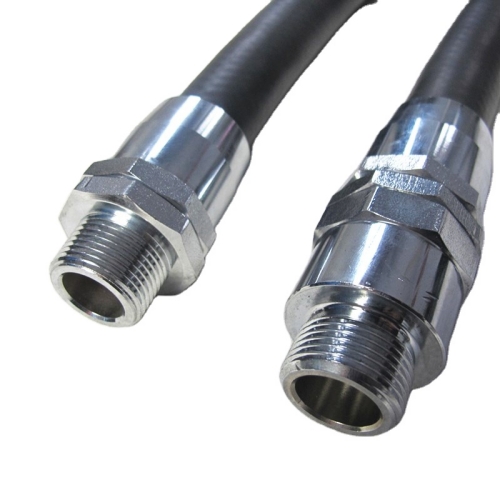
Oil hose, a critical component in fluid transfer systems, is engineered for the safe and reliable conveyance of petroleum-based products, lubricants, and hydraulic fluids. Its technical position within the industry chain falls between the raw material supplier (polymer, reinforcement fiber, chemical additives) and the end-user application (oil & gas, automotive, industrial machinery). Core performance characteristics are defined by its pressure rating, temperature resistance, chemical compatibility, and mechanical durability. The selection of appropriate oil hose material and construction directly impacts operational efficiency, safety compliance, and long-term cost-effectiveness, making a thorough understanding of its properties essential. Modern oil hose designs address stringent environmental regulations concerning leakage and fluid containment, necessitating increasingly sophisticated materials and manufacturing techniques. This guide provides a detailed technical analysis of oil hose, covering material science, manufacturing processes, performance characteristics, failure modes, and relevant industry standards.
Material Science & Manufacturing
Oil hose construction typically involves a multi-layered design. The inner tube, crucial for fluid contact, commonly employs synthetic rubbers like nitrile (NBR), also known as Buna-N, for its excellent oil resistance. Ethylene Propylene Diene Monomer (EPDM) rubber is also utilized, particularly when compatibility with a broader range of fluids, including phosphate ester hydraulic fluids, is required. Fluorocarbon elastomers (FKM, Viton) offer superior resistance to aggressive chemicals and high temperatures but are significantly more expensive. The reinforcement layer provides structural integrity to withstand internal pressure. This often consists of high-tensile strength textile braids (typically polyester or nylon) or spirally wound steel wire. The outer cover offers environmental protection against abrasion, ozone, UV degradation, and weathering. Common cover materials include Chloroprene rubber (Neoprene) and PVC.
Manufacturing processes vary depending on hose type and complexity. Inner tubes are often produced through extrusion, where the rubber compound is forced through a die to create a continuous tube. Reinforcement layers are applied through braiding or spiraling techniques. Steel wire reinforcement requires precise winding tension and consistent pitch to ensure uniform pressure resistance. The outer cover is similarly extruded and bonded to the inner layers using adhesives or vulcanization. Critical parameter control includes rubber compound formulation (polymer ratio, filler content, curing agent concentration), extrusion temperature and speed, braiding/winding tension, and curing time and temperature. Failure to maintain optimal parameters can lead to defects like porosity in the inner tube, inadequate reinforcement adhesion, or inconsistent cover thickness.
Performance & Engineering
Oil hose performance is dictated by several key engineering considerations. Burst pressure, the maximum pressure the hose can withstand before failure, is determined by the reinforcement layer's strength and construction. Working pressure, a fraction of the burst pressure (typically 4:1 safety factor), represents the safe operating limit. Temperature resistance is critical, as rubber properties change with temperature. Hose materials exhibit a glass transition temperature (Tg) below which they become brittle. Therefore, operating temperatures must remain within the specified range to maintain flexibility and prevent cracking. Chemical compatibility is paramount to avoid swelling, degradation, or leaching of the rubber compound. Hose selection must align with the specific fluid being conveyed, considering its chemical composition and concentration.
Force analysis is essential in designing robust oil hose. Internal pressure creates hoop stress in the hose wall, which the reinforcement layer must counteract. External loads, such as bending, kinking, and axial tension, introduce additional stresses. Finite element analysis (FEA) is frequently employed to model these stresses and optimize hose geometry and material selection. Compliance requirements vary by industry and region. Oil & gas applications demand adherence to API standards (e.g., API 5C), while automotive applications are governed by SAE standards (e.g., SAE J30R9 for hydraulic hose). Environmental regulations, such as REACH and RoHS, restrict the use of hazardous substances in hose construction.
Technical Specifications
| Parameter | Unit | Typical Value (NBR Inner Tube, Steel Wire Reinforcement, Neoprene Cover) | Testing Standard |
|---|---|---|---|
| Working Pressure | psi | 2000 | SAE J30R9 |
| Burst Pressure | psi | 8000 | SAE J30R9 |
| Temperature Range | °F | -40 to 212 | SAE J30R9 |
| Inner Diameter | in | 0.5 - 4 | ASTM D149 |
| Outer Diameter | in | 0.75 - 5 | ASTM D149 |
| Tensile Strength (Reinforcement) | psi | 250,000 | ASTM D2256 |
Failure Mode & Maintenance
Oil hose failure can manifest in several forms. Fatigue cracking, induced by repeated pressure cycling and bending, is a common mode, particularly in high-flex applications. Delamination, the separation of layers, can occur due to inadequate bonding or chemical attack. Degradation of the rubber compound, caused by exposure to heat, ozone, UV radiation, or incompatible fluids, reduces its elasticity and strength. Oxidation leads to hardening and cracking of the rubber. Kinking and crushing can cause localized damage and restrict fluid flow.
Preventive maintenance is crucial for extending hose life and preventing failures. Regular visual inspections should identify signs of cracking, swelling, abrasion, or leakage. Pressure testing can verify the hose's structural integrity. Proper hose routing and support mechanisms minimize bending stress. Avoid sharp bends and direct contact with abrasive surfaces. Use appropriate hose couplings and ensure they are securely tightened. When handling fluids, verify chemical compatibility and avoid exceeding the hose's temperature and pressure limits. Damaged hoses should be replaced immediately. Storage should be in a cool, dry, and dark location, away from ozone sources and direct sunlight.
Industry FAQ
Q: What is the difference between NBR and EPDM in oil hose applications, and when would I choose one over the other?
A: NBR (Nitrile) offers excellent resistance to petroleum-based oils, fuels, and hydraulic fluids, making it ideal for general-purpose oil transfer. However, its temperature range is somewhat limited and it isn't as compatible with certain chemicals like phosphate esters. EPDM (Ethylene Propylene Diene Monomer) has superior resistance to heat, ozone, and weathering, and is compatible with a wider range of fluids, including phosphate esters and glycol-based brake fluids. Choose EPDM when broad chemical compatibility and high-temperature performance are critical, even if oil resistance isn’t the primary concern.
Q: How does steel wire reinforcement affect the performance of an oil hose compared to textile reinforcement?
A: Steel wire reinforcement provides significantly higher pressure resistance and burst strength compared to textile (polyester or nylon) reinforcement. It's essential for applications requiring high-pressure operation, such as hydraulic systems. However, steel wire hoses are less flexible and more prone to kinking. Textile reinforcement offers greater flexibility and is more suitable for lower-pressure applications where ease of routing is important. The choice depends on the specific pressure and flexibility requirements.
Q: What is the significance of the safety factor when specifying oil hose working pressure?
A: The safety factor is a critical design parameter that accounts for uncertainties in operating conditions and material properties. A typical safety factor of 4:1 means the burst pressure is four times the working pressure. This provides a margin of safety to prevent catastrophic failure due to pressure surges, temperature fluctuations, or material degradation. A lower safety factor increases the risk of failure, while a higher safety factor may lead to an unnecessarily over-engineered and costly hose.
Q: How do environmental factors like ozone and UV exposure impact the lifespan of oil hose?
A: Ozone and UV radiation can cause chain scission in the rubber polymer, leading to hardening, cracking, and loss of elasticity. This is particularly problematic for outer cover materials. Neoprene and certain specially formulated PVC compounds offer better resistance to ozone and UV degradation than standard rubbers. Regular inspection for surface cracking and the use of protective coverings can help mitigate these effects.
Q: What are the key considerations when selecting hose couplings, and how do they affect overall system performance?
A: Hose couplings must be compatible with the hose material and the fluid being conveyed. Ensure the coupling’s pressure rating matches or exceeds the hose’s working pressure. Proper crimping or swaging is essential to create a leak-tight seal and prevent slippage. Using incompatible or improperly installed couplings can lead to leaks, hose separation, and even catastrophic failure. Select couplings made from corrosion-resistant materials appropriate for the operating environment.
Conclusion
Oil hose selection and maintenance are paramount for ensuring the safe and efficient operation of fluid transfer systems. A comprehensive understanding of material properties, manufacturing processes, performance characteristics, and potential failure modes is critical for mitigating risks and maximizing hose lifespan. The appropriate choice of rubber compound, reinforcement layer, and outer cover depends on the specific application requirements, including fluid compatibility, temperature range, pressure rating, and environmental conditions.
Future advancements in oil hose technology will likely focus on developing more durable and chemically resistant materials, implementing smart hose monitoring systems for predictive maintenance, and incorporating sustainable materials to reduce environmental impact. Adhering to relevant industry standards and implementing rigorous quality control procedures are essential for maintaining the integrity and reliability of oil hose systems.