
Apr . 01, 2024 17:55 Back to list
Oil Hose Manufacturers Performance Analysis
Introduction
Oil hoses are critical components in the transfer of petroleum-based products, serving a wide range of industries including oil & gas exploration, refining, marine transport, and chemical processing. Their technical position within the industry chain is upstream of final product delivery, directly impacting operational efficiency and safety. These hoses are engineered to withstand high pressures, varying temperatures, and the corrosive nature of hydrocarbons. Core performance characteristics include burst pressure, working pressure, kink radius, chemical compatibility, and resistance to abrasion and weathering. The industry faces increasing demands for hoses capable of handling increasingly harsh environments and specialized fluids, alongside stringent regulatory compliance. Failure can lead to significant environmental damage, safety hazards, and costly downtime, driving the need for robust materials and rigorous quality control.
Material Science & Manufacturing
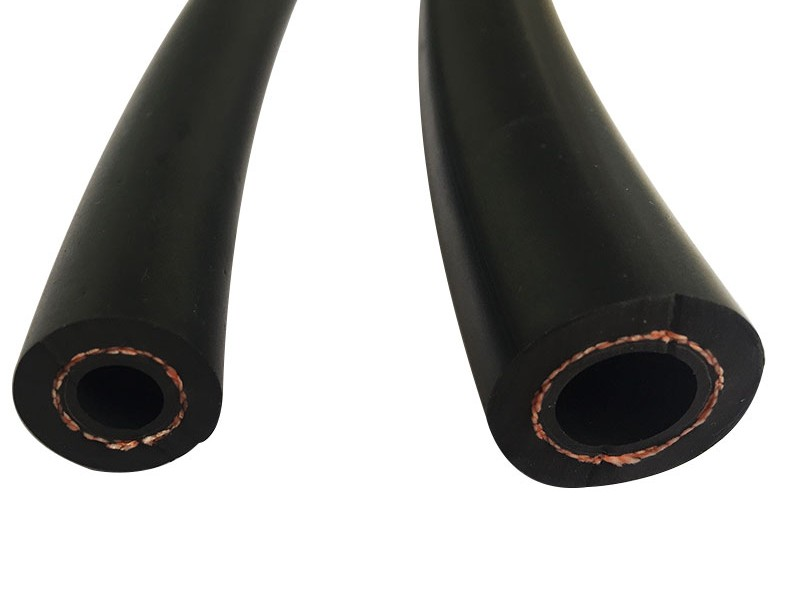
The primary materials for oil hose construction are elastomers, reinforcement layers, and outer coverings. Elastomers commonly used include nitrile rubber (NBR), which offers excellent oil resistance; ethylene propylene diene monomer (EPDM) for resistance to weathering, ozone, and heat; and chloroprene rubber (CR) or neoprene, providing a balance of properties. Fluoropolymers like Viton (FKM) are employed for specialized applications requiring resistance to aggressive chemicals and high temperatures. Reinforcement layers typically consist of high-tensile strength synthetic fibers – polyester, nylon, and aramid – braided or spiraled within the elastomer matrix. These layers provide the hose's pressure-bearing capacity. Outer coverings are often made of abrasion-resistant polymers or textile braids.
Manufacturing processes vary depending on hose type and intended application. For smaller diameter, high-pressure hoses, a process involving mandrel construction is prevalent. This involves building up layers of elastomer and reinforcement around a central mandrel, followed by vulcanization (curing) to create a cohesive structure. Extrusion is used for larger diameter, lower-pressure hoses. Raw rubber compounds are extruded through a die, forming a continuous tube which is then reinforced and covered. Skiving, a process of reducing the inner tube diameter, is critical for fitting compatibility. Critical parameters during manufacturing include precise control of rubber compound mixing ratios, vulcanization temperature and time, reinforcement layer tension, and dimensional accuracy. Inconsistent parameters can lead to defects like porosity, delamination, and uneven thickness, impacting performance and longevity. Quality control relies on hydrostatic testing, impulse testing, and dimensional inspections conforming to industry standards.

Performance & Engineering
Oil hose performance is governed by several key engineering principles. Burst pressure, the maximum pressure the hose can withstand before rupture, is determined by the tensile strength of the reinforcement layers and the bonding strength between the layers and the elastomer. Working pressure is significantly lower than burst pressure, typically with a safety factor of 4:1. Kink radius is critical to prevent hose collapse and flow restriction. A tight bend radius induces stress concentrations in the hose wall, potentially leading to failure. Environmental resistance is paramount. Exposure to UV radiation, ozone, and extreme temperatures can cause elastomer degradation, reducing flexibility and increasing the risk of cracking. Chemical compatibility dictates the selection of appropriate elastomer materials to prevent swelling, softening, or dissolution.
Force analysis considers both internal pressure and external forces (bending, twisting, axial tension). Finite Element Analysis (FEA) is often employed to model stress distribution within the hose under various loading conditions. Compliance requirements, such as API Q1 standards for offshore oil and gas applications, dictate specific performance criteria and testing procedures. Static grounding is a vital safety consideration; hoses must be electrically conductive to prevent static electricity buildup, which could ignite flammable fluids. Proper fitting selection is also crucial, ensuring a secure and leak-proof connection that can withstand the operating pressure and external forces.
Technical Specifications
| Parameter | Unit | Typical Value (Oil Hose – Standard Duty) | Typical Value (Oil Hose – High Pressure) |
|---|---|---|---|
| Working Pressure | psi | 300 | 1000 |
| Burst Pressure | psi | 900 | 3000 |
| Temperature Range | °F | -40 to +180 | -20 to +212 |
| Inner Tube Material | - | NBR | FKM |
| Reinforcement | - | Polyester Braid | Aramid Spiral |
| Outer Cover | - | CR | CR (Abrasion Resistant) |
| Kink Radius | inches | 6 | 12 |
Failure Mode & Maintenance
Common failure modes in oil hoses include fatigue cracking, particularly at connection points due to flexing and vibration; delamination of reinforcement layers caused by poor bonding or excessive pressure; chemical degradation of the elastomer due to incompatibility with the conveyed fluid; and abrasion of the outer cover leading to exposure of reinforcement layers. Oxidation and ozone cracking can occur in EPDM hoses exposed to prolonged UV radiation and ozone. Impulse pressures (pressure surges) can induce fatigue failure, even below the rated working pressure. Internal erosion from abrasive particles in the fluid can also damage the inner tube.
Preventative maintenance is crucial. Regular visual inspections should be conducted to identify cuts, abrasions, swelling, or cracking. Hose pressure should be monitored to ensure it remains within the specified working range. Proper storage is essential; hoses should be stored in a cool, dry, and dark environment, avoiding direct sunlight and contact with ozone-generating equipment. After use, hoses should be thoroughly drained and cleaned. Replacement intervals should be established based on operating conditions, frequency of use, and manufacturer's recommendations. Damaged hoses should be removed from service immediately and properly disposed of. Hydrostatic testing can be performed periodically to verify hose integrity.
Industry FAQ
Q: What is the primary difference between NBR and FKM in oil hose applications, and when would you specify FKM despite its higher cost?
A: NBR (Nitrile) offers excellent resistance to petroleum-based oils and is a cost-effective solution for standard applications. However, FKM (Viton) provides superior resistance to aggressive chemicals, high temperatures, and harsher environments. We specify FKM when the hose will be exposed to fuels containing aromatic hydrocarbons, synthetic lubricants, or operate consistently above 80°C (176°F), as NBR's performance degrades significantly under these conditions. The increased longevity and reliability of FKM often justify the higher upfront cost in critical applications.
Q: How does reinforcement material (polyester vs. aramid) impact the hose's performance characteristics, specifically regarding pressure and flexibility?
A: Polyester braid reinforcement provides good tensile strength and is suitable for moderate pressure applications. It offers excellent flexibility, making it easier to handle and route. Aramid spiral reinforcement, on the other hand, provides significantly higher tensile strength and is used in high-pressure hoses. While aramid offers superior pressure capacity, it generally results in a stiffer hose with a larger bend radius compared to polyester-reinforced options.
Q: What are the key considerations when selecting hose fittings, and what types of failures are commonly associated with improper fitting selection?
A: Proper fitting selection is paramount. Consider the hose inner diameter, working pressure, fluid compatibility, and connection type (threaded, flanged, quick-connect). Fittings must be rated to at least the hose’s working pressure, and constructed of materials compatible with the conveyed fluid. Common failures associated with improper fitting selection include leakage, blow-out due to insufficient crimping or threading, and fatigue cracking at the fitting interface caused by mismatched materials or improper installation.
Q: How important is static grounding in oil hose applications, and what measures are taken to ensure proper grounding?
A: Static grounding is critically important when transferring flammable fluids. The flow of fluid through the hose can generate static electricity, which, if discharged, could ignite flammable vapors. Oil hoses are typically manufactured with a conductive layer within the hose wall, often a metallic helix or carbon black loading. Grounding wires are then connected to the hose fittings and bonded to a common ground point to dissipate static charge safely. Regular testing of grounding continuity is essential.
Q: What are the typical inspection criteria for identifying a hose nearing the end of its service life, and how frequently should these inspections be performed?
A: Inspection criteria include visual checks for cuts, abrasions, swelling, cracking, or delamination of the hose wall. Check for stiffness or loss of flexibility, indicating elastomer degradation. Inspect fittings for leaks or corrosion. A pressure test can confirm the hose's integrity. Inspection frequency depends on the severity of the operating conditions. For critical applications, monthly inspections are recommended; for less demanding applications, quarterly or semi-annual inspections may suffice. Detailed records should be maintained.
Conclusion
Oil hoses are complex engineered products vital to the safe and efficient transfer of petroleum-based fluids. Their performance is fundamentally dependent on the careful selection of materials, precise manufacturing control, and adherence to rigorous industry standards. Understanding the interplay between material properties, engineering principles, and potential failure modes is crucial for ensuring operational reliability and minimizing risks.
Future trends in oil hose technology will likely focus on developing lighter-weight, more durable materials with enhanced chemical resistance and improved environmental sustainability. The integration of smart sensing technologies for real-time pressure and temperature monitoring will also likely become more prevalent, enabling predictive maintenance and enhancing safety. Continued innovation in hose design and manufacturing processes will be critical to meet the evolving demands of the oil and gas and related industries.