
Apr . 01, 2024 17:55 Back to list
oem wrapped cover steel wire spiral hydraulic hose Performance Analysis

Introduction
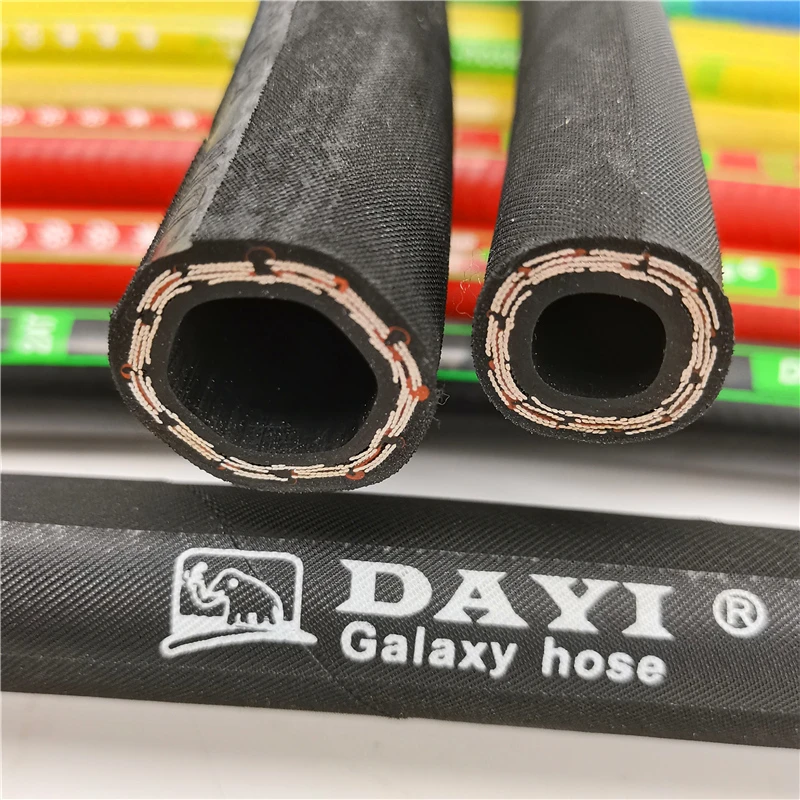
OEM wrapped cover steel wire spiral hydraulic hose constitutes a critical fluid conveyance component across diverse industrial applications, including construction machinery, agricultural equipment, material handling, and oil & gas. Unlike rubber hoses reinforced with textile braids, these hoses utilize multiple layers of high-tensile steel wire spirally wound within a synthetic rubber matrix, providing superior pressure resistance and durability. This construction method allows for handling significantly higher working pressures and temperature ranges compared to conventionally reinforced hoses. The “wrapped cover” refers to an external abrasion-resistant textile or polymeric layer applied over the wire spiral, enhancing protection against external damage and environmental factors. The OEM designation signifies that these hoses are often manufactured to specific customer requirements, customized in terms of length, end fittings, and performance characteristics, differentiating them from standard, off-the-shelf products. Understanding the material composition, manufacturing processes, and performance characteristics of these hoses is paramount for ensuring system reliability, safety, and longevity.
Material Science & Manufacturing
The core materials in a wrapped cover steel wire spiral hydraulic hose directly influence its performance. The inner tube typically comprises a blend of synthetic rubbers, most commonly Nitrile Rubber (NBR) for oil resistance, Ethylene Propylene Diene Monomer (EPDM) for water and heat resistance, or Fluorocarbon (FKM/Viton) for aggressive chemical environments. NBR offers good abrasion resistance but limited high-temperature capabilities. EPDM excels in outdoor applications due to its UV and ozone resistance. FKM provides exceptional chemical compatibility and temperature resistance but at a higher cost. The reinforcement layer consists of high-tensile steel wire, typically drawn from carbon steel with a tensile strength exceeding 2000 MPa. The wire is spirally wound to create a robust structure capable of withstanding high pressures. The cover material is often a blend of Polyurethane (PU), Polyamide (Nylon), or a specialized rubber compound formulated for abrasion resistance, weathering, and oil resistance. Manufacturing involves several key stages: inner tube extrusion, wire winding, rubber injection molding (encasing the wire spiral), cover extrusion and application, and final curing. Precise control of vulcanization time and temperature is crucial for achieving optimal rubber properties – hardness, tensile strength, and elongation. Wire spacing and pitch are also critical parameters affecting burst pressure and flexibility. The quality of the steel wire—surface finish, consistent diameter, and freedom from defects—directly impacts fatigue life and overall hose reliability. Improper bonding between the rubber and steel can lead to delamination and premature failure.
Performance & Engineering
The performance of a steel wire spiral hydraulic hose is dictated by its ability to withstand internal pressure, external damage, and environmental stresses. Force analysis focuses on hoop stress within the hose wall, which increases linearly with pressure and hose diameter. The steel wire reinforcement provides the necessary tensile strength to resist this stress, preventing bursting. Burst pressure is typically rated with a 4:1 safety factor. Flexibility, measured by bend radius, is a critical engineering consideration, particularly in applications involving tight routing. The wire spiral’s pitch and the rubber compound’s hardness influence flexibility. Environmental resistance is crucial, particularly in harsh operating conditions. Exposure to UV radiation, ozone, extreme temperatures, and corrosive chemicals can degrade the rubber compounds, leading to cracking, hardening, and reduced performance. The wrapped cover provides a first line of defense against these external factors. Compliance requirements vary by region and application. For example, SAE J517, EN 856, and DIN EN 853 standards define performance requirements for hydraulic hoses, including pressure ratings, temperature ranges, and fatigue life. Fatigue life, often assessed through impulse testing, represents the number of pressure cycles the hose can withstand before failure. End fitting attachment is a critical area of engineering; incorrect crimping can lead to leakage or fitting blow-off. Finite Element Analysis (FEA) is frequently employed to optimize hose design and predict performance under various loading conditions.
Technical Specifications
| Parameter | Unit | Typical Value (NBR/Steel Wire/PU Cover) | Testing Standard |
|---|---|---|---|
| Working Pressure | MPa | 25-40 | SAE J517 |
| Burst Pressure | MPa | 100-160 | SAE J517 |
| Temperature Range | °C | -40 to +100 | SAE J517 |
| Minimum Bend Radius | mm | 6-12 times hose ID | Manufacturer’s Specification |
| Tensile Strength (Cover) | MPa | >20 | ASTM D412 |
| Abrasion Resistance (Cover) | mg loss | <50 (Taber Abraser) | ISO 7798-2 |
Failure Mode & Maintenance
Steel wire spiral hydraulic hoses are susceptible to several failure modes. Fatigue cracking, initiated by repeated pressure cycling, typically occurs in the wire reinforcement due to stress concentration. Delamination, the separation of the rubber from the wire, results from inadequate bonding during manufacturing or degradation of the adhesive properties over time. Oil permeation through the inner tube can cause swelling and softening of the rubber, reducing pressure resistance. External abrasion can compromise the cover, exposing the wire spiral to corrosion. Oxidation and ozone cracking affect the rubber compounds, particularly in exposed applications. Improper installation, such as excessive bending or twisting, can introduce stress concentrations and accelerate failure. Maintenance procedures should include regular visual inspections for cracks, abrasion, and leaks. Hose replacement should be based on a predetermined schedule or after any sign of damage. Proper storage is essential; hoses should be stored in a cool, dry, dark environment, away from ozone sources and direct sunlight. End fittings should be inspected for corrosion and damage. Crimping integrity should be verified periodically. Avoid kinking or sharply bending the hose during operation. Ensure compatibility of the hose material with the conveyed fluid to prevent premature degradation.
Industry FAQ
Q: What is the primary advantage of steel wire spiral reinforcement over textile braid reinforcement in hydraulic hoses?
A: Steel wire spiral reinforcement offers significantly higher pressure handling capability and superior resistance to fatigue and abrasion compared to textile braid reinforcement. While textile braid hoses are more flexible and lower in cost, they are limited in pressure rating and are more susceptible to failure under harsh operating conditions.
Q: How does the choice of inner tube material impact the hose’s suitability for different fluids?
A: The inner tube material must be chemically compatible with the conveyed fluid. NBR is suitable for petroleum-based oils, EPDM for water-based fluids and phosphate ester fluids, and FKM for aggressive chemicals and high temperatures. Using an incompatible material can lead to swelling, degradation, and premature hose failure.
Q: What role does the wrapped cover play in the overall hose performance?
A: The wrapped cover provides external protection against abrasion, weathering, ozone, and UV radiation. It enhances the hose's durability and extends its service life, particularly in exposed applications. The cover material is selected to offer resistance to specific environmental factors.
Q: What is the significance of the 4:1 safety factor in hydraulic hose specifications?
A: The 4:1 safety factor means that the burst pressure of the hose is four times its working pressure. This provides a margin of safety to prevent catastrophic failure under unexpected pressure surges or operating conditions. It's a standardized industry practice to ensure reliable performance.
Q: How should I inspect a hydraulic hose for potential failure?
A: Inspect the hose for cracks, abrasion, swelling, leaks, and kinks. Check the end fittings for corrosion and proper crimping. Pay close attention to areas near bends and fittings, as these are common failure points. Any visible damage or degradation warrants immediate hose replacement.
Conclusion
OEM wrapped cover steel wire spiral hydraulic hoses represent a robust and reliable solution for demanding fluid conveyance applications. Their superior pressure handling, durability, and resistance to environmental factors, stemming from their carefully engineered multi-layer construction, position them as essential components in a wide range of industrial machinery. A thorough understanding of the material science, manufacturing processes, and potential failure modes is critical for ensuring safe and efficient operation.
Future development trends will likely focus on lightweight materials, improved abrasion resistance of cover compounds, and enhanced monitoring technologies for predictive maintenance. The increasing adoption of Industry 4.0 principles will drive the development of “smart” hoses equipped with sensors to monitor pressure, temperature, and structural integrity, enabling proactive maintenance and minimizing downtime. Proper selection, installation, and maintenance remain paramount to maximizing the lifespan and performance of these critical components.