
Apr . 01, 2024 17:55 Back to list
oem wire braided high pressure hydraulic hose Performance Analysis

Introduction
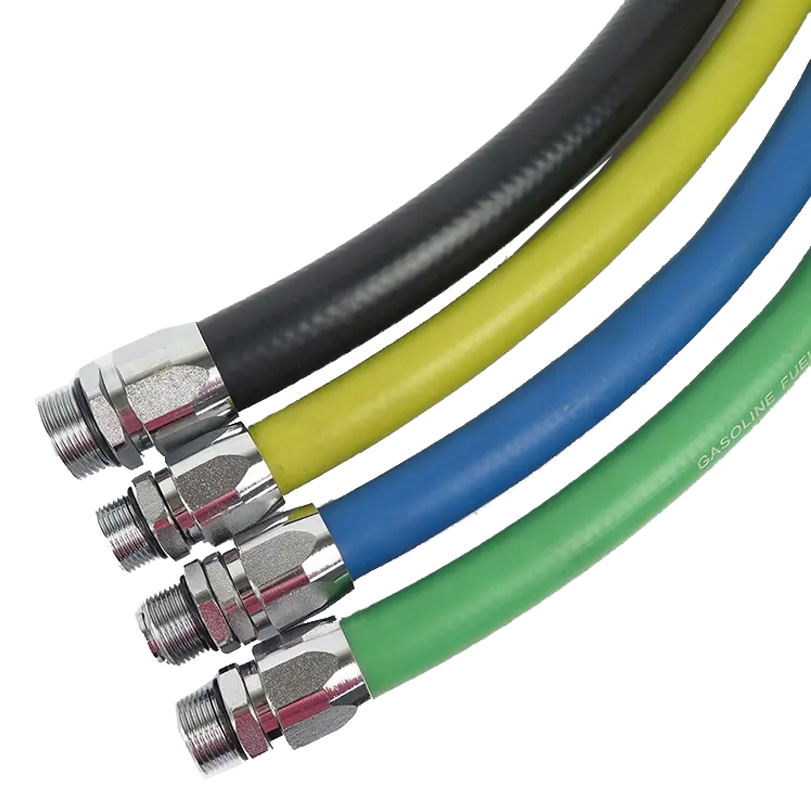
OEM wire braided high-pressure hydraulic hose is a critical component in hydraulic systems across numerous industries, including construction, agriculture, manufacturing, and aerospace. Its primary function is to safely and efficiently transmit hydraulic fluid under high pressure to power actuators and machinery. Unlike standard rubber hoses, wire braiding – typically constructed from high-tensile steel wire – provides significant reinforcement, enabling the hose to withstand substantially higher working pressures, resist kinking, and maintain dimensional stability. This guide provides an in-depth technical overview of these hoses, encompassing material science, manufacturing processes, performance characteristics, failure modes, and relevant industry standards. A key industry pain point is balancing cost with the required safety factor and service life; inadequate hose selection or maintenance can lead to catastrophic failures, resulting in downtime, environmental damage, and potential injury. Understanding the interplay between pressure ratings, material compatibility, and operating conditions is paramount for engineers and procurement professionals.
Material Science & Manufacturing
The construction of wire braided high-pressure hydraulic hose involves several key materials and precise manufacturing processes. The inner tube is typically composed of synthetic rubber compounds, with nitrile rubber (NBR) being a common choice due to its excellent resistance to petroleum-based hydraulic fluids. Other materials include chloroprene rubber (CR) for improved ozone and weathering resistance, and fluorocarbon rubber (FKM/Viton) for applications requiring compatibility with aggressive fluids and high temperatures. The reinforcement layer consists of one or more braids of high-tensile steel wire, the number of braids directly correlating with the pressure rating. The outer cover is generally made of a synthetic rubber compound, often a blend of CR and NBR, offering abrasion resistance, oil resistance, and protection against environmental degradation.
Manufacturing involves several stages: inner tube extrusion, wire braiding, hose assembly, and outer cover extrusion. Extrusion requires precise temperature and pressure control to ensure uniform wall thickness and material consistency. The wire braiding process utilizes specialized machinery to interlock the steel wires, creating a dense and flexible reinforcement structure. Crucial parameters include braid angle (typically 55-75 degrees) and wire tension, which significantly influence burst pressure and flexibility. Post-braiding, the hose is typically subjected to curing, where vulcanization crosslinks the rubber compounds, enhancing their physical and chemical properties. Quality control measures throughout the process, including dimensional checks, pressure testing (hydrostatic and impulse testing), and material analysis, are vital to ensure compliance with industry standards. A key manufacturing challenge is achieving consistent adhesion between the rubber layers and the steel wire, often addressed through surface treatment and bonding agents.
Performance & Engineering
The performance of wire braided hydraulic hose is dictated by several engineering factors. Burst pressure, working pressure, and impulse pressure ratings are paramount. Burst pressure represents the maximum pressure the hose can withstand before failure; working pressure is a fraction of the burst pressure, typically defined by a safety factor (e.g., 4:1). Impulse pressure accounts for pressure fluctuations and surges within the hydraulic system, requiring the hose to demonstrate resistance to fatigue cracking. Tensile strength is a crucial parameter, determining the hose’s ability to resist stretching and tearing under load. Flexibility, measured by bend radius, is essential for ease of installation and operation in confined spaces.
Environmental resistance is also critical. Hose materials must withstand exposure to temperature extremes, UV radiation, ozone, and various chemicals. Finite element analysis (FEA) is often employed to simulate stress distribution within the hose under different loading conditions, optimizing reinforcement layer design and material selection. Compliance requirements, such as those outlined by SAE J517 and EN 856, dictate specific testing procedures and performance criteria. Proper hose routing and support are crucial to prevent abrasion, kinking, and excessive bending, all of which can compromise performance and shorten service life. Incorrectly installed hoses can experience localized stress concentrations, accelerating fatigue failure. Furthermore, fluid compatibility is essential; using incompatible fluids can cause swelling, degradation, and premature failure of the hose materials.
Technical Specifications
| Parameter | Unit | Typical Value (DN20, 2 Wire Braid) | Typical Value (DN32, 4 Wire Braid) |
|---|---|---|---|
| Working Pressure | MPa | 20 | 32 |
| Burst Pressure | MPa | 80 | 128 |
| Minimum Bend Radius | mm | 150 | 250 |
| Temperature Range | °C | -40 to +100 | -40 to +100 |
| Inner Tube Material | - | NBR | NBR |
| Reinforcement Material | - | Steel Wire Braid (2 layers) | Steel Wire Braid (4 layers) |
| Outer Cover Material | - | CR/NBR Blend | CR/NBR Blend |
Failure Mode & Maintenance
Wire braided hydraulic hoses are susceptible to various failure modes. Fatigue cracking, initiated by repeated pressure cycling, is a common issue, particularly in areas of high stress concentration (e.g., near fittings). Delamination, the separation of rubber layers, can occur due to inadequate bonding or chemical attack. Abrasion, caused by contact with abrasive surfaces, can wear through the outer cover, exposing the reinforcement layer to corrosion. Oxidation, resulting from exposure to heat and oxygen, can degrade the rubber compounds, reducing their flexibility and strength. Fitting failures, such as corrosion or loosening, can lead to leakage and hose rupture.
Preventative maintenance is crucial for extending hose service life. Regular visual inspections should be conducted to identify signs of abrasion, cracking, swelling, or leakage. Hose routing should be optimized to minimize bending and exposure to abrasive surfaces. Fluid compatibility should be verified to prevent chemical attack. Hose assemblies should be properly supported to prevent sagging and stress concentration. When replacing hoses, it’s essential to use fittings that are compatible with the hose and the hydraulic system. Crimping procedures must be carefully controlled to ensure a secure and leak-proof connection. Proper storage conditions, including protection from UV radiation and extreme temperatures, can also help prevent premature degradation. If a hose shows any signs of damage, it should be immediately removed from service and replaced.
Industry FAQ
Q: What is the impact of exceeding the minimum bend radius on hose life?
A: Exceeding the minimum bend radius induces excessive stress on the reinforcement layer and inner tube, accelerating fatigue cracking. This localized stress concentration dramatically reduces the hose’s service life and increases the risk of premature failure. Consistent bending below the specified radius causes microscopic damage that accumulates over time.
Q: How does steel wire braid count affect hose performance?
A: Increasing the steel wire braid count directly increases the hose’s pressure rating and resistance to kinking. Each additional braid layer adds reinforcement, allowing the hose to withstand higher pressures and maintain its shape under load. However, increased braid count also reduces flexibility, which must be considered for applications requiring tight bends.
Q: What are the common causes of hose leaks at the fitting interface?
A: Leaks at the fitting interface can stem from several sources: improper crimping, corrosion of the fitting or hose end, damage to the sealing surface, or incompatibility between the fitting and hose materials. Insufficient crimping leads to a loose connection, while corrosion degrades the sealing surfaces. Utilizing the correct fitting and a calibrated crimping machine are critical.
Q: What is the importance of fluid compatibility when selecting a hydraulic hose?
A: Fluid incompatibility can cause the inner tube material to swell, soften, or degrade, leading to leaks, reduced pressure capacity, and premature failure. Certain fluids can react chemically with the rubber compounds, causing them to lose their elasticity and strength. Always consult a fluid compatibility chart to ensure the hose material is suitable for the intended application.
Q: What is the role of impulse pressure testing and why is it important?
A: Impulse pressure testing simulates the effects of pressure fluctuations and surges within a hydraulic system. It assesses the hose’s ability to withstand repeated pressure spikes without failure. This testing is vital because hydraulic systems rarely operate at a constant pressure; impulse pressures can significantly exceed the steady-state working pressure.
Conclusion
OEM wire braided high-pressure hydraulic hose is a sophisticated engineered component, vital to the reliable operation of hydraulic systems across diverse industries. Its performance is critically dependent on the careful selection of materials, precise manufacturing processes, and adherence to stringent quality control standards. Understanding the interplay between working pressure, burst pressure, impulse pressure, environmental factors, and fluid compatibility is crucial for ensuring safe and efficient operation.
Moving forward, advancements in hose technology will likely focus on the development of lighter-weight materials, improved abrasion resistance, and enhanced chemical compatibility. Predictive maintenance strategies, incorporating sensor technology to monitor hose condition in real-time, will also play an increasingly important role in optimizing hose service life and preventing catastrophic failures. Careful consideration of these technical aspects is paramount for engineers and procurement professionals to maximize the return on investment and minimize risks associated with hydraulic hose applications.