
Apr . 01, 2024 17:55 Back to list
oem two wire braided hydraulic hose Performance Analysis
Introduction
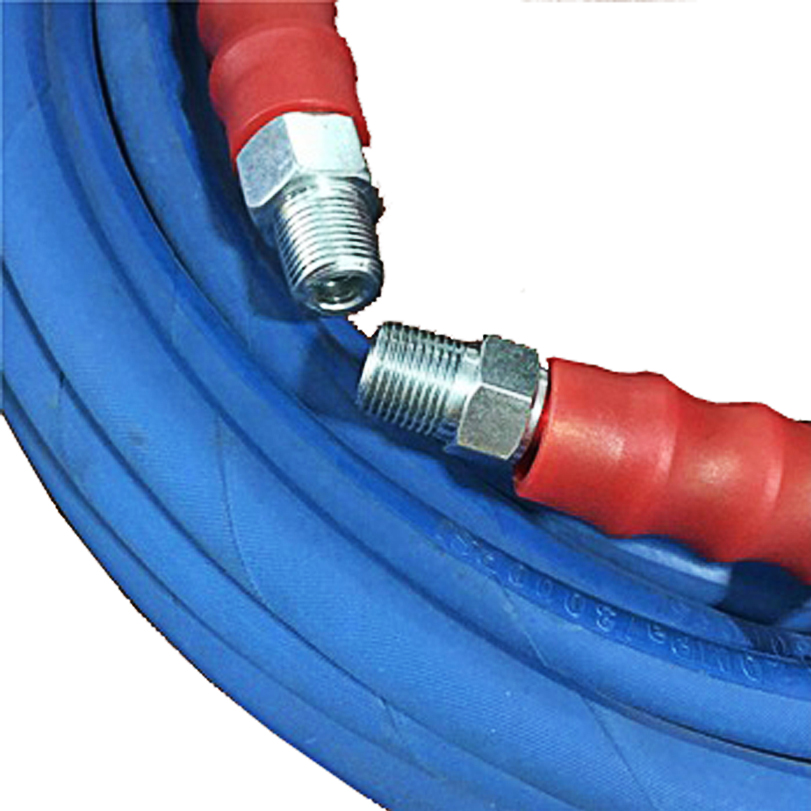
OEM two-wire braided hydraulic hose constitutes a critical component within fluid power systems, designed for the reliable transmission of hydraulic fluid under significant pressure. Positioned within the industry chain between hose manufacturers and Original Equipment Manufacturers (OEMs) across diverse sectors – including construction, agriculture, mining, and material handling – its performance dictates the efficiency and safety of countless applications. These hoses are characterized by an inner tube, a reinforcing braid (typically steel wire), and an outer cover, working synergistically to withstand high pressures, temperature fluctuations, and exposure to various fluids. Core performance characteristics include pressure rating, burst pressure, temperature range, and fluid compatibility. The industry currently faces challenges regarding the increasing demand for lighter weight hoses with higher pressure capabilities, coupled with stricter environmental regulations governing fluid containment and material composition. Maintaining consistent quality control and traceability throughout the manufacturing process are also paramount concerns.
Material Science & Manufacturing
The foundation of a two-wire braided hydraulic hose lies in the careful selection and processing of its constituent materials. The inner tube is commonly constructed from nitrile rubber (NBR), known for its excellent resistance to petroleum-based hydraulic fluids, or ethylene propylene diene monomer (EPDM) for phosphate ester-based fluids. NBR possesses good abrasion resistance and tensile strength, while EPDM exhibits superior heat and ozone resistance. The reinforcing braid, typically high-strength steel wire conforming to SAE J517 Grade R9 or similar standards, provides the hose’s pressure-bearing capacity. The wire undergoes a controlled drawing process to achieve the necessary tensile strength and flexibility. The outer cover utilizes a synthetic rubber compound, frequently chloroprene (CR) or polyurethane (PU), providing abrasion, weather, and oil resistance.
Manufacturing begins with the extrusion of the inner tube to precise dimensions. The steel wire braid is then helically wound around the extruded tube, utilizing automated braiding machines ensuring consistent braid coverage and angle. This process is critical; inconsistent braiding leads to localized stress concentrations and premature failure. Following braiding, the outer cover is extruded over the braid. Critical parameters during extrusion include temperature control (to prevent material degradation), screw speed (affecting material homogeneity), and die design (influencing surface finish). Post-extrusion, the hose undergoes a curing process, typically involving heat treatment, to vulcanize the rubber compounds and achieve their final physical properties. Quality control includes hydrostatic testing to verify pressure rating and impulse testing to assess fatigue resistance. Skiving operations are often employed to create precise fitting interfaces.

Performance & Engineering
The performance of a two-wire braided hydraulic hose is governed by a complex interplay of forces and environmental factors. Force analysis focuses on hoop stress within the inner tube, axial stress in the reinforcing braid, and shear stress at the interfaces between layers. The braid’s geometry and wire tensile strength dictate the hose's ability to withstand internal pressure without expansion or rupture. Finite Element Analysis (FEA) is routinely employed during the design phase to optimize braid construction and predict stress distribution under various loading conditions. Environmental resistance encompasses thermal stability, chemical compatibility, and UV degradation. Prolonged exposure to extreme temperatures can cause rubber compounds to harden or become brittle, reducing flexibility and increasing susceptibility to cracking. Compatibility with the hydraulic fluid is crucial; incompatible fluids can cause swelling, softening, or degradation of the inner tube, leading to leaks and system failure.
Compliance requirements are stringent, governed by standards such as SAE J517 (hydraulic hose), ISO 6897 (hydraulic hose), and EN 856 (hydraulic hose). These standards specify requirements for pressure rating, burst pressure, temperature range, impulse testing, and dimensional tolerances. Functional implementation involves careful consideration of fitting selection and installation procedures. Improperly installed fittings can create stress risers and significantly reduce the hose's service life. Bend radius is also a critical parameter; exceeding the minimum bend radius induces stress and accelerates fatigue failure. Regular visual inspections for abrasion, cracking, and leaks are essential for preventative maintenance.
Technical Specifications
| Parameter | Unit | SAE J517 R12 (Typical) | EN 856 4SH (Typical) |
|---|---|---|---|
| Working Pressure | MPa | 20.7 | 21 |
| Burst Pressure | MPa | 82.7 | 84 |
| Temperature Range | °C | -40 to +100 | -40 to +100 |
| Inner Tube Material | - | NBR | NBR |
| Reinforcement | - | Two Steel Wire Braid | Two Steel Wire Braid |
| Outer Cover Material | - | Synthetic Rubber (CR) | Synthetic Rubber (CR) |
Failure Mode & Maintenance
Two-wire braided hydraulic hoses are susceptible to various failure modes. Fatigue cracking, often initiated at the braid crossover points, occurs due to repeated pressure cycling and flexing. This is exacerbated by exceeding pressure limits or operating outside the specified temperature range. Delamination, the separation of layers, can result from poor adhesion between the inner tube, braid, and outer cover, often linked to inadequate curing or incompatible materials. Oxidation and degradation of the rubber compounds, particularly the outer cover, are accelerated by exposure to ozone, UV radiation, and high temperatures, leading to cracking and loss of flexibility. Abrasion damage from contact with surrounding components can compromise the outer cover, exposing the braid to corrosion. Pinholes in the inner tube can develop due to internal corrosion or damage from contaminated fluids.
Preventative maintenance is paramount. Regular visual inspections should focus on identifying cracks, abrasions, bulges, or leaks. Hose assemblies should be replaced if any signs of damage are observed. Proper hose routing and support are crucial to prevent excessive bending and abrasion. Fluid filtration is essential to remove contaminants that can cause internal erosion and damage. When replacing hoses, it is vital to use fittings that are compatible with both the hose and the hydraulic system, and to follow proper torque specifications during installation. Consider implementing a hose management program that tracks hose age, service history, and replacement schedules.
Industry FAQ
Q: What is the impact of impulse pressure on the service life of a two-wire braided hose?
A: Impulse pressure, or pressure spikes, significantly reduces the service life. Each impulse creates stress waves that propagate through the hose, leading to fatigue failure over time. Higher impulse pressures and frequencies accelerate this process. Specifying hoses with higher impulse ratings and implementing dampening devices in the hydraulic system can mitigate this issue.
Q: How does the selection of the inner tube material affect fluid compatibility?
A: The inner tube material must be compatible with the hydraulic fluid to prevent swelling, softening, or degradation. NBR is generally suitable for petroleum-based fluids, while EPDM is preferred for phosphate ester fluids. Using an incompatible material can lead to leaks, contamination, and system failure.
Q: What are the critical considerations when selecting fittings for two-wire braided hose?
A: Fittings must be rated for the hose's working and burst pressures. They should also be compatible with both the hose end configuration (e.g., crimp, field attachable) and the hydraulic fluid. Proper crimping procedures are essential to ensure a secure and leak-free connection. Using the wrong fitting or an improperly crimped fitting can lead to premature failure.
Q: What is the significance of the bend radius specification for hydraulic hoses?
A: Exceeding the minimum bend radius induces stress on the hose, particularly at the bend point. This stress accelerates fatigue failure and can lead to cracking. Maintaining the specified bend radius ensures the hose operates within its designed stress limits.
Q: How does steel wire braid contribute to the hose’s pressure rating?
A: The steel wire braid provides the primary structural support against internal pressure. The tensile strength of the steel wire, the braid angle, and the braid coverage all directly impact the hose's ability to withstand pressure. A tighter braid angle and greater coverage offer higher pressure ratings.
Conclusion
OEM two-wire braided hydraulic hose represents a complex engineering solution demanding careful material selection, precise manufacturing, and adherence to stringent industry standards. Its performance is inextricably linked to the reliable operation of critical fluid power systems. Understanding the interplay between material properties, manufacturing processes, and operating conditions is essential for ensuring longevity and preventing catastrophic failures. The ongoing pursuit of lighter, stronger, and more durable hoses, coupled with the increasing demand for environmentally responsible materials, will continue to drive innovation in this sector.
Successfully selecting and implementing these hoses necessitates a holistic approach, encompassing thorough application analysis, proper installation procedures, and a proactive maintenance program. Addressing the core challenges of fatigue resistance, fluid compatibility, and environmental degradation will remain paramount for maintaining system integrity and optimizing performance throughout the hose’s service life. Continued research into advanced materials and manufacturing techniques promises further enhancements in the capabilities and reliability of two-wire braided hydraulic hose technology.